



Antique Glass Table Centre
An antique glass table centre brings striking height and reflective surface to a formal dining arrangement.
Antique Glass Table Centre
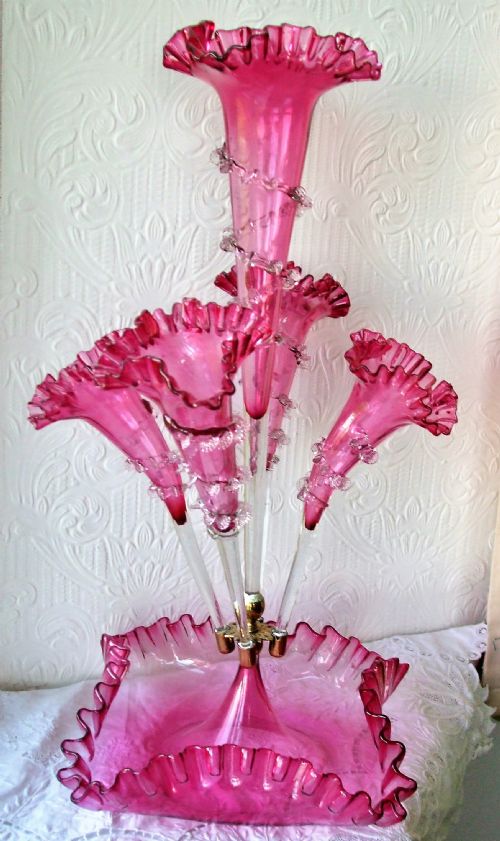
An antique glass table centre acts as the focal point for dining rooms and large reception spaces, designed to hold fruit, flowers or sweetmeats. These pieces include tiered epergnes with hanging baskets as well as low bowls meant to sit directly upon the polished wood of a dining table.
Buyers browsing this selection will most frequently encounter Victorian cranberry glass epergnes and Georgian cut glass bowls. These forms combine glass vessels with supportive frames in silver plate, wrought iron, brass, or carved wood.
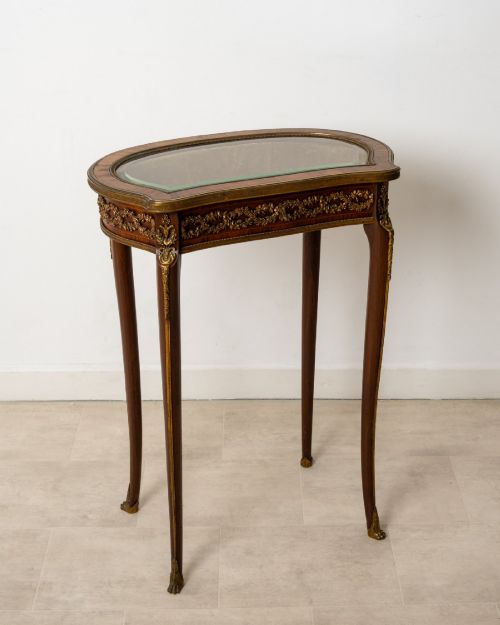
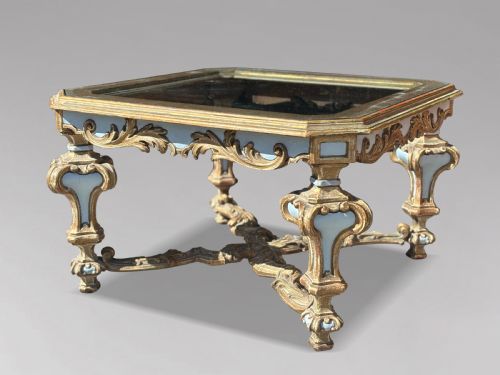
Origins span English, French and German workshops, with distinct regional preferences evident in the choice of supportive materials. Black Forest examples incorporate elaborate carved wood bases, whilst French pieces favour gilt bronze and kingwood.
Materials and construction methods
Glass production relied on traditional blowing and cutting techniques, yielding heavy lead crystal with deep prismatic facets or vibrant coloured glass such as cranberry. Artisans shaped molten metal into complex epergne trumpets and sturdy decorative bowls by hand.
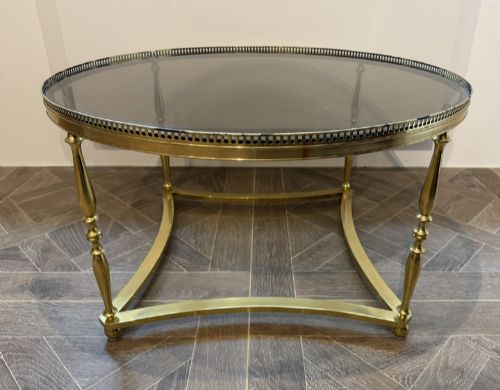
Support structures combine turned and carved timber such as walnut, mahogany and bleached pine with metal elements in brass, silver plate and wrought iron. Makers integrated these disparate materials using concealed screw threads, peg joints and fitted brass collars.
Antique Glass Table Centre Retail Price Guide 2026
Typical asking prices for glass table centre among the pieces listed under this phrase on Sellingantiques today, from the lower quarter to the upper quarter. They describe what is for sale here now, not the wider market.
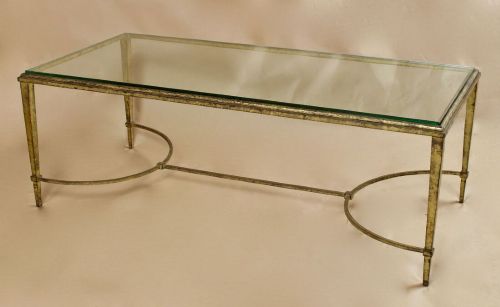
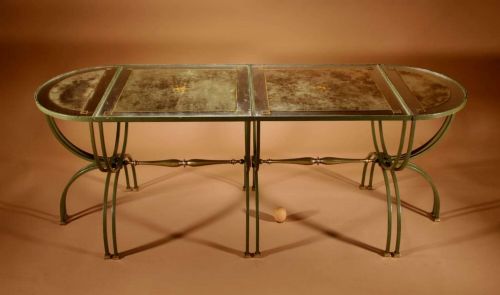
Current listings feature nineteenth-century Black Forest carved wood centrepieces alongside Georgian cut glass bowls and Art Deco wrought iron tables.
Judging quality and craftsmanship
The distinction between standard items and superior examples lies in the depth and crispness of the glass cutting, alongside the weight and clarity of the metal components. Heavy lead crystal with sharp, hand-polished facets represents the upper tier of production.
Integration between the glass vessels and their supporting frames demonstrates the maker's skill, where superior pieces fit securely without excessive movement or reliance on modern replacement parts.
Baccarat Crystal
The Antique Glass Table Centre Glossary
- Epergne
- A large table centrepiece featuring a central bowl with multiple branching arms and hanging baskets for fruit or flowers. These structures stand proudly on a circular foot.
- Cut Glass
- Glass decorated by grinding facets and patterns into the surface using a rotating wheel. This process creates deep light refraction across the body of the bowl.
- Cranberry Glass
- A transparent red glass coloured by the addition of gold chloride to the molten batch. The intensity of the pinkish-red hue varies according to the gold concentration.
- Silver Plate
- A thin layer of silver fused or electroplated onto a base metal such as copper or brass. This technique provided the appearance of solid silver at a lower production cost.
- Baccarat Crystal
- Fine lead crystal produced by the renowned French glassworks, often featuring heavy weight and brilliant clarity. Pieces frequently incorporate complex mouldings and precise hand-cutting.
Antique Glass Table Centre: Frequently Asked Questions
How do I clean an antique glass centrepiece?
Cleaning requires warm soapy water and a soft cloth, avoiding harsh abrasives that scratch old glass surfaces. Metal mounts must be kept dry to prevent damage to silver plate or brass.
Detachable glass trumpets should be washed individually and dried thoroughly before reuniting them with their supportive frames.
Can I use these for fresh flowers?
Most glass bowls and epergne trumpets hold water securely and suit fresh floral arrangements. Care must be taken when filling hanging baskets to distribute weight evenly across the frame.
Liners protect vulnerable metal bases from moisture damage during prolonged use on dining tables.
How do I identify Georgian glass?
Georgian glass displays a heavy hand-blown character with pontil marks on the underside and slightly irregular thickness throughout the vessel. Cut patterns feature deep, sharp facets rather than the smooth, uniform press-moulding seen in later periods.
The metal content in Georgian lead crystal also produces a resonant ring when gently tapped.