


Antique Glass Salt Dips
Antique glass salt dips are miniature open vessels that held salt at the dining table, combining coloured glass liners with precious or plated metal mounts.
Antique Glass Salt Dips
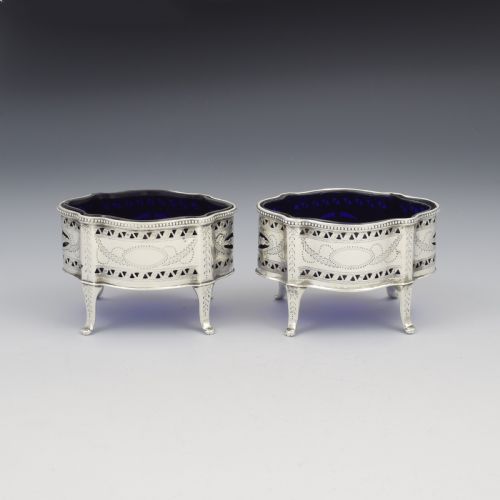
When you search for antique glass salt dips, you encounter small open cellars designed to sit on the dining table for individual or shared condiment use. The examples here include Victorian, Georgian, and Edwardian specimens, alongside later twentieth-century production.
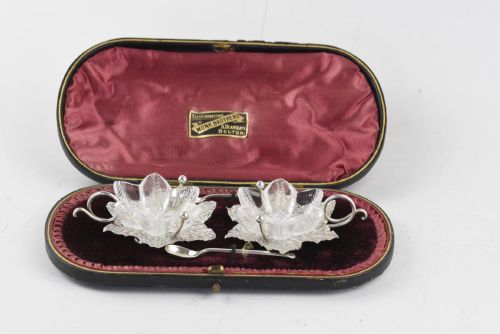
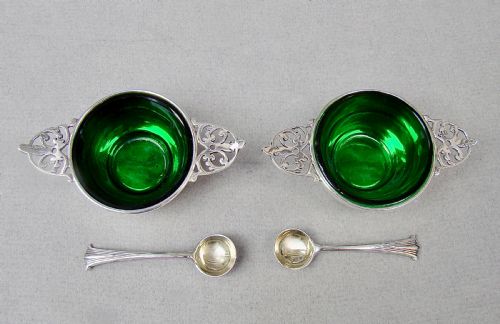
Most pieces pair a coloured or clear glass insert with a metal framework, though some consist entirely of heavy cut glass or lead crystal. You find single items, matched pairs, cased sets, and larger groupings complete with matching spoons.
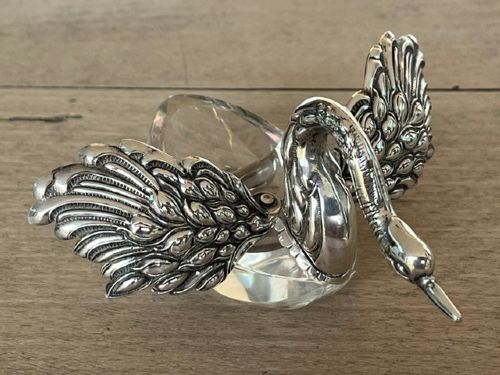
Forms range from simple open bowls to novelty animal figures, divided swan bodies, quaich shapes, and footed serpentine profiles. They reflect formal dining customs across the nineteenth and twentieth centuries.
How they were made
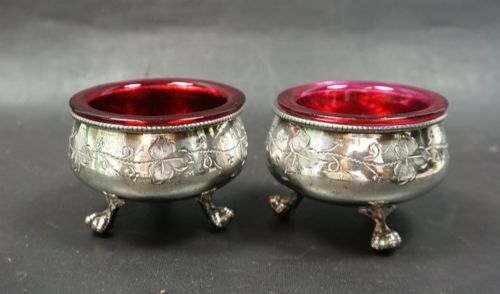
Makers utilised molten glass production methods, employing lead crystal or pressing cobalt and cranberry glass into moulds before hand-finishing and polishing. Cut glass variants received deep facets and decorative swag motifs carved across the exterior surface.
Metal mounts incorporate sterling silver, silver plate, and mixed materials, formed through casting, piercing, and smithing techniques. Components like movable wings and fitted saucers demonstrate precision assembly by period metalworkers.
Listings feature sterling silver, silver plate, lead crystal, cobalt glass, and cranberry glass across Victorian, Georgian, Edwardian, and Art Deco periods.
What varies in quality
Quality rests in the weight and clarity of the glass, the depth of the cutting, and the crispness of any metal piercing or hallmarking. Superior pieces retain their original matching glass liners and retain tight joints in hinged or movable parts.
The integration between the glass insert and its surrounding metal frame dictates the overall refinement. Finer sets show careful proportion and deliberate material contrast, whereas simpler production relies on standard stamped metal and plain glass.
Josiah Williams & Co
The Antique Glass Salt Dips Glossary
- Salt cellars
- Small open or covered vessels used to hold salt on the dining table before the widespread adoption of salt shakers. They often require a small spoon for serving.
- Cobalt glass
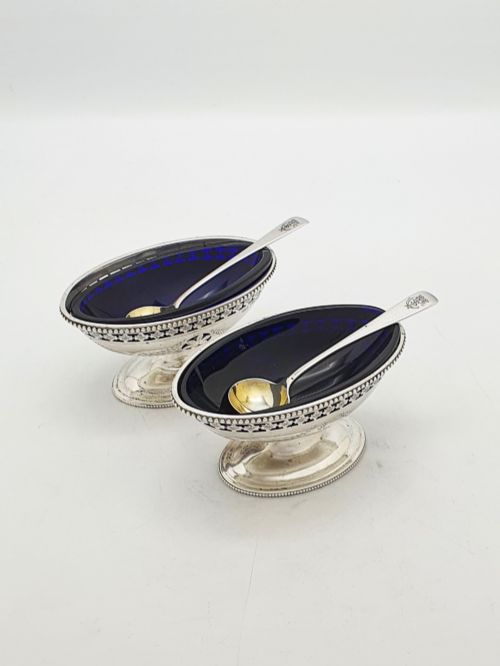
- Deep blue glass coloured with cobalt oxide, frequently used for liners inside silver salt cellars to provide a striking visual contrast.
- Cranberry glass
- A transparent pinkish-red glass created by adding gold to the molten batch, popular during the Victorian period for tableware inserts.
- Cut glass
- Glass decorated by grinding facets and patterns into the surface using a rotating wheel, common in Georgian and Victorian tablewares.
- Open salts
- Salt cellars constructed without a lid, exposing the contents and the coloured glass liner directly to view.
- Quaich
- A traditional Scottish two-handled drinking vessel form occasionally adapted by silversmiths for novelty salt cellars.
Antique Glass Salt Dips: Frequently Asked Questions
How were salt dips used at the table?
Dinners used these small open vessels to hold fine salt near each place setting. Guests pinched or spooned salt directly from the glass dip onto their plate.
Larger master salts sat centrally for shared use, while smaller individual dips accompanied each guest.
What is the difference between cobalt and cranberry glass?
Cobalt glass achieves its deep, dark blue tone through the use of cobalt oxide during manufacturing. Cranberry glass displays a rich reddish-pink shade produced by introducing gold into the molten glass.
Both colours served as decorative liners inside silver frames during the Victorian era.
How do I date an antique salt dip?
Dating relies on hallmarks stamped on the silver mounts, stylistic cues such as Georgian cut patterns or Art Deco geometry, and manufacturing techniques. Silver marks often reveal the exact assay office and year of production.
Glass weight, pontil marks, and the presence of original fitted saucers also help establish the period.
Are salt dips safe to use for modern dining?
Most antique glass salt dips function well for serving dry condiments like salt or spices during meals. Hand washing protects the delicate glass and aged metal surfaces.
Avoid exposing antique silver plate and older glass liners to harsh dishwashers or prolonged moisture.