


Antique Glass Display Pieces
Antique glass display pieces are cabinets, cases, and vessels formed from wood, brass, and glass to hold valued objects.
Antique Glass Display Pieces
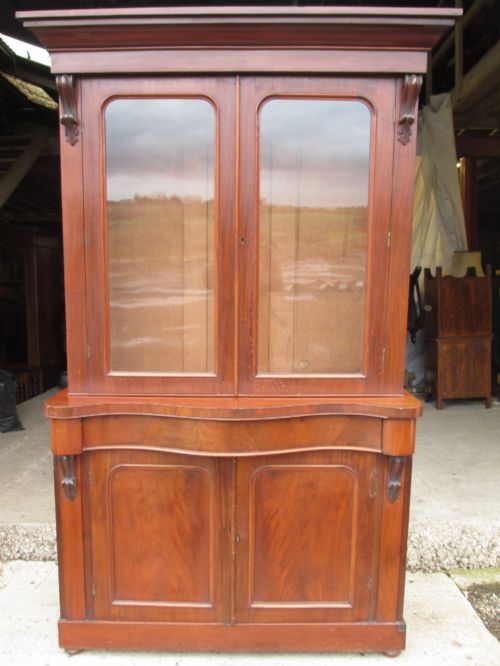
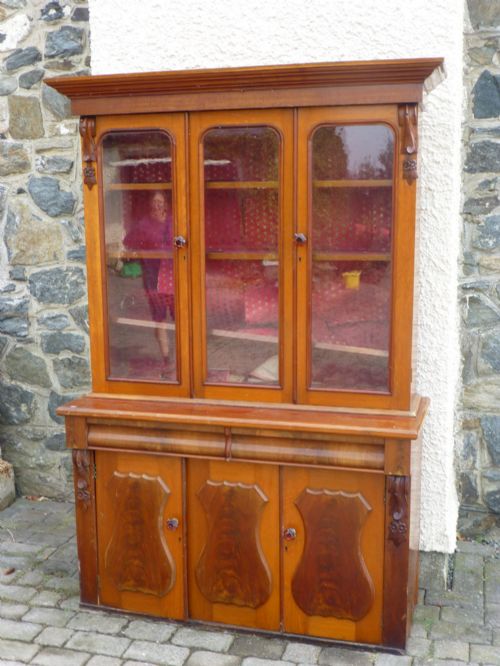
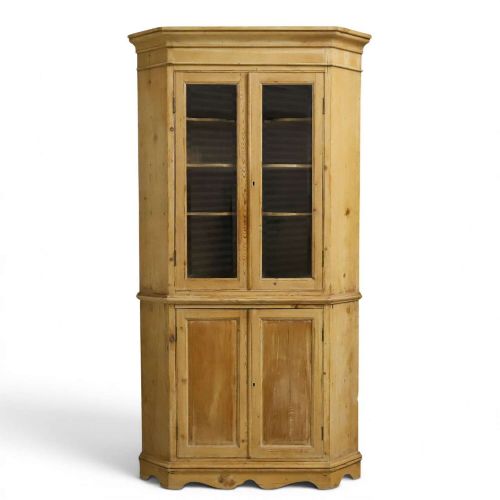
Antique glass display pieces encompass glazed bookcases, corner cupboards, dressers, and specialised holders designed to showcase prized items. When searching for antique glass display pieces, buyers encounter diverse forms ranging from large mahogany library bookcases to slim bow-fronted corner cabinets and decorative glassware.
The selections span distinct historical eras, with Victorian and Edwardian examples appearing frequently alongside earlier 18th-century cabinets and 19th-century vernacular furniture. Common configurations include two-part display cabinets, mirror-back sideboards, and wall or floor-standing units fitted with transparent panes.
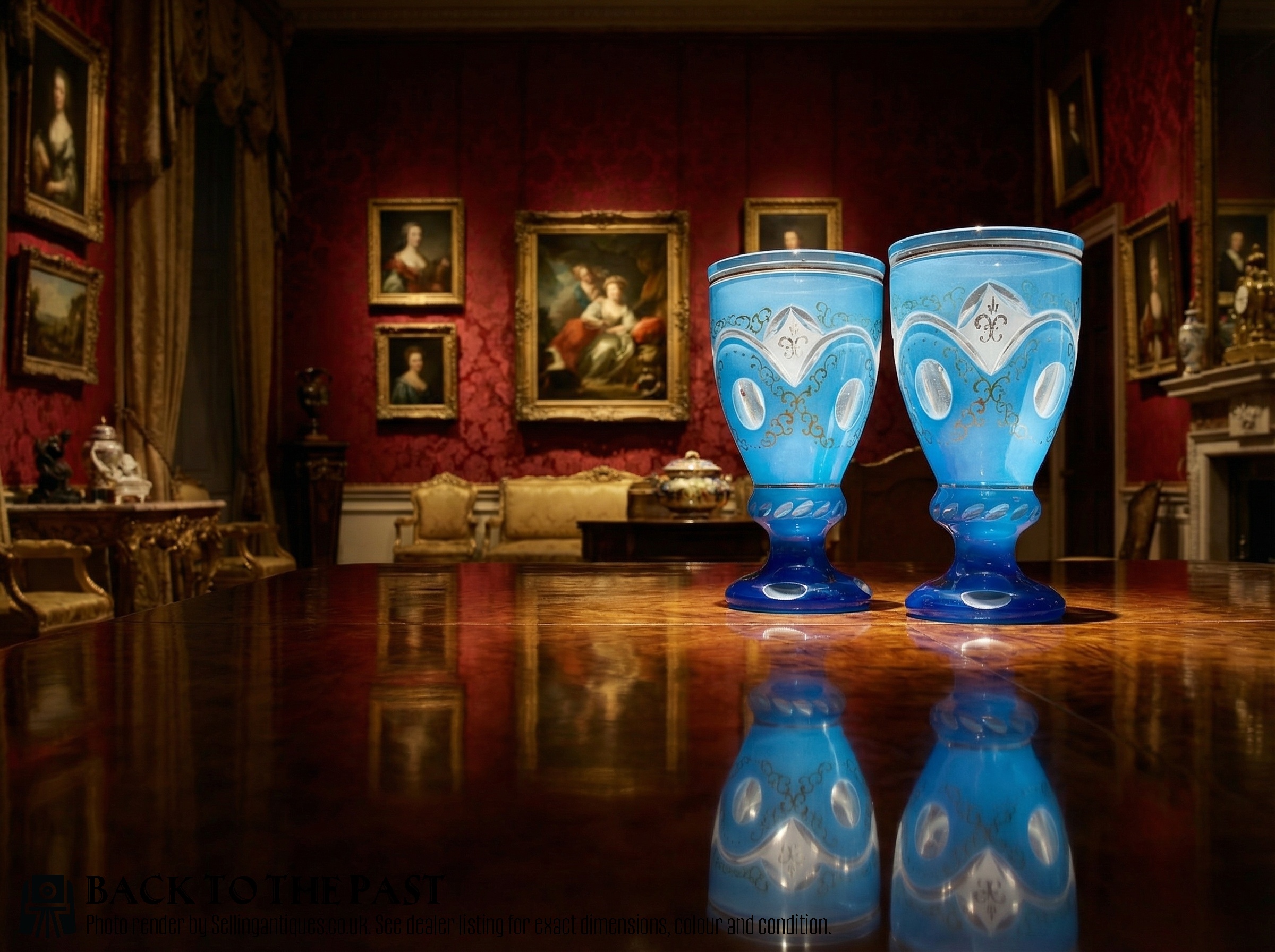
Many of these items combine functional storage with viewing areas, utilising wooden frames of mahogany, oak, pine, and satinwood. Alongside larger cabinetry, specialised decorative objects such as goblets and hatpin stands also populate the category.
How they were made
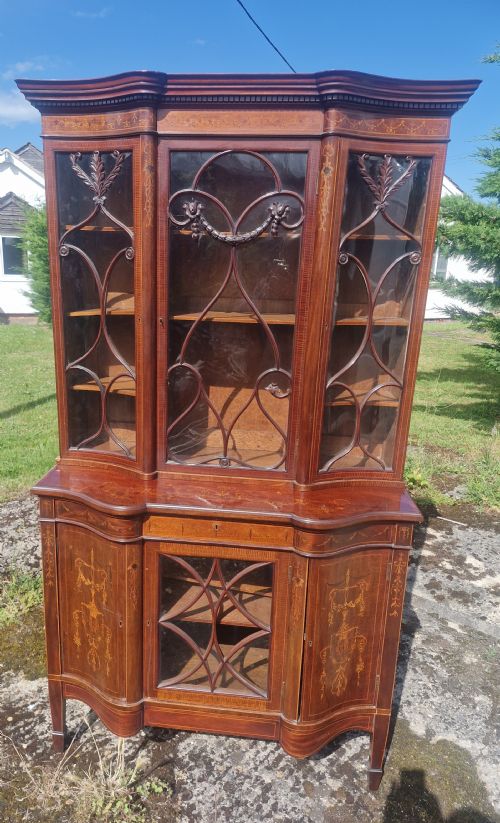
Construction relies heavily on traditional cabinet-making timbers such as mahogany, oak, and pine, frequently enhanced with inlay work or distinct grain patterns like burr yew and flame mahogany. Wood sections are joined to form sturdy carcases, accommodating multi-pane glass doors and brass hardware.
Glass production and framing required precise fitting within doors and display vessels, while specialised items incorporated precious metals or hand-finished gilt decoration on blown glass bodies.
A three-mast sailing ship rests permanently trapped inside a glass bottle, defying the logic of its own creation.
What varies in quality
Quality differences manifest in the selection of timbers, the crispness of inlaid details, and the overall proportions of the cabinetry. Superior examples exhibit carefully matched wood grains, such as flame mahogany or burr yew, and balanced architectural symmetry.
The refinement of the glazing bars, the integration of brass fittings, and the condition of the glass itself distinguish standard utilitarian storage from finer decorative display furniture.
Crisford & Norris·Le Roy et Fils
The Antique Glass Display Pieces Glossary
- Glazed bookcase
- A piece of furniture featuring glass-fronted doors designed for housing books while keeping them visible.
- Corner cabinet
- A storage unit shaped specifically to fit into the internal corner of a room, often with glass panels on the upper section.
- Bow front
- A convex, curved front profile found on certain cabinets and dressers.
- Inlay
- A technique where contrasting pieces of wood or other materials are inserted into a recessed surface to form decorative patterns.
- Gilt glass
- Glassware decorated with a thin layer of gold leaf or gold paint.
Antique Glass Display Pieces: Frequently Asked Questions
Where should I place a display cabinet?
These cabinets suit dining rooms, living spaces, or hallways where natural light can pass through the glass doors. Ensure the floor is level to prevent the tall wooden carcase from twisting over time.
Keep them away from direct sunlight to protect both the timber finish and the objects stored inside from fading.
How do I clean antique glass?
Use a soft, lint-free cloth paired with a mild glass cleaner sprayed onto the cloth rather than directly onto the glass. This prevents moisture from seeping into the wooden frames or historic putty.
Take care around old glazing bars and antique glass panes, which can be thinner and more delicate than modern equivalents.
Are corner cabinets practical for small rooms?
Corner units utilise dead space in room junctions, offering storage without protruding deeply into the main floor area. Slim forms fit neatly into tight architectural spaces.
They provide vertical display capability while maintaining clear pathways around the room.
What is a two-part cabinet?
A two-part cabinet consists of a separate upper section, often glazed for display, resting upon a lower base unit containing cupboards or drawers. This modular construction assisted with transport and placement in historic homes.
The sections can be separated when moving the furniture between rooms or properties.