



Antique Glass Cruet Bottle
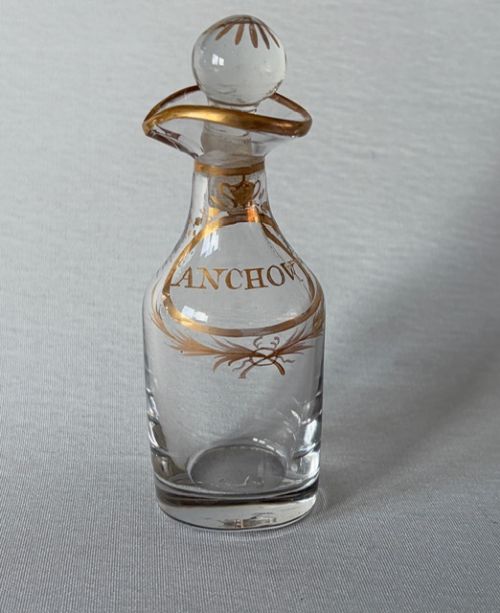
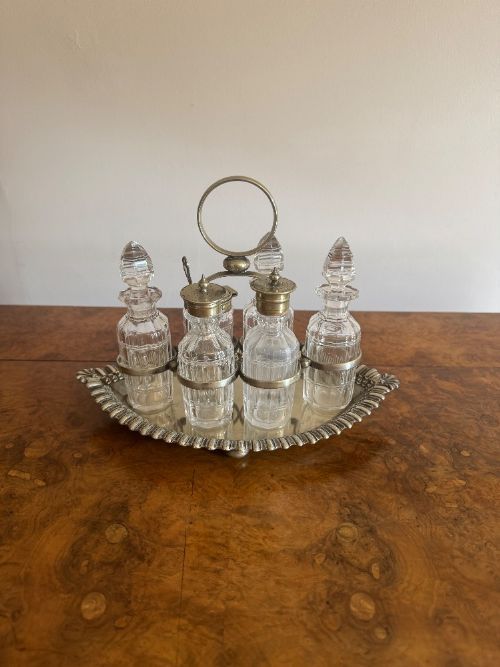
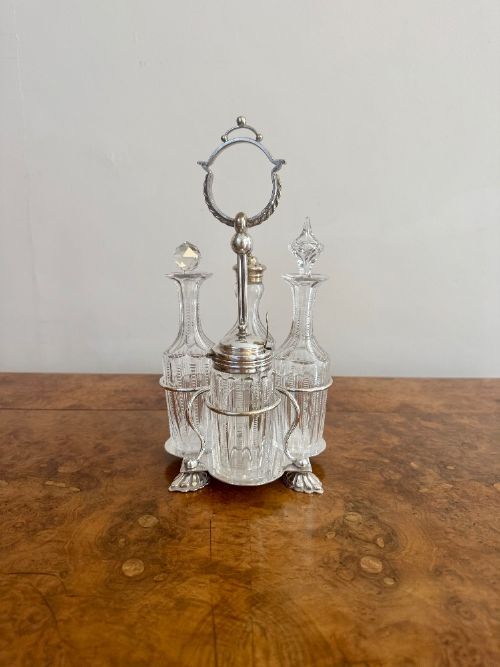
An antique glass cruet bottle sits at the table to hold oil, vinegar, or condiments with period style.
Antique Glass Cruet Bottle
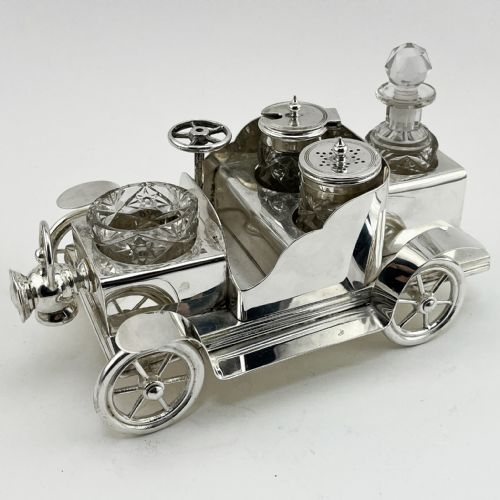
An antique glass cruet bottle is a small vessel designed to hold table condiments like oil, vinegar, or sauces, often housed in stands or used alongside matching bottles. When searching this phrase, buyers encounter individual glass bottles as well as multi-bottle frames from various eras.
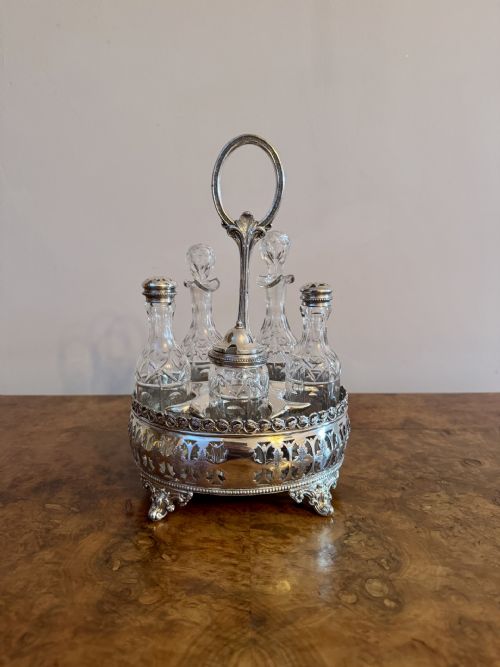
The pieces on this page span the Georgian, Victorian, Edwardian, and Art Deco periods, reaching back to the eighteenth century. Most examples combine glass bodies with mounts, collars, or stands made from silver plate, sterling silver, or Old Sheffield plate.
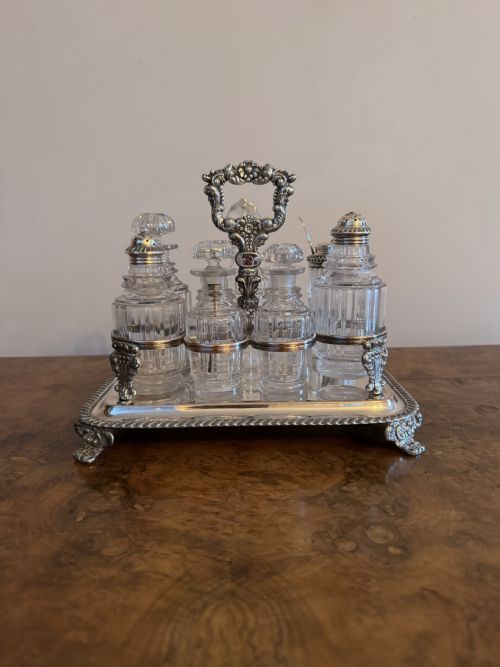
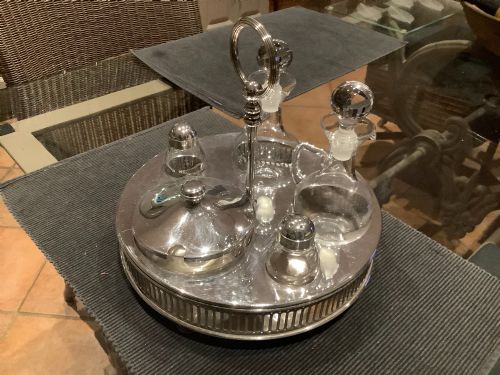
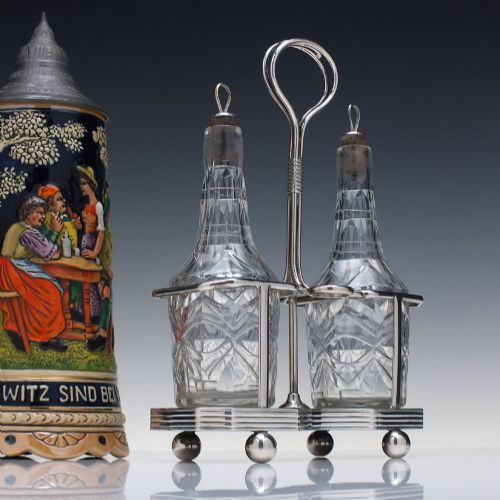
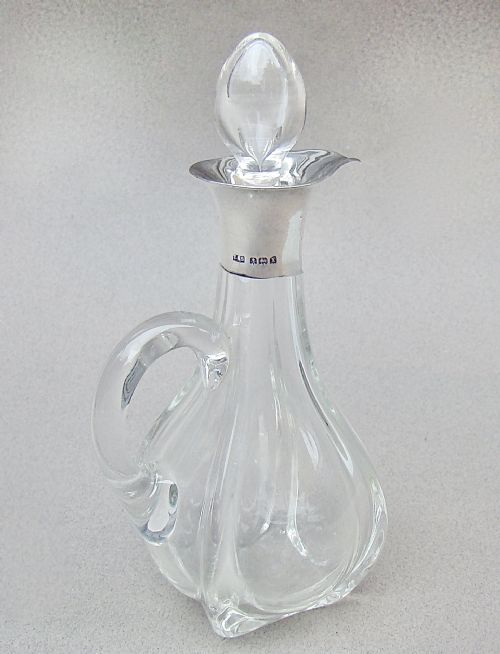
Forms range from single oil or vinegar bottles with silver mounts to substantial sets holding up to seven or eight bottles in ornate frames. Buyers also find related decanters and condiment sets sharing the same dining table function.
How they were made
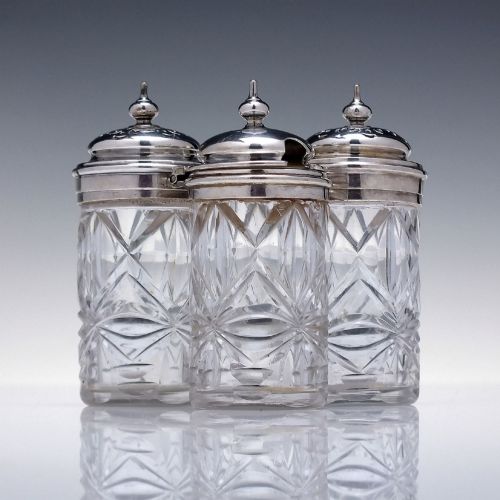
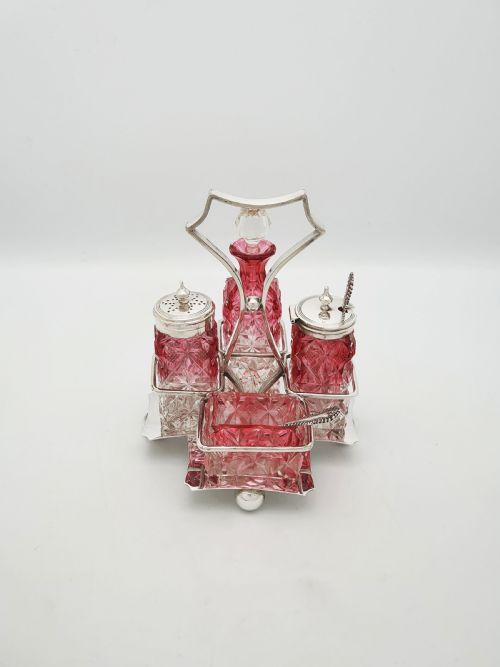
Makers shaped the glass bodies using techniques such as hand cutting, heavy lead crystal moulding, and flashing with colours like cranberry. These glass vessels often feature intricate cutting patterns to catch the light on the dining table.
Metal components, including collars, stoppers, and stands, utilise sterling silver, silver plate, or Sheffield plate. Workshops applied hallmarks to the silver mounts and frames to record the year and place of assay.
Structural frames incorporate materials like ebonised wood alongside silver-plated metalwork to support multiple bottles securely. Original stoppers and fitted mounts complete the construction of these functional tableware items.
Antique Glass Cruet Bottle Retail Price Guide 2026
Typical asking prices for glass cruet bottle among the pieces listed under this phrase on Sellingantiques today, from the lower quarter to the upper quarter. They describe what is for sale here now, not the wider market.
Listings feature glass cruet bottles spanning the Georgian, Victorian, Edwardian, and Art Deco eras in cut glass, cranberry glass, and crystal.
What varies in quality
The standard of cutting on the glass separates standard bottles from the finer examples on the page. Deep, crisp hand-cut facets in heavy lead crystal create a sharper refraction than simpler moulded glass.
The quality of the metal mounts and frames marks another distinction across the range. Substantial sterling silver mounts with clear hallmarks or heavy silver plating on complex frames indicate higher workshop standards than basic plated wares.
Levi & Salaman·Walker & Hall·Charles Thomas Fox·Elkington & Co·Hester Bateman·Wade Wingfield Wilkins·Daum
The Antique Glass Cruet Bottle Glossary
- Cruet set
- A matched collection of bottles and jars for holding condiments, typically held together in a metal or wooden stand. These sets sat on the dining table for self-service during meals.
- Sheffield plate
- A material made by fusing a thin sheet of sterling silver to a thicker copper base before rolling them together. This technique predates modern electroplating.
- Cranberry glass
- A rich red-pink glass coloured by the addition of gold chloride to the molten batch. It appears frequently in Victorian and Edwardian tableware.
- Sterling silver
- An alloy containing a high proportion of pure silver mixed with other metals for durability. British pieces carry hallmark stamps to verify this standard.
Antique Glass Cruet Bottle: Frequently Asked Questions
What is an antique glass cruet bottle used for?
These bottles served at the dining table to hold liquid condiments such as olive oil and vinegar for individual seasoning.
Dinners and lunches relied on them for accessible sauces before pre-bottled condiments became common.
How do I identify a Victorian cruet bottle?
Victorian examples often feature heavier cut glass patterns combined with ornate silver-plated frames or sterling silver mounts.
Stylistic cues draw on Gothic revivals, elaborate floral motifs, or novelty designs popular during the nineteenth century.
Are the stoppers original to the bottles?
Many surviving bottles retain their original glass or silver-mounted stoppers, which were ground to fit specific necks.
Checking for matching number marks or consistent wear helps determine if the stopper belongs to the bottle.
How do I clean an antique cruet bottle?
Gentle washing with warm water and mild soap preserves the delicate glass surfaces and old metal plating.
Harsh abrasives and chemical dips damage silver plate and historical glass finishes.