

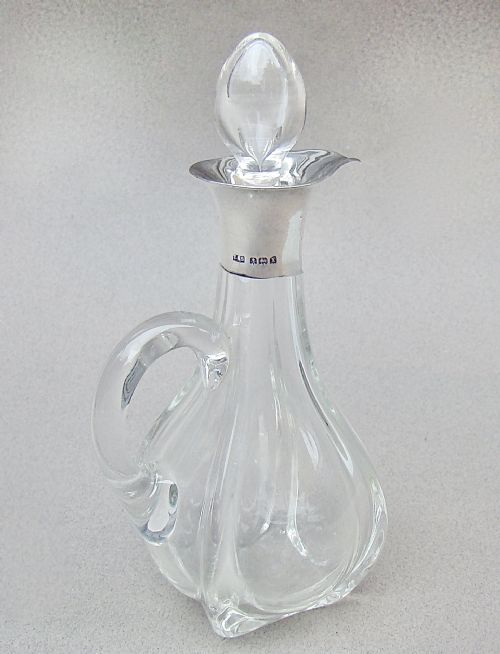
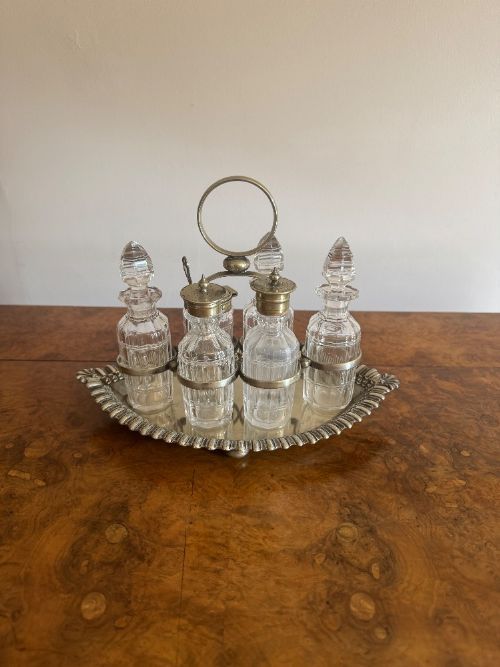
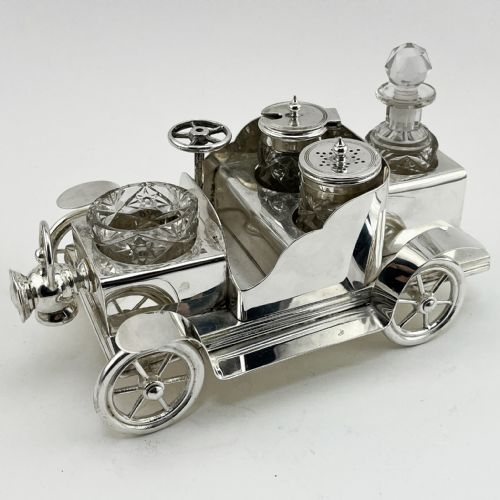
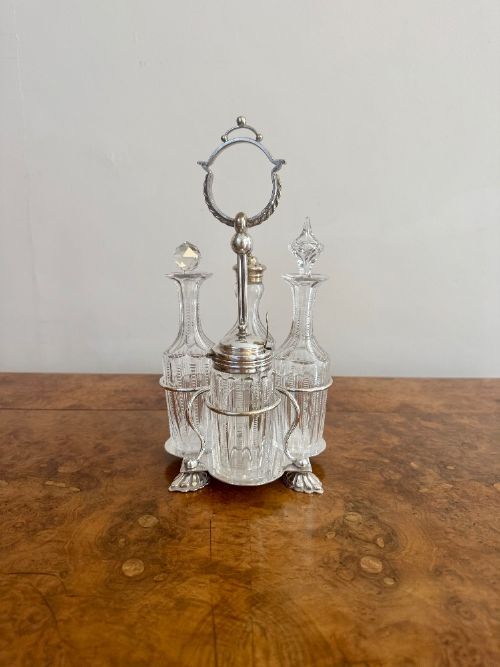
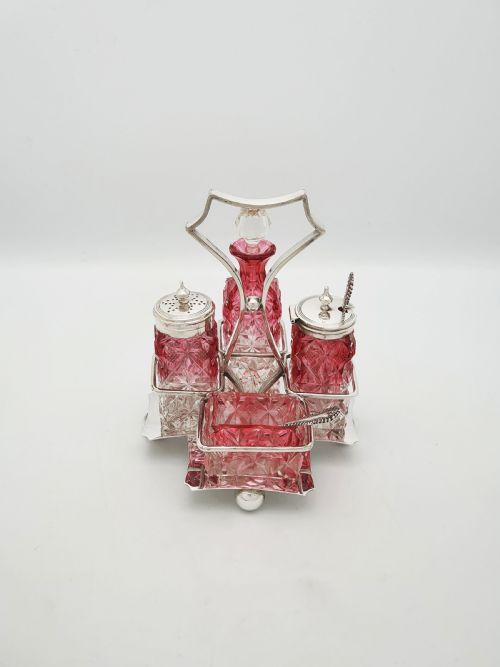


Silver Condiment Bottle
A silver condiment bottle is a functional table vessel that brings period elegance and craftsmanship to dining.
Silver Condiment Bottle
When searching for a silver condiment bottle, buyers encounter individual vessels or components belonging to larger cruet sets and stands. These pieces appear across Georgian, Victorian, and Edwardian periods, reflecting the formal dining habits of past centuries.
The most common formats on this page include cut glass bottles with silver mounts, standalone sterling silver or silver plated containers, and oil and vinegar vessels designed for tabletop service. Many survive within complete multi-bottle stands or as matched pairs.
Originating primarily from English workshops, these items demonstrate the shift in dining table presentation from the eighteenth century through the early twentieth century. Collectors and hosts select them for practical use or to complete partial antique cruet frames.
How they were made
Makers combined blown glass with sterling silver, silver plate, or Old Sheffield plate, utilising techniques like deep cut glass and cranberry flashing to catch the light. Mounts were shaped, hallmarked, and fitted closely to glass necks and bodies.
Silversmiths employed casting, stamping, and engraving for decorative collars and handles, while wood elements such as ebonised bases provided sturdy frames for multi-bottle sets.
Silver Condiment Bottle Retail Price Guide 2026
Typical asking prices for silver condiment bottle among the pieces listed under this phrase on Sellingantiques today, from the lower quarter to the upper quarter. They describe what is for sale here now, not the wider market.
Listings span Georgian, Victorian, and Edwardian periods, incorporating cut glass, sterling silver, silver plate, and ebonised wood.
What varies in quality
The distinction between standard items and exceptional pieces rests on the crispness of the cut glass facets and the thickness of the silver mounts. Maker attribution to notable workshops also elevates the standing of a piece.
Completeness alters valuation significantly, as finding original matching bottles within a silver frame or retaining correct silver labels denotes superior historical integrity.
Walker & Hall·Charles Thomas Fox·Elkington & Co·Hester Bateman·Wade Wingfield Wilkins·Matthew Linwood
The Silver Condiment Bottle Glossary
- Cruet set
- A matched collection of glass bottles or jars mounted in a metal frame for holding condiments at the table.
- Sheffield plate
- A material made by fusing a thin sheet of silver to a copper base, common in pieces dating before electroplating.
- Cranberry glass
- A rich red-pink transparent glass created by adding gold chloride to the molten batch during the Victorian era.
- Silver plate
- Base metal coated with a thin layer of pure silver, widely utilised for domestic tableware from the nineteenth century onward.
- Cut glass
- Glassware decorated by grinding facets or geometric patterns into the surface using a rotating wheel.
Silver Condiment Bottle: Frequently Asked Questions
How were silver condiment bottles used?
These vessels sat on dining tables to hold oils, vinegars, sauces, and dry seasonings for guests to serve themselves during meals.
They were housed in dedicated stands or placed directly on the tablecloth alongside larger serving dishes.
How do I tell Georgian from Victorian bottles?
Georgian pieces often feature heavier, hand-cut crystal with simpler, refined silver collars and distinct hallmarks from the late eighteenth or early nineteenth century.
Victorian examples tend toward more ornate ornamentation, including novelty designs, heavier silver plating, and colourful glass treatments like cranberry flashing.
Can I use these bottles for dining today?
Many antique bottles remain entirely functional for serving oils, vinegars, and sauces at modern dinner parties.
Ensure the glass is washed thoroughly and check that any cork or metal stoppers fit securely before filling.