


Antique Glass Caddy
When you search for an antique glass caddy, you step into a world of polished wood, cut crystal, and gleaming metal designed to hold tea, spirits, or condiments.
Antique Glass Caddy
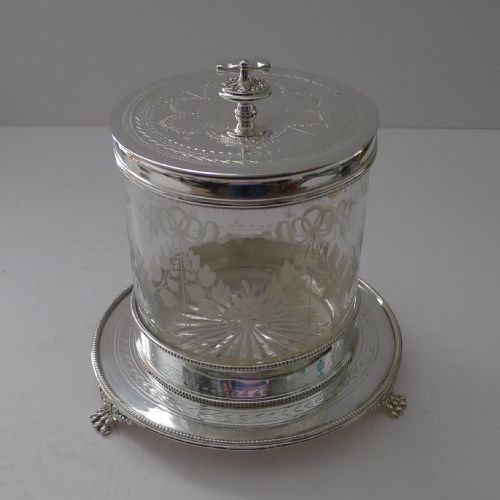
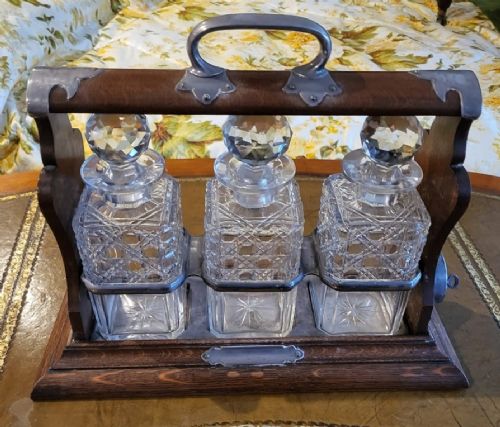
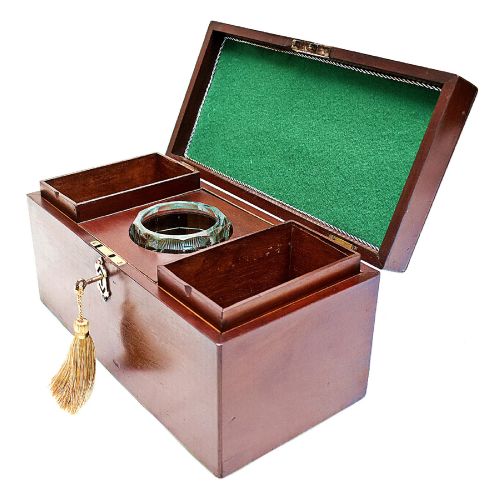
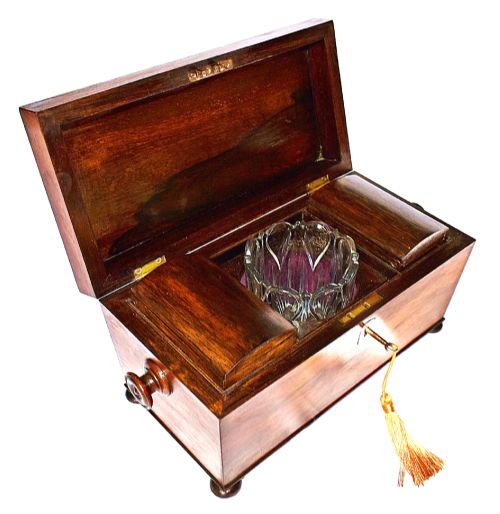
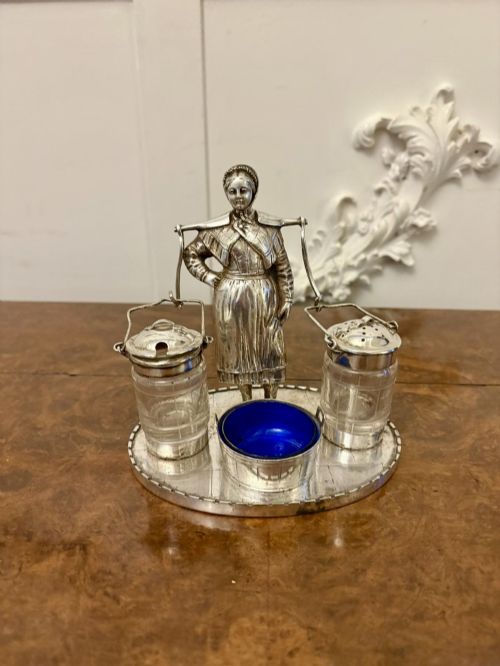
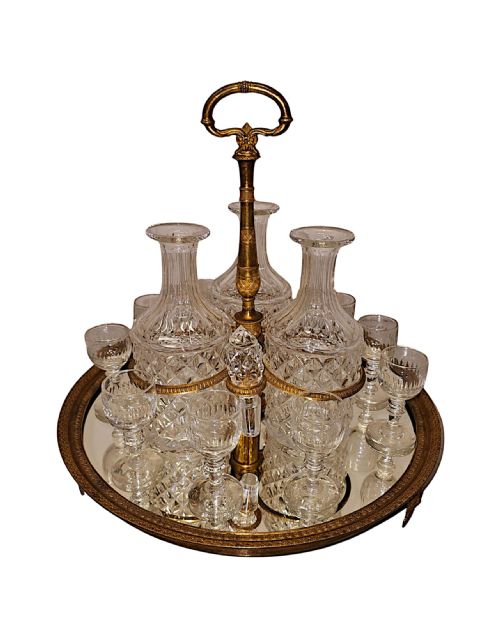
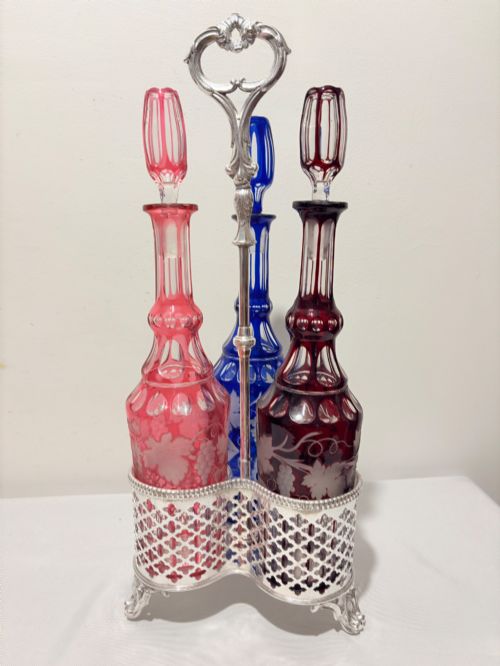
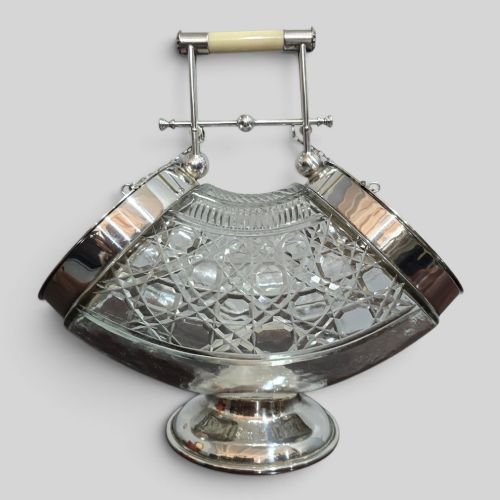
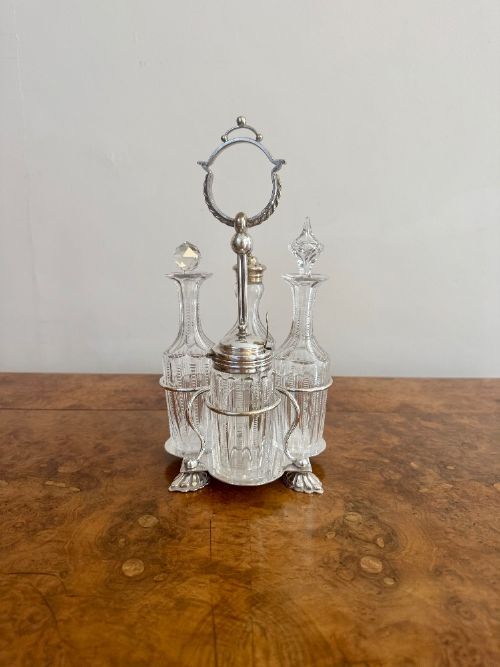
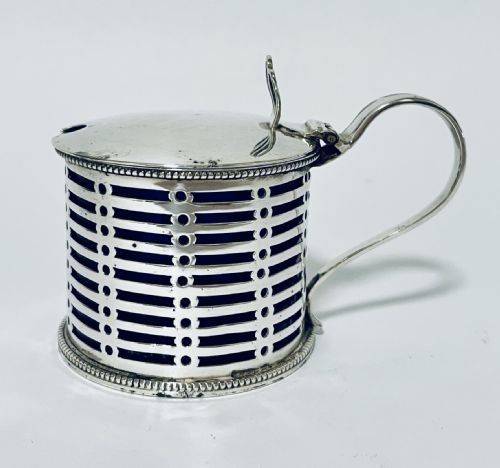
An antique glass caddy encompasses varied forms, from Georgian tea caddies with internal glass bowls to Edwardian biscuit barrels and elaborate tantalus sets. You will frequently encounter silver plated frames holding cut glass vessels, alongside wooden boxes housing crystal decanters.
The objects serve multiple domestic functions across the periods, functioning as tea containers, condiment stands, and liquor cabinets. Pieces emerge from the Georgian, Regency, Victorian, and Edwardian eras, reflecting changing social rituals in British and French homes.
Wooden structures often use mahogany, oak, or satinwood, while the glass components feature hobnail cutting, cranberry flashing, or plain blown forms. Metal mounts in silver plate, brass, or ormolu complete the construction.
How they were made
Glass vessels receive their patterns through deep cutting wheels or moulding techniques, producing faceted surfaces that catch the light. Skilled artisans shape lead crystal and standard glass to fit specific silver plated or brass stands and wooden boxes.
Cabinetmakers construct the wooden caddies using hardwoods like mahogany, satinwood, and oak, frequently incorporating parquetry or brass mountings. Metalworkers shape silver plate, ormolu, and sterling silver to form the handles, rims, and frames that secure the glass inserts.
Antique Glass Caddy Retail Price Guide 2026
Typical asking prices for glass caddy among the pieces listed under this phrase on Sellingantiques today, from the lower quarter to the upper quarter. They describe what is for sale here now, not the wider market.
Object forms span cruet sets, tea caddies, tantalus sets, condiment stands, biscuit barrels, and decanter sets.
What varies in quality
The crispness of the glass cutting distinguishes finer pieces, where facets are sharp and uniform across the surface. Heavier lead crystal and deeply etched cranberry flashed glass indicate higher standards of manufacture.
Joinery and metalwork finish dictate the overall standard of the piece, visible in tightly fitted wooden boxes and substantial silver plating over the metal frames. Original internal glass bowls and matching stoppers elevate the integrity of the surviving object.
Mappin Brothers·William Rudkins
The Antique Glass Caddy Glossary
- Tantalus
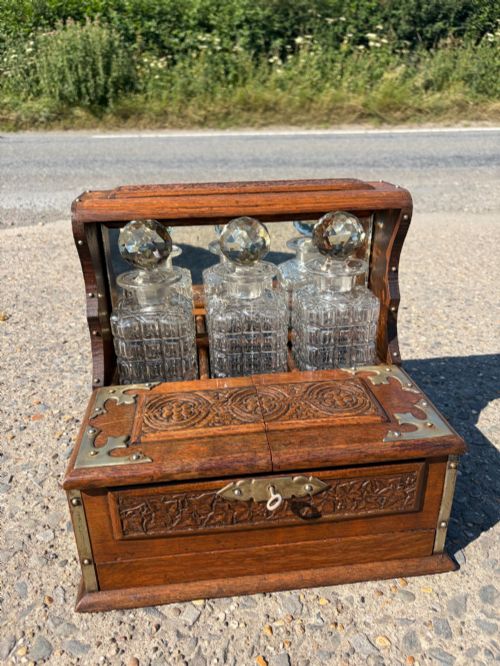
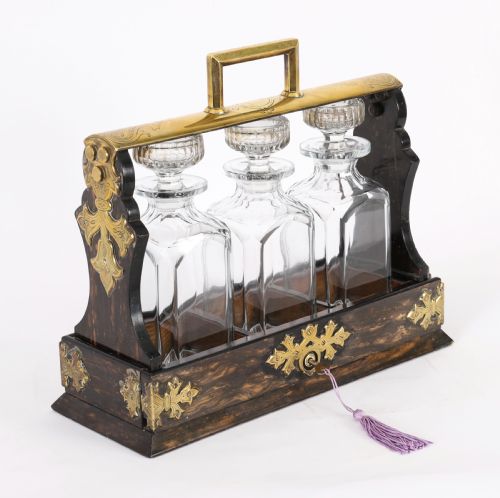
- A locking wooden frame that holds decanters securely, preventing access to the contents without a key. The mechanism typically bars the stoppers from being removed until the front bar drops.
- Cruet set
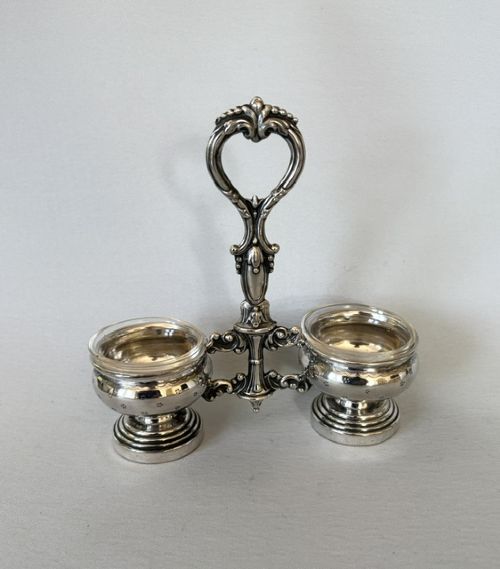
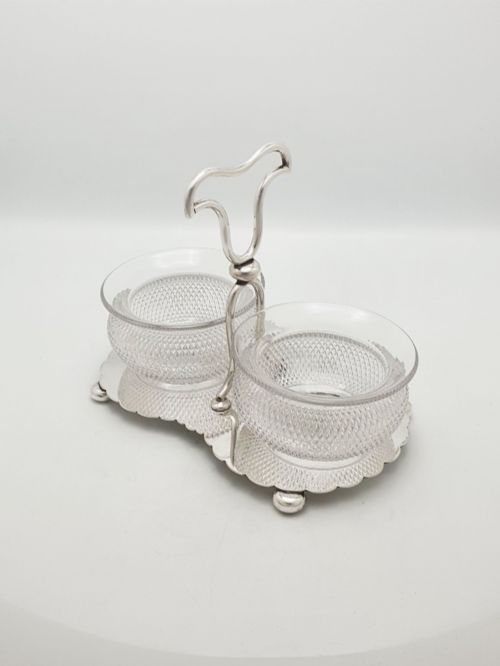
- A matched collection of glass bottles or cruets for oil, vinegar, mustard, and pepper, held in a metal stand. These frames frequently use silver plate and feature central carrying handles.
- Cranberry glass
- A rich red glass produced by adding gold chloride to the molten batch. It appears often in Victorian and Edwardian drinking vessels and condiment containers.
- Hobnail cut
- A decorative glass pattern featuring rows of sharp, projecting square pyramids. This heavy cutting style creates considerable sparkle and tactile texture.
- Sarcophagus form
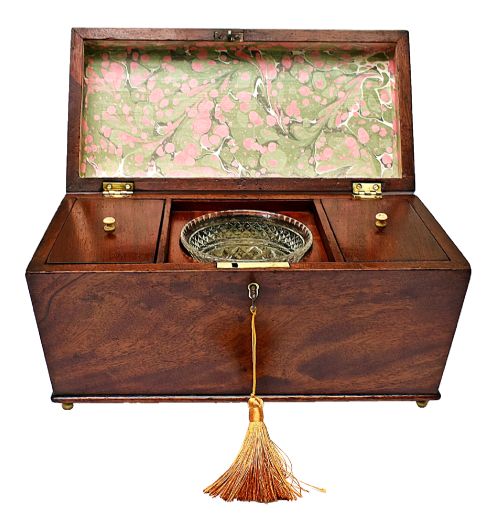
- A style of tea caddy or box shaped like a miniature stone sarcophagus, featuring a domed or peaked lid. Cabinetmakers used this architectural silhouette extensively during the Regency period.
Antique Glass Caddy: Frequently Asked Questions
What is an antique glass caddy used for?
These pieces served practical roles in the dining room and parlour, storing tea leaves, condiments, or spirits for guests. Interiors often contained glass bowls for mixing tea or dedicated spaces for crystal bottles.
Over time, the domestic purpose shifted from storing dry tea to holding liquid refreshments or table sauces. They functioned as portable hospitality stations for the household.
How do I date a glass caddy?
Dating relies on the combination of wood types, metalwork styles, and glass cutting techniques present in the piece. Georgian and Regency examples often feature mahogany or satinwood boxes with delicate inlay.
Victorian and Edwardian versions lean towards heavy silver plated frames, oak tantalus stands, and distinctively cut crystal. Looking at the construction methods of the housing helps narrow down the decade of origin.
How do I care for my antique glass caddy?
Gentle cleaning with a soft, dry cloth protects the wooden surfaces and metal mounts from moisture damage. Glass inserts should be washed by hand in lukewarm water without harsh detergents.
Keep wooden caddies away from direct sunlight and extreme temperature changes to prevent the wood from warping. Proper maintenance preserves the original finish of both the glass and its housing.
What is the difference between a tantalus and a tea caddy?
A tantalus is a locking stand designed to display decanters of spirits securely without allowing easy access to the drinks. They are typically made of oak or mahogany with heavy brass or silver plated mountings.
A tea caddy is a smaller box built specifically to store dry tea leaves, often featuring internal compartments and a small glass mixing bowl. While both use glass and wood, their original domestic functions are entirely separate.