
Antique Glass Bird
These pieces of antique glass bird work capture the delicate forms of avian subjects through pressed, moulded, or stained glass from the nineteenth and early twentieth centuries.
Antique Glass Bird
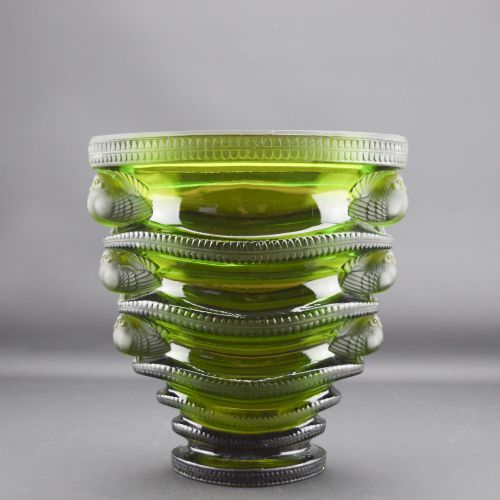
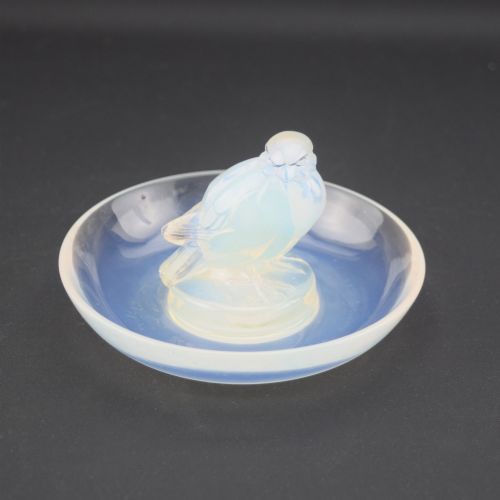
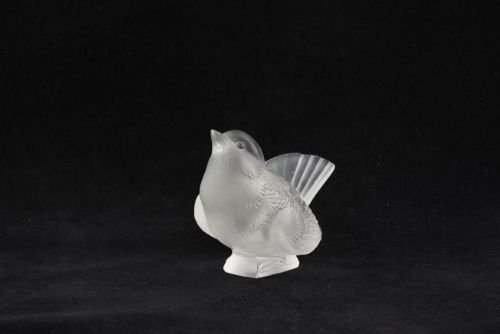
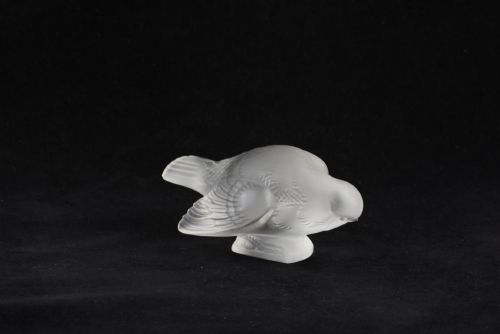
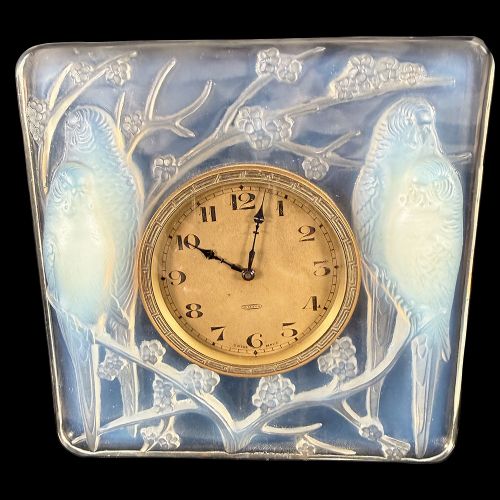
When you search for an antique glass bird, you encounter sculptural paperweights, decorative vessels, and architectural window panels representing avian forms. The most frequently met examples on this page are the pressed and opalescent glass figurines produced during the Art Deco period, particularly the sparrows and finches modelled by René Lalique. These objects combine utilitarian or purely decorative functions with precise animal anatomy.
The material evidence extends from mid-nineteenth century cranberry glass decanters engraved with birds among vines to leaded stained glass windows depicting birds on branches. Pieces span the Victorian, Edwardian, and Art Deco styles, originating primarily from English and French makers. Each item demonstrates how different glassworking techniques interpret the natural world.
How They Were Made
Makers utilised pressing and moulding techniques to shape molten glass into solid figural paperweights or hollow vessels. Acid staining and blue or grey patination were frequently applied to the recessed details of Art Deco models to accentuate the feathers and form against a frosted background.
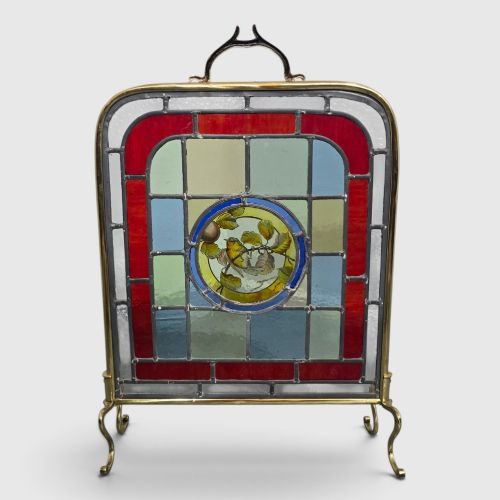
Window panels and architectural pieces were constructed using lead cames to join pieces of stained, painted, or flashed glass. Engraved decanters and jugs achieved their bird and foliage motifs through wheel-cutting or chemical etching directly onto the vessel surface.
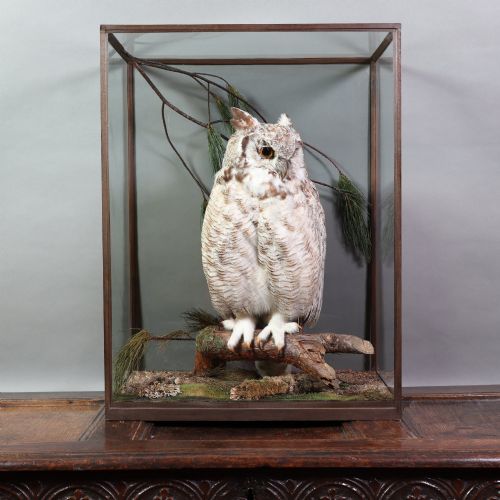
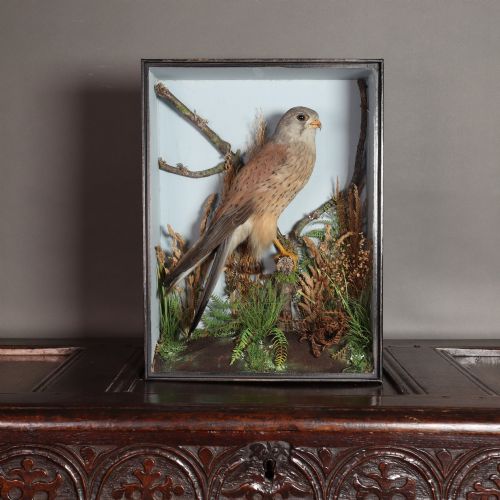
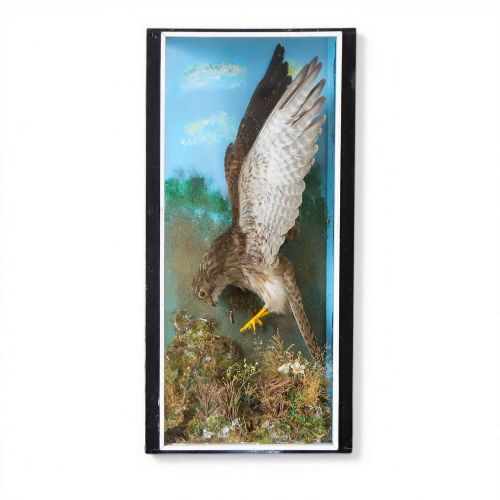
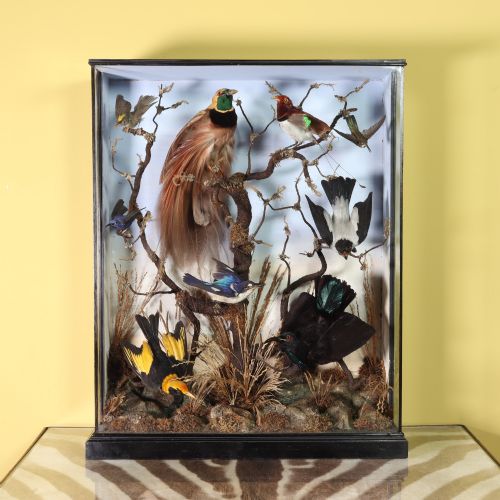
Some glass birds share shelf space with stuffed owls and taxidermy hummingbirds, proving the Victorians wanted feathers everywhere.
What Varies in Quality
Quality rests primarily on the crispness of the moulding and the depth of the finish in pressed figural pieces. Superior examples retain their original surface patination and show minimal wear to the high points of the glass relief.
In stained or painted glass panels and vessels, the skill of the artisan shows in the precision of the lead lines and the subtlety of the enamel firing. The clarity of the glass and the articulation of the bird's anatomy distinguish finer works from standard production items.
Rene Lalique
The Antique Glass Bird Glossary
- Opalescent glass
- Glass that milky or bluishly translucent, scattering light to create a shimmering effect often seen in twentieth-century figural sculptures.
- Stained glass
- Glass coloured by the addition of metallic oxides during its manufacture, or painted and fired on the surface for windows and decorative panels.
- Lead came
- A slender rod of cast lead with a grooved channel used to hold individual pieces of glass together in a window or panel.
- Cranberry glass
- A rich red transparent glass produced by the addition of gold chloride to the molten batch, popular during the Victorian era for tableware and decanters.
- Socle
- A short plinth or pedestal supporting a sculpture, paperweight, or figural object.
Antique Glass Bird: Frequently Asked Questions
How do I date an antique glass bird?
Dating relies on stylistic indicators such as the geometric lines of Art Deco design or the heavy ornamentation of the Victorian period. Maker signatures, registration marks, and the manufacturing technique also help establish the era of production.
Moulded glass figurines often bear acid-etched signatures typical of twentieth-century French studios, whereas engraved tableware reflects nineteenth-century English workshop practices.
Were these glass birds meant for display or use?
Many items served dual purposes as both decorative art and functional objects. Figural paperweights were designed for desks, while decanters, jugs, and stained glass windows combined practical utility with illustrative bird motifs.
Desk ornaments and paperweights remained purely aesthetic or domestic accessories, whereas window panels and vessels fulfilled daily household roles.
How should I display my glass bird?
Place your piece in a well-lit location where natural light can pass through the translucent or opalescent glass. Shelving near a window enhances the depth of coloured and frosted surfaces.
Ensure the display area is stable and protected from heavy foot traffic to prevent accidental knocks, particularly for delicate figurines mounted on socles.
What is the difference between pressed and blown glass birds?
Pressed glass involves forcing molten material into a metal mould using a plunger, producing sharp details and heavy walls. Blown glass is shaped by inflating molten metal through a blowpipe, resulting in lighter vessels with softer contours.
Figurines and solid paperweights are typically pressed or cast, while decanters and jugs generally begin as blown forms before receiving engraved decoration.