
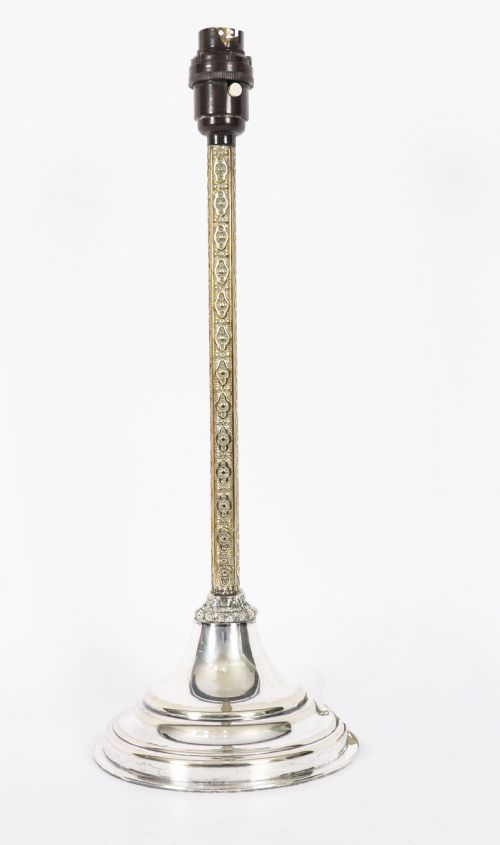
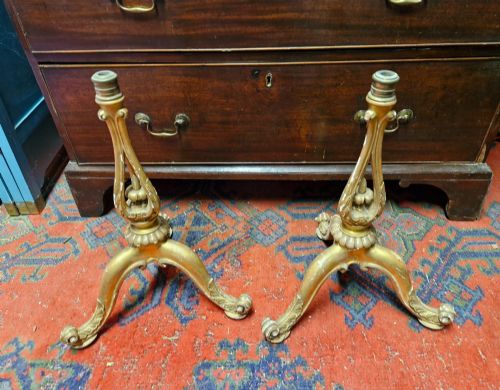
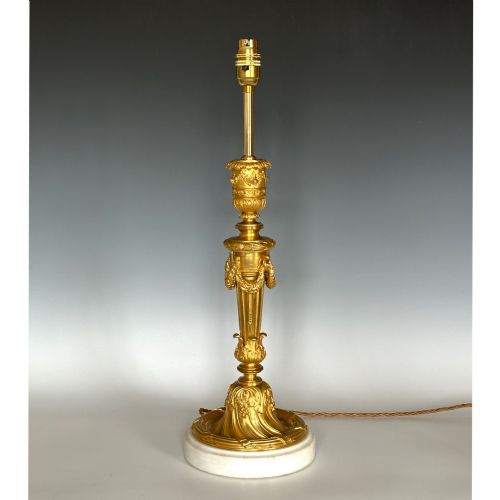
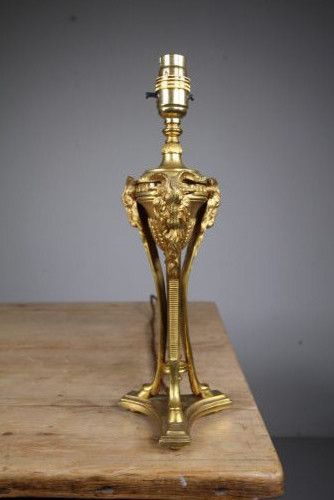
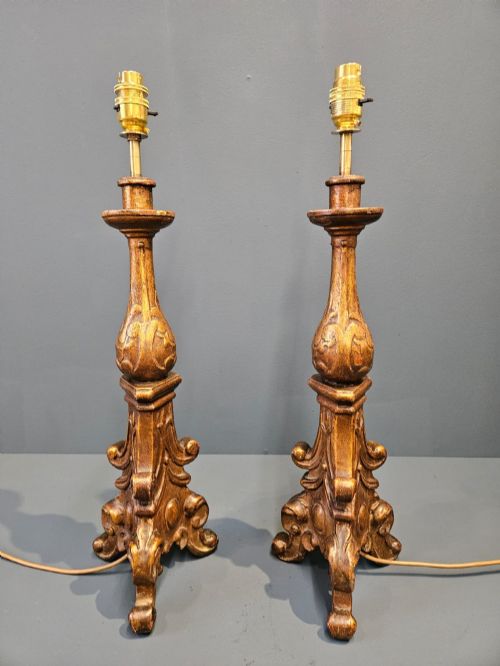


Antique Gilt Candlestick Lamp
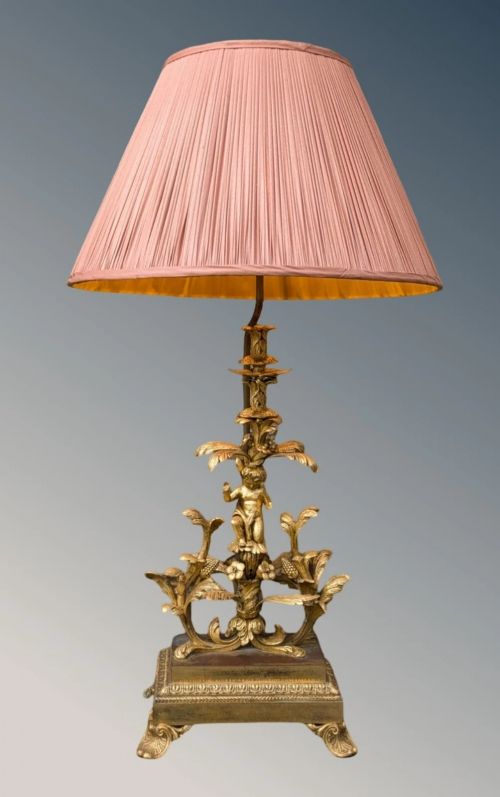
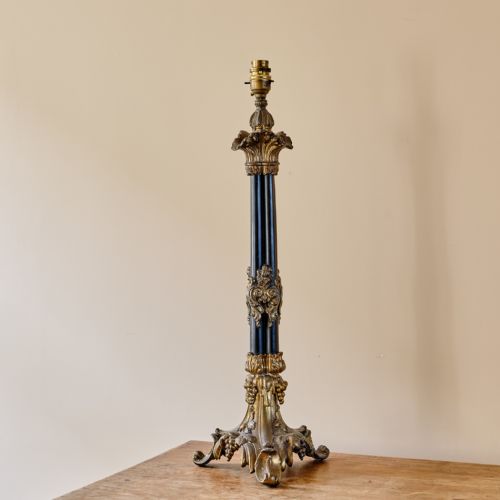
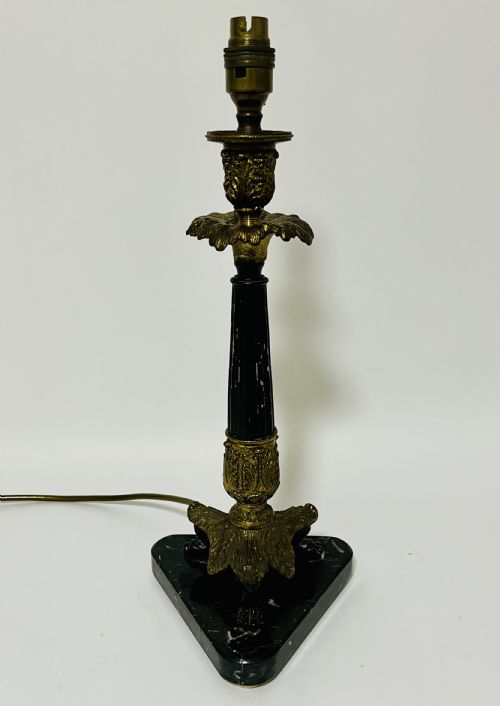
These antique gilt candlestick lamps unite past illumination with enduring decoration, transforming former altar pieces and boudoir standards into striking focal points.
Antique Gilt Candlestick Lamp
An antique gilt candlestick lamp bridges historical interior lighting and decorative metalwork, frequently originating from converted altar sticks or candelabras. Buyers exploring this category encounter pieces spanning from the eighteenth century through the Victorian era and into the early twentieth century.
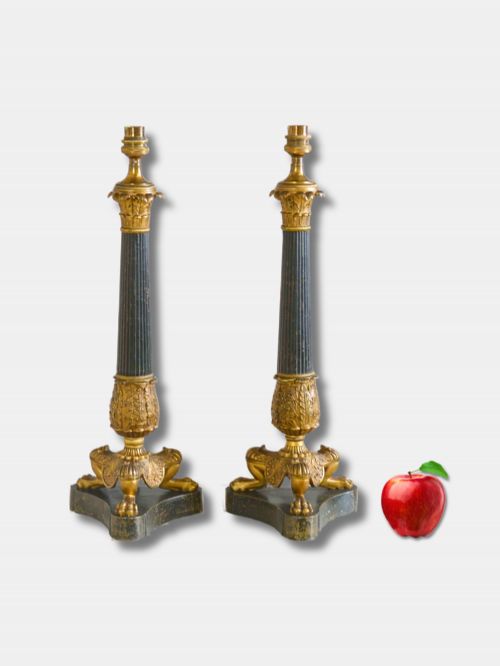
The selection ranges from French Empire and Rococo Revival forms to Italian Baroque designs. Table lamps and standard lamps dominate the offerings, often appearing as matched pairs utilising carved wood, ormolu, or gilt bronze.
Origins stretch across England, France, Italy, and Spain, bringing distinct regional carving traditions and metal-casting methods into domestic spaces. Many items retain structural elements from earlier lighting eras before conversion for modern electrical use.
How They Were Made
Casting and fire-gilding formed the foundation for metal pieces, utilising bronze, brass, or ormolu to achieve deep metallic lustre. Artisans applied mercury gilding techniques to metals, creating durable surfaces that reflect ambient light effectively.
Carved timber supports relied on gesso and gold leaf applications, particularly evident in Italian and Spanish church pieces. Craftsmen shaped solid woods before building up delicate surface layers for subsequent gilding.
The inventory combines nineteenth-century French ormolu with eighteenth-century Spanish and Italian giltwood examples.
What Varies in Quality
Depth of chisel work in carved giltwood and the crispness of chased detail in ormolu define the upper tier of production. Superior examples maintain intact gilding without heavy abrasion, showing sharp architectural or organic motifs.
Substantial weight and balanced proportions distinguish finer metal casts from lighter production pieces. Original mounts, matching bases, and harmonious conversions elevate the integrity of the lamp.
Mappin And Webb·Jean Demosthene Dugourc
The Antique Gilt Candlestick Lamp Glossary
- Ormolu
- Finely chased and gilt bronze used extensively in French decorative arts. This technique produces a rich golden finish on metal mounts.
- Gesso
- A plaster mixture applied to wood surfaces as a base for gilding. It allows carvers to achieve smooth contours before applying gold leaf.
- Pricket
- A sharp metal spike on a candlestick designed to hold a candle. Altar lamps frequently incorporate this traditional feature into their design.
- Parcel Gilt
- A finishing method where only specific areas of an object receive gilding. This highlights particular carved details against a contrasting background.
- Candelabra
- A branched lighting fixture holding multiple candles. Many antique examples later undergo conversion to electrical wiring.
Antique Gilt Candlestick Lamp: Frequently Asked Questions
How do I identify a converted candlestick lamp?
Converted lamps often retain original drip pans, prickets, or threading holes originally intended for wax collection and support.
Closer inspection reveals internal wiring channels fitted during twentieth-century adaptation without destroying primary historical surfaces.
Are these lamps supplied as pairs?
Many listings feature symmetrical pairs originating from formal mantelpieces, altars, or drawing room side tables.
Single pieces also appear frequently, surviving independently from larger sets or grander candelabra arrangements.
Which periods are most common?
Nineteenth-century examples dominate the available selection, encompassing Victorian production alongside French Empire and Rococo Revival revivals.
Earlier eighteenth-century specimens rely predominantly on carved giltwood and heavy church metalwork.
How do I care for gilt surfaces?
Dust giltwood and ormolu gently using a soft, dry brush to prevent abrasion to the delicate metallic leaf.
Avoid liquid cleaners and chemical polishes that strip historical mercury gilding or damage underlying gesso layers.