


Antique Gilt Candleholders
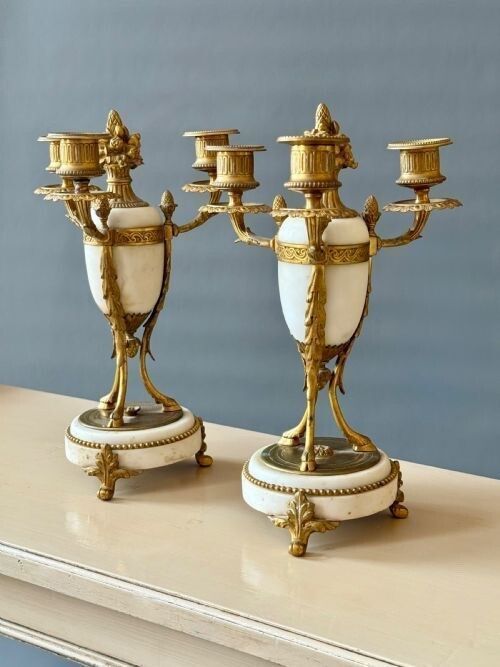
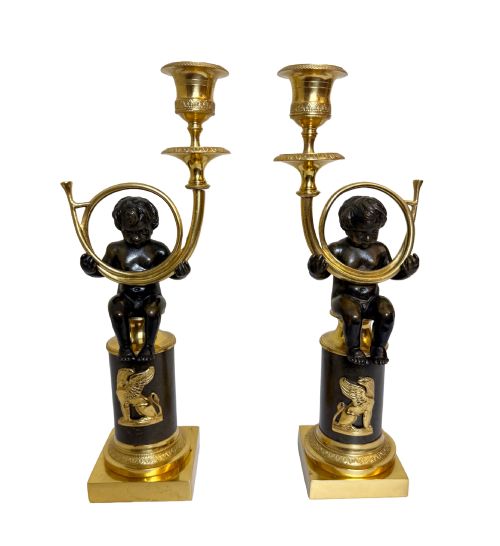
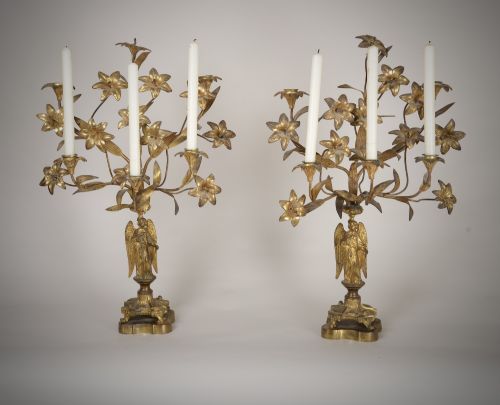
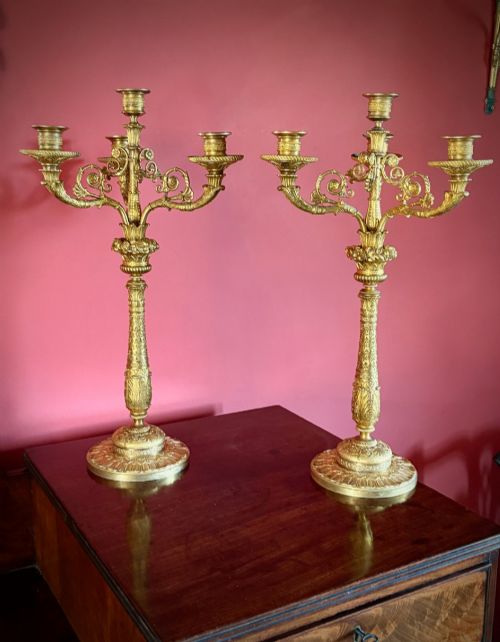
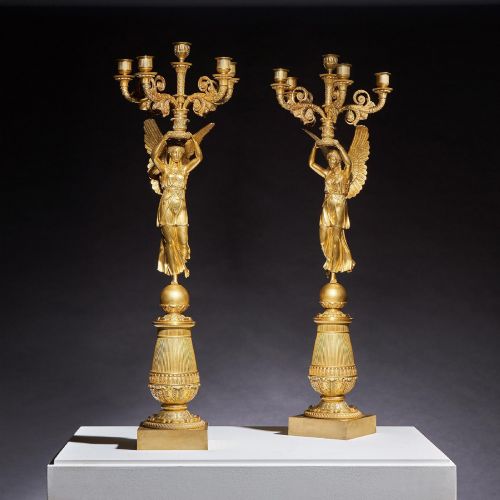
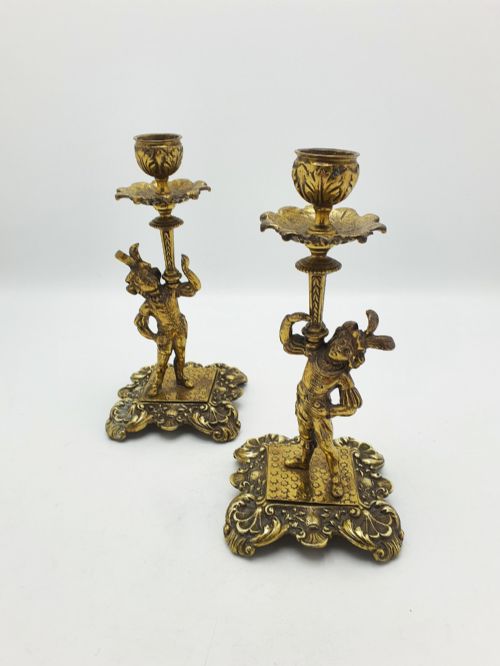
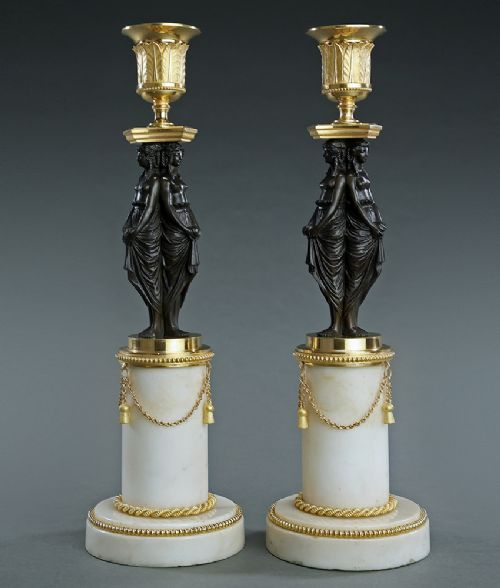
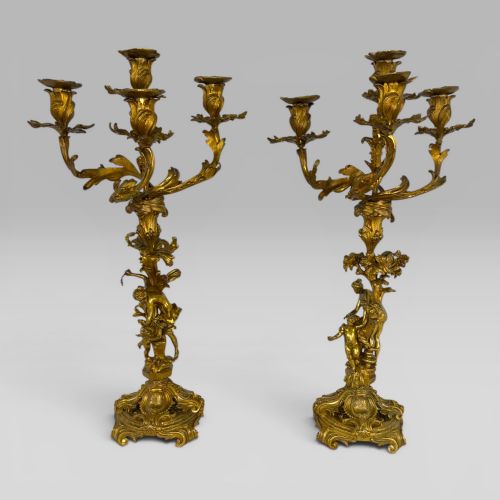
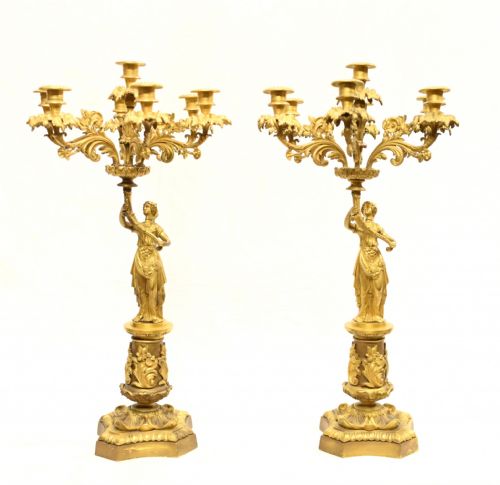
These antique gilt candleholders bring nineteenth-century French and English decorative metalwork into focus through bright gilding, warm bronze, and heavy marble bases.
Antique Gilt Candleholders
When you search for antique gilt candleholders, you encounter a variety of nineteenth-century lighting forms, ranging from single candlesticks to multi-branch candelabra and wall sconces. These items served both practical illumination and decorative display in period interiors.
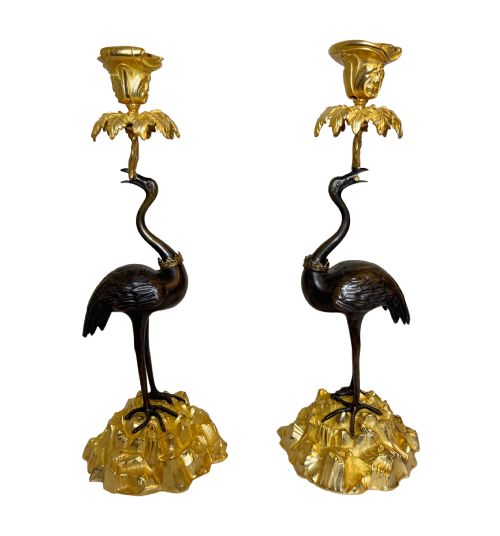
The selections on this page are dominated by French and Victorian designs, frequently pairing cast bronze or brass with mercury gilding or ormolu. You will frequently find figures such as cherubs, caryatids, and birds integrated into the structural stems.
Many examples incorporate contrasting materials, pairing white or dark marble plinths with polished metal components. Others introduce porcelain elements or cloisonné sections beneath the candle nozzles.
How they were made
The creation of these metal pieces relied on lost-wax or sand casting, producing detailed sculptural forms in bronze or brass that were subsequently chased by hand to sharpen the motifs. Ormolu components received an applied amalgam of mercury and gold, heated to drive off the mercury and leave a durable golden surface.
Marble bases were turned on lathes or sawn to shape, then polished and drilled to receive the metal stems and fixing bolts. Assemblages were held together by threaded internal rods, securing multi-branch arms and drip pans tightly to the central columns.
Flamingos and storks occasionally stand in for standard classical figures, supporting candle sockets on nineteenth-century metal stems.
What varies in quality
The distinction between standard production and exceptional work lies primarily in the crispness of the hand-chasing on the metal surfaces. Superior castings retain sharp feather, drapery, and facial details, whereas lesser examples show softened contours from worn production moulds.
Weight and construction method also separate tiers of quality, with finer pairs utilising heavier gauge bronze and robust internal threading rather than thin stamped brass or loose components.
Pierre Philippe Thomire·Claude Clodion·Rabiat
The Antique Gilt Candleholders Glossary
- Ormolu
- A golden surface finish created by applying a mercury and gold mixture to a bronze base and heating the metal. This technique produced a deep, lasting lustre characteristic of eighteenth and nineteenth-century French metalwork.
- Candelabra
- A branched lighting fixture designed to hold multiple candles simultaneously. These pieces often feature removable upper arms to convert the base into a single candlestick.
- Patinated bronze
- Metal that has been treated with chemical solutions to create a dark, aged surface tone. This dark finish frequently contrasts with bright gilt highlights on figural stems.
- Mantle lustre
- A decorative ornamental object featuring hanging glass or crystal prisms mounted around a central candle column. They stood on fireplace shelves to reflect ambient light.
- Caryatid
- A sculpted female figure serving as an architectural support or structural column. In these items, the figure forms the upright stem holding the candle nozzle.
Antique Gilt Candleholders: Frequently Asked Questions
How do I identify French Empire gilt metalwork?
French Empire pieces typically display strict classical motifs such as caryatids, dolphins, swans, and military trophies cast in heavy bronze.
The gilding on these items often combines matte and burnished areas to create strong visual contrast across the sculptural surface.
Were these items meant for daily use?
In their original nineteenth-century context, these gilt metal fixtures stood on drawing-room mantelpieces, sideboards, and pier tables to provide ambient light during evening gatherings.
They were decorative status objects as much as practical light sources, frequently paired with matching mantel clocks and wall mirrors.
What periods do these metal candleholders span?
The examples on this page primarily date from the nineteenth century, encompassing Regency, Victorian, and Edwardian production alongside French Rococo Revival and Empire styles.
Earlier items from the eighteenth century appear occasionally alongside later nineteenth-century interpretations of those earlier aesthetic movements.