
Antique Gilt Bracket
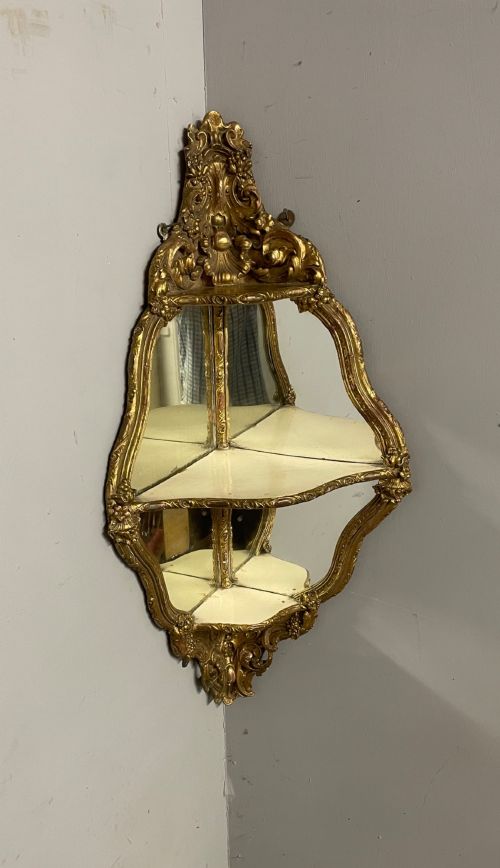
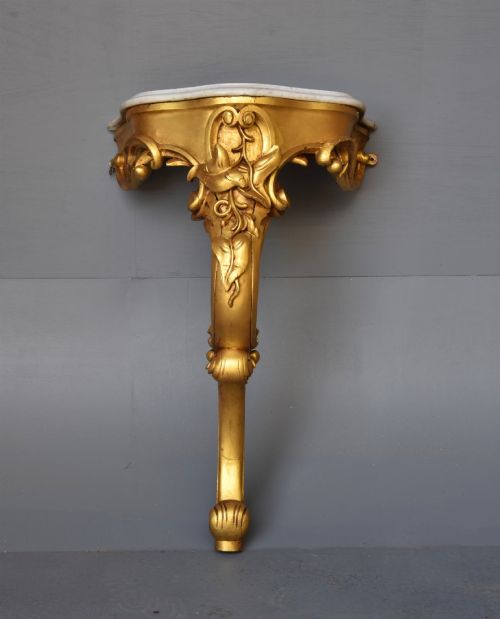
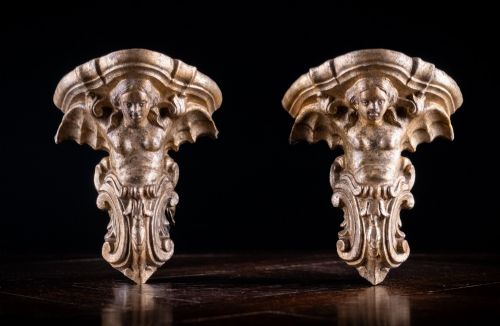
An antique gilt bracket brings sculpted timber and gilded surfaces to a wall, holding a clock, a figure or a candle.
Antique Gilt Bracket
An antique gilt bracket encompasses architectural shelves, console supports, and structural ledges designed to project from a wall. These items provide a raised platform for ornaments, mantel clocks, or lighting, serving both a functional purpose and an ornamental role within a room.
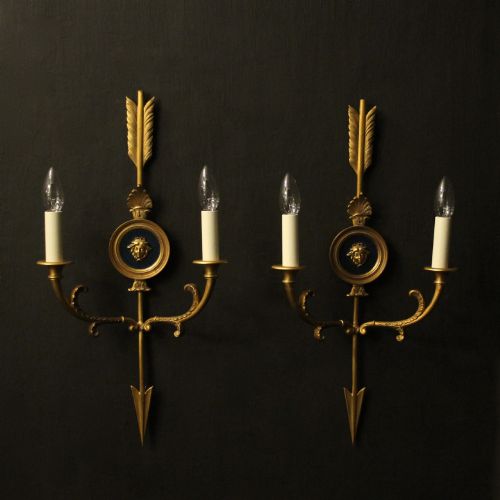
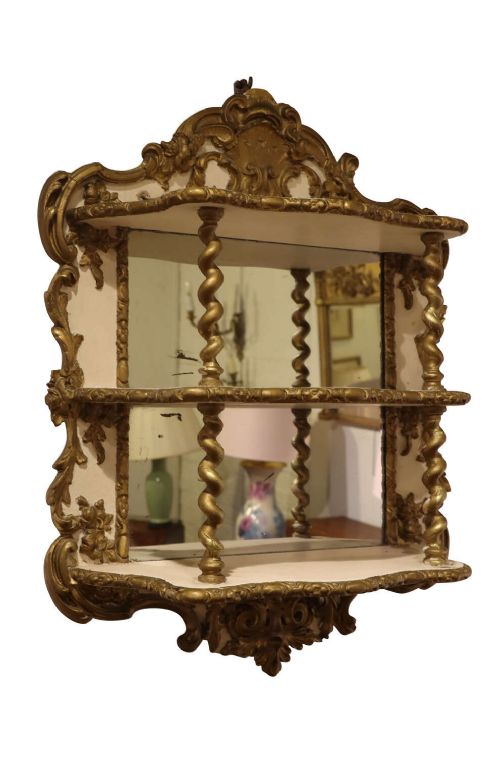
The selections span small timber shelves and mirrored wall brackets alongside larger console tables and clock supports. Pieces frequently emerge in pairs, reflecting formal interior schemes from past centuries.
Originating largely from nineteenth-century workshops, these supports display influences ranging from ornate French Rococo to restrained Neoclassical designs. Buyers encounter carved timber, gesso, and cast bronze forms across the collection.
How they were made
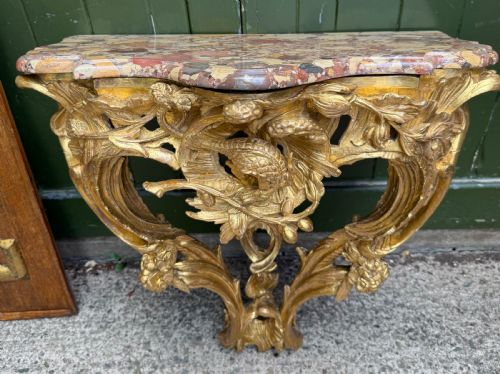
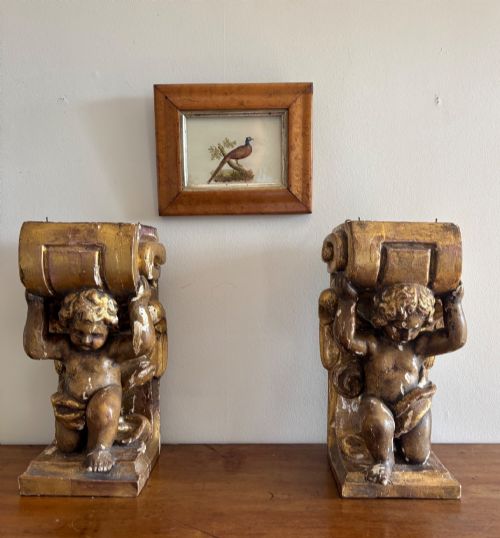
Carved giltwood forms the foundation of many pieces, requiring skilled artisans to shape timber before applying fine layers of gold leaf over preparation layers. Gesso often provides a smooth base for intricate relief work, allowing sharp definition on scrolls and foliage.
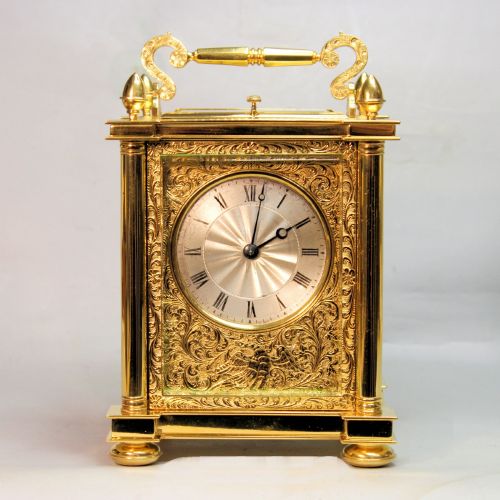
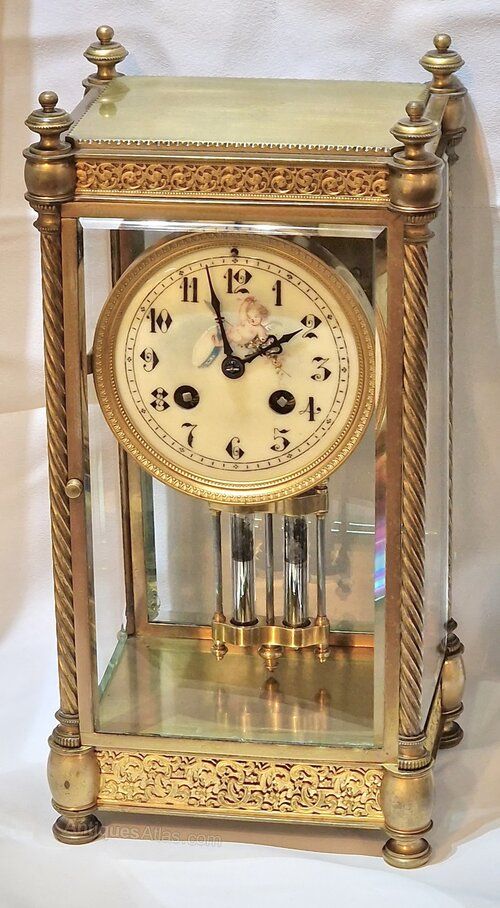
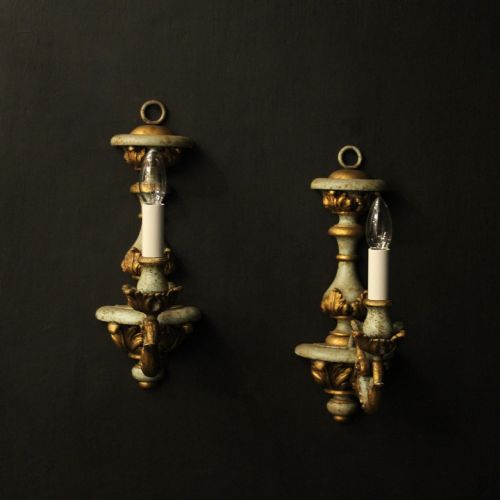
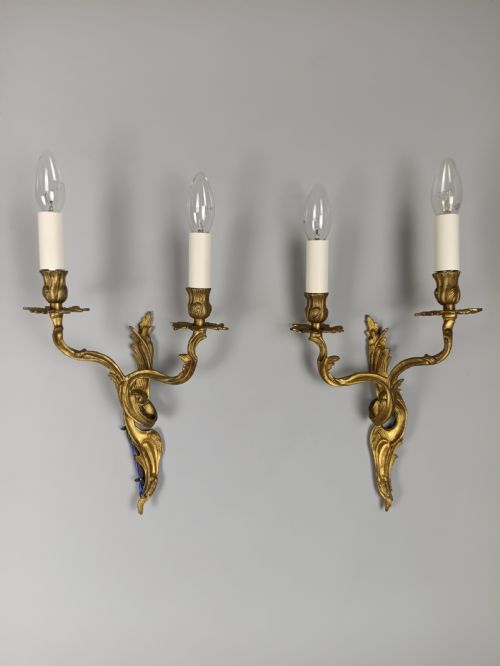
Cast metals such as brass, bronze, and ormolu appear frequently on clock brackets and wall lights, shaped through foundry work and finished with mercury gilding or modern electroplating. These metallic elements bring weight and structural durability to ornate supporting arms and mounts.
Periods represented span from the seventeenth century through the Victorian era into the 1930s.
What varies in quality
Depth and crispness of hand-carving distinguish superior timber brackets from simpler moulded versions, where human touch brings life to acanthus leaves and avian motifs. The preservation of original gilding surfaces and the absence of heavy modern over-painting heavily influence the character of a piece.
Material choice dictates the structural integrity and visual depth, with dense hardwoods and heavy cast bronzes holding fine detail far better than softer composition ornaments. Integration between the shelf and its backplate reveals the underlying joinery and thoughtfulness of the original maker.
Cousens And Whiteside
The Antique Gilt Bracket Glossary
- Giltwood
- Timber carved and coated with fine gold leaf. This technique creates a radiant surface that catches interior candlelight or daylight.
- Gesso
- A plaster mixture applied to wood surfaces as a smooth base for gilding. It allows craftsmen to mould crisp relief details before applying gold leaf.
- Ormolu
- Gilded bronze used for decorative mounts and clock fittings. The finish combines the rich tone of gold with the durability of cast bronze.
- Girandole
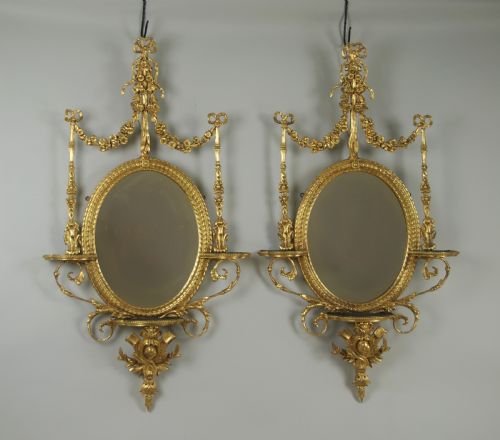
- A branched wall light or sconce incorporating a mirror backplate. The reflective glass multiplies the illumination within a room.
- Console table
- A table supported by wall brackets rather than independent legs. These pieces fit snugly against vertical surfaces in formal halls and reception rooms.
Antique Gilt Bracket: Frequently Asked Questions
What is an antique gilt bracket used for?
An antique gilt bracket functions primarily as an ornamental wall shelf for displaying small sculptures, vases, or clocks. They lift decorative objects off standard furniture surfaces to create focal points on plain walls.
Historically, larger versions also served as structural supports for console tables or carried heavy candelabra arms. Today, collectors utilise them to introduce architectural depth and metallic warmth into domestic interiors.
How do I identify French Rococo brackets?
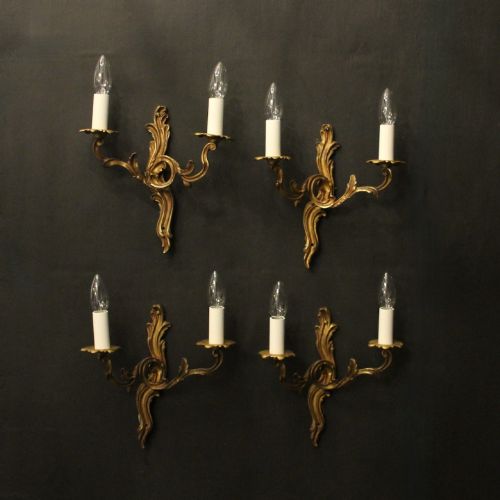
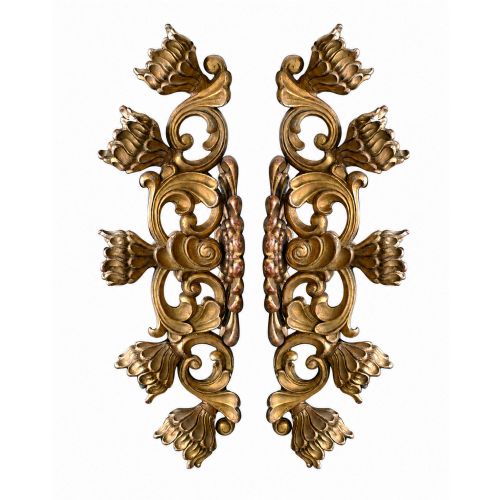
French Rococo brackets display asymmetric C-scrolls, shell motifs, and exuberant floral carvings. The style avoids straight lines in favour of flowing, organic contours that appear natural and unforced.
Surfaces often combine carved giltwood with gesso details or Ormolu mounts. Eighteenth and nineteenth-century interpretations lean heavily on these curving, theatrical silhouettes.
Where should I hang a wall bracket?
Wall brackets require secure fixing to solid masonry or properly located timber studs due to their weight. Placing them at eye level or above companion furniture pieces ensures proper visual balance in a room.
Pairings of brackets work well flanking doorways, fireplaces, or large mirrors to create symmetry. Avoiding damp environments protects the underlying timber and delicate gesso or gilt surfaces.
Are these brackets strong enough for heavy items?
Solid timber and bronze brackets possess significant load-bearing capacity for clocks and ornaments. However, the integrity depends entirely on the wall fixings and the joint where the shelf meets the backplate.
Lightweight gesso or composition pieces suit purely decorative objects rather than heavy bronze clocks. Assessing the backplate construction reveals whether a piece was built for display or structural support.