



Antique Gilded Timepiece
These antique gilded timepiece selections bring together nineteenth-century brass, ormolu, and marble designs built to anchor a mantelpiece.
Antique Gilded Timepiece
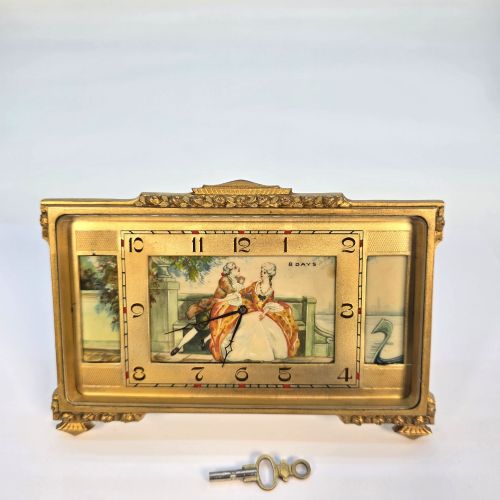
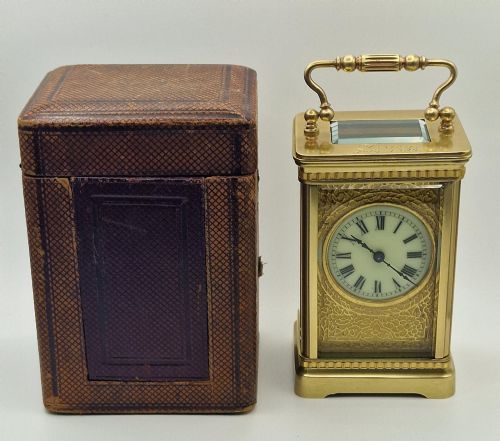
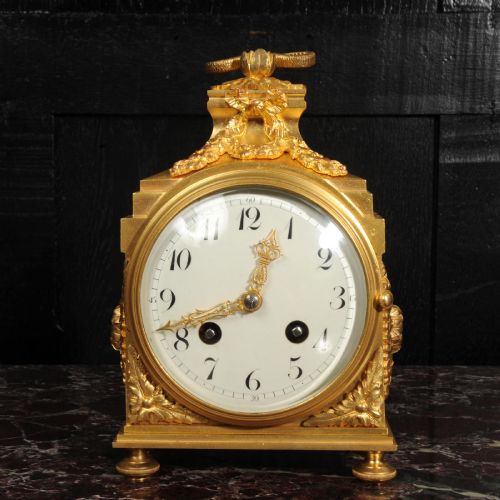
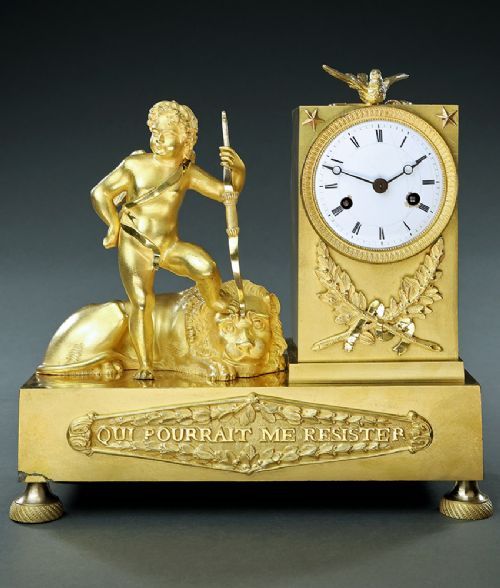
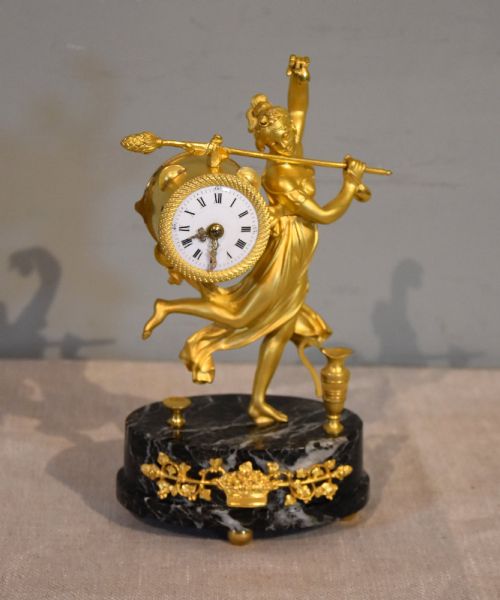
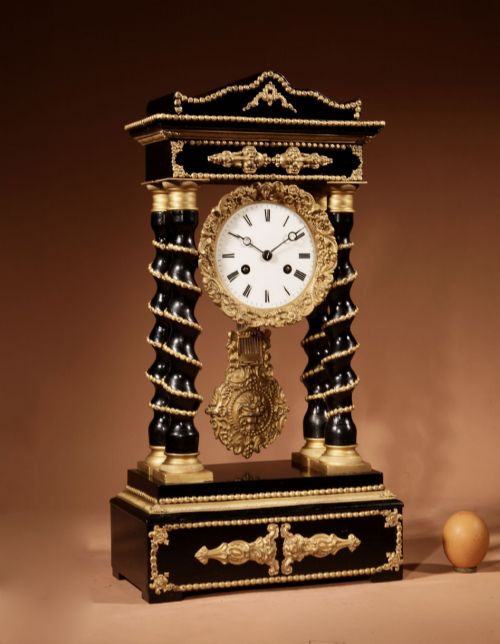
When you search for an antique gilded timepiece, you encounter nineteenth-century French and Victorian clocks designed to sit on a mantel or desk. The selection ranges from robust portico clocks and porcelain-mounted mantel pieces to portable brass carriage clocks.
Most items on this page originate from French workshops spanning the Victorian era through eighteen-ninety. They employ styles such as French Empire, Louis XVI, and Rococo Revival, incorporating cast metal cases and enamel dials.
Mantel clocks dominate the selection, accompanied by four-glass clocks and wall-hanging cartel clocks. Enamel, porcelain, and glass frequently complement the gilded frames.
Materials and Construction
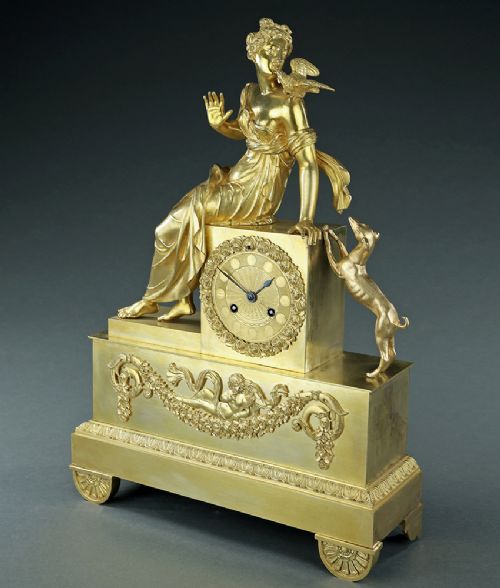
Maker workshops cast cases in bronze, brass, and ormolu, applying mercury gilding or modern electroplating to achieve a brilliant gold finish. These metal mounts often combine with contrasting green or red marble, ebonised wood, and giltwood.
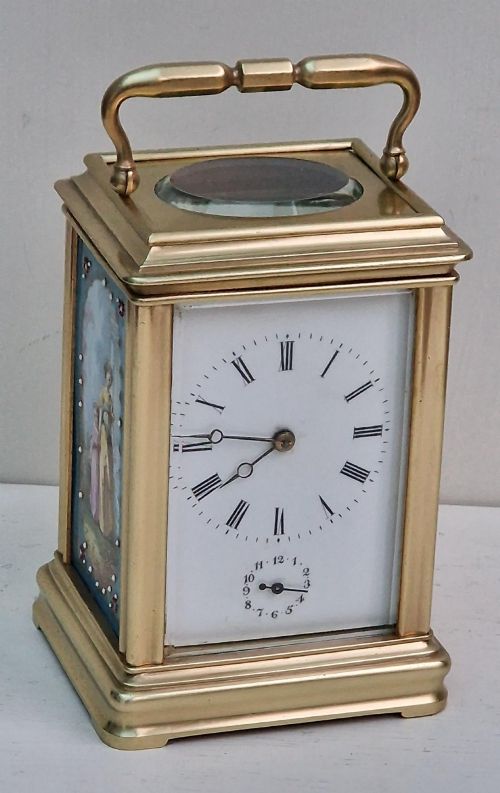
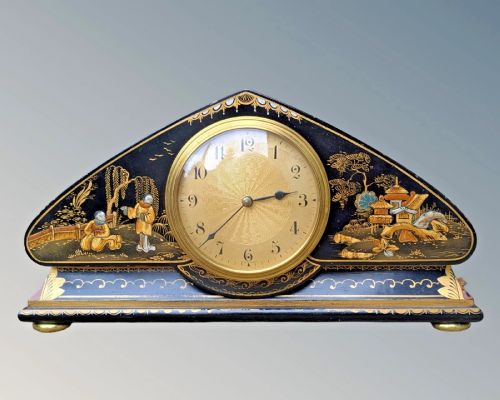
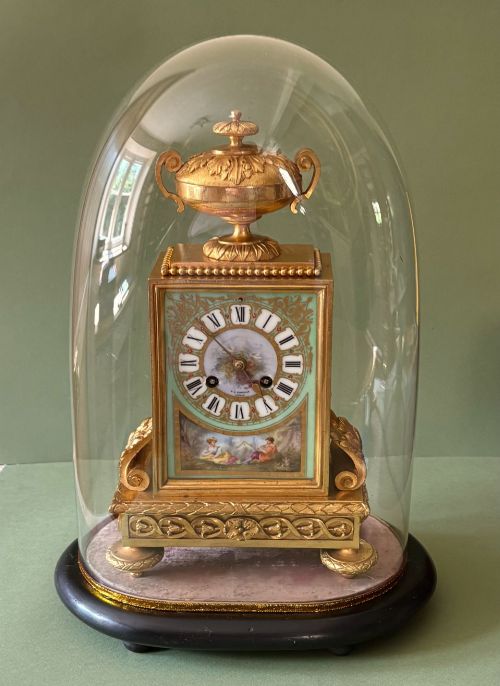
Dials and decorative panels feature painted porcelain, sometimes styled with Chinoiserie motifs or Sevres-inspired details. Bevelled glass panels house delicate movements, allowing views of escapements and gear trains in carriage and four-glass models.
Periods represented on this page range from the eighteen-fifties through the dawn of the twentieth century.
Judging Quality
Quality rests in the crispness of the bronze casting and the depth of the gilding. Superior examples display sharply chiselled ormolu mounts with clean relief work, whereas lesser pieces show softened details from worn moulds.
The integration of secondary materials defines the tier of the clock. Hand-painted porcelain panels and undamaged enamel dials with fine hand-drawn numerals elevate a piece above standard mass-produced brass cases.
Henri Jacot·C. Detouche Paris·Philippes Paris·Tiffany·Wetterstrands·Japy Frers·Drocourt
The Antique Gilded Timepiece Glossary
- Ormolu
- Gilt bronze created by applying a mercury and gold amalgam to a cast bronze base, heated to bond the gold. This technique produced a deep, lasting lustre on nineteenth-century French clock cases.
- Carriage Clock
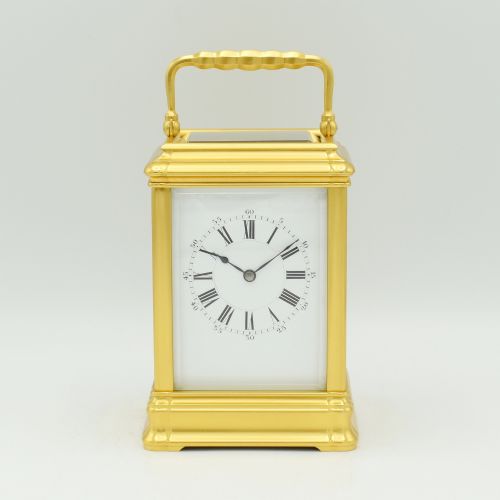
- A small, portable spring-driven timepiece fitted with a carrying handle and glass panels. These were designed for travel during the nineteenth century.
- Portico Clock
- A tall mantel clock styled like a classical temple with columns supporting the upper entablature. The pendulum typically swings visibly between the pillars.
- Cartel Clock
- A wall clock housed in an ornate, asymmetrical frame made of gilt bronze or carved giltwood. These pieces emerged during the Rococo period and remained popular in later revivals.
- Champlevé
- An enamelling technique where troughs are dug into a metal surface and filled with vitreous enamel before firing. It frequently appears on luxury French clock bezels and bezels.
Antique Gilded Timepiece: Frequently Asked Questions
How do I wind a mechanical mantel clock?
Most spring-driven clocks require a key inserted into the dial holes to tension the mainsprings. Turn the key gently until you feel resistance, taking care not to over-wind.
Striking clocks should be allowed to complete their chime sequence between hour adjustments. Set the minute hand by moving it clockwise rather than backwards.
What is the difference between a mantel clock and a timepiece?
In horological terms, a timepiece is a clock that indicates the time without striking hours or quarters. A mantel clock often includes a striking train with a bell or gong.
Both terms apply broadly to decorative clocks placed on mantelpieces. Check the movement description to confirm if a strike mechanism is present.
How should I clean gilded bronze?
Dust ormolu and gilt bronze gently with a dry, soft artist brush to remove particles from crevices. Avoid abrasive metal polishes that strip away the thin gold layer.
Water and chemical solvents can damage delicate patinas and painted dials. Professional conservation is recommended for tarnished or neglected surfaces.