


Antique Ghiordes Rug
An antique ghiordes rug brings centuries of Anatolian weaving tradition into a room through distinguished prayer designs and rich, historic wool.
Antique Ghiordes Rug
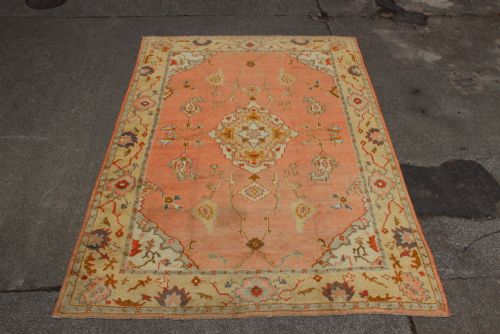
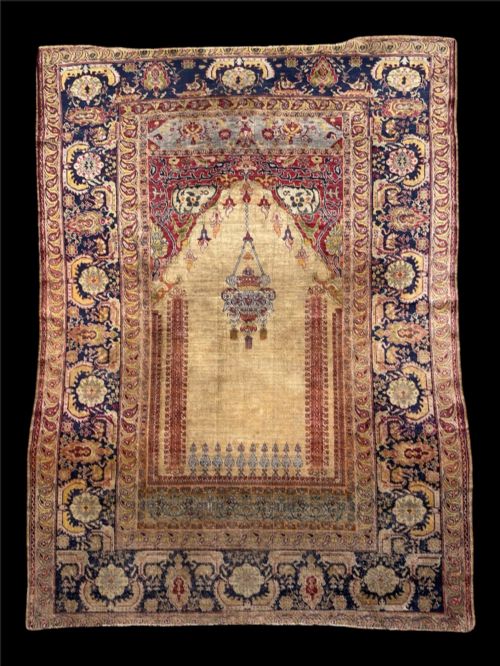
An antique ghiordes rug originates from Western Anatolia and frequently appears in the form of a traditional prayer rug defined by distinct architectural niches and multiple borders. These pieces span from the mid eighteenth century into the early twentieth century, encompassing village and tribal formats alongside larger carpet variations.
Buyers searching for an antique ghiordes rug most commonly encounter nineteenth century examples featuring wool piles and classic design layouts. These textiles carry the aesthetic hallmarks of Ottoman Turkish craftsmanship, recorded across periods ranging from 1750 to 1920.
Materials and construction methods
Weavers constructed an antique ghiordes rug primarily using wool and cotton foundations, occasionally incorporating hand-spun wool and silk for specific pile formations. These natural fibres supported intricate colour work across blue, green, and white fields.
Makers employed traditional Anatolian knotting techniques and durable vegetable dyes to establish the density and structural integrity seen in these carpets. The interplay of cotton warps with wool or silk piles created the distinct tactile quality associated with Ottoman workshop and village production.
Some nineteenth-century weavers hid tiny asymmetrical knots in the border margins, quietly breaking symmetry just to keep evil spirits guessing.
Distinctions in quality and execution
The degree of fineness in knot density and the precision of the prayer arch separate standard village pieces from highly articulated masterworks. Superior examples display crisp geometry within the multiple borders and balanced proportions across the field.
Material selection and dye retention dictate the visual endurance of each textile. Pieces retaining vibrant, saturated green or blue grounds demonstrate superior initial pigment formulation and careful historical preservation.
The Antique Ghiordes Rug Glossary
- Prayer rug
- A format characterised by a central niche or mihrab designed to direct the placement of the rug during daily use. This architectural motif often dominates the composition of Western Anatolian village weavings.
- Mihrab
- The pointed arch or niche depicted at one end of a prayer rug. It symbolises the direction of prayer and serves as the primary focal point in classical compositions.
- Oushak
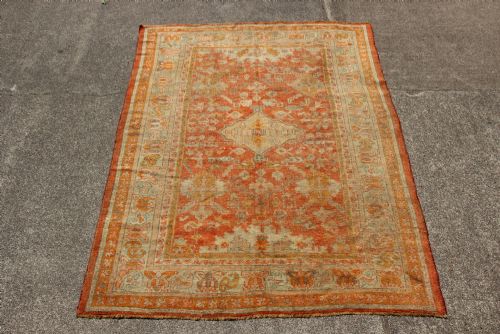
- A neighbouring weaving centre whose stylistic traits occasionally blend with ghiordes designs in larger carpet formats. These pieces share regional Ottoman Anatolian roots.
- Hand-spun wool
- Yarn produced manually using traditional spinning tools rather than industrial machinery. This method yields variable thickness that adds organic texture to the pile.
Antique Ghiordes Rug: Frequently Asked Questions
What defines an antique ghiordes rug?
These textiles are traditional knotted pile rugs originating from Western Anatolia in Turkey. They are widely recognised for distinctive prayer niches, multiple decorative borders, and historic Ottoman design influences.
Most surviving examples date from the eighteenth, nineteenth, and early twentieth centuries. They reflect centuries of regional weaving heritage through characteristic colour palettes of green, blue, and white.
How do I date an antique ghiordes rug?
Dating relies on stylistic analysis of the prayer arch, border complexity, and the palette of the wool field. Earlier eighteenth century examples typically exhibit more archaic drawing styles and specific ground colours.
Later pieces from the late nineteenth and early twentieth centuries often show shifts in proportion and synthetic or modified natural dye usage. Comparing structural materials like hand-spun wool against cotton foundations also helps narrow the production era.
Where were these rugs made?
Production is centered in Western Anatolia, specifically around the town of Ghiordes in Turkey. This region formed a vital part of the Ottoman Empire and sustained a prolific village and workshop weaving tradition.
The aesthetic developed locally before influencing broader Ottoman and Turkish carpet production across neighbouring districts.
How should I care for an antique ghiordes rug?
Protect the textile by placing it in low-traffic areas away from direct, harsh sunlight to preserve the natural wool pile and dye colours. Regular gentle vacuuming without a beater bar prevents dust accumulation in the foundation.
Professional cleaning tailored to antique Oriental carpets ensures the cotton and wool fibres remain stable over time.