

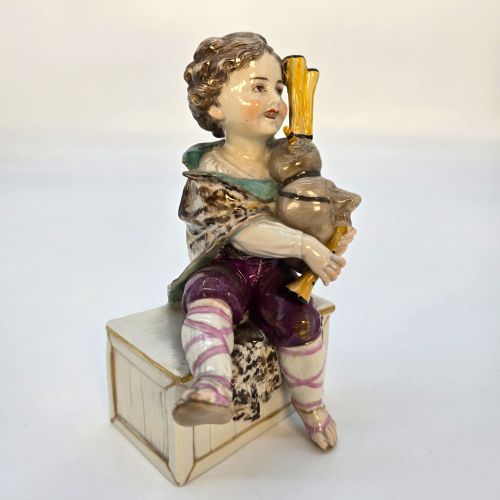


Antique German Porcelain Boy
These antique german porcelain boy figures bring playful nineteenth-century European charm to a mantelpiece, fashioned by master continental factories.
Antique German Porcelain Boy
When you search for antique german porcelain boy, you encounter figural representations of youths modelled in biscuit or glazed ceramic paste. These objects capture children engaged in daily labours, leisure activities, or theatrical poses, originating from renowned German ceramic centres.
The versions most commonly met on this page date from the nineteenth century, spanning periods from the 1860s through the Edwardian era. You will find individual figurines, paired harvesters, posy holders, and painted plaques showing young boys.
Formations range from modest unglazed bisque pieces to elaborate hand-painted groups adorned with gold leaf. Their origins trace to historical manufactories such as Meissen, Volkstedt, Sitzendorf, and Plaue.
Manufacturing methods and materials
Potters utilised hard-paste porcelain and ceramic bisque as the primary bases for these figures. Hard-paste porcelain provided a durable, vitreous body capable of holding sharp sculptural details during high-temperature firing.
Antique German Porcelain Boy Retail Price Guide 2026
Typical asking prices for german porcelain boy among the pieces listed under this phrase on Sellingantiques today, from the lower quarter to the upper quarter. They describe what is for sale here now, not the wider market.
Listings feature hard-paste porcelain, bisque porcelain, and enamel glaze across periods from the eighteenth century to the Edwardian era.
Factors influencing quality
The refinement of the modelling separates standard decorative items from superior works. Finer examples display crisp facial expressions, well-defined fingers, and intricate rendering of clothing folds rather than soft, blurred contours.
Volkstedt Rudolstadt Factory·Krister KPM Waldenburg·Meissen Porcelain·C. G. Schierholz·Volkstedt Triebner, Ens and Eckert·Ernst Bohne and Soehne·Sitzendorf Porcelain·Helena Wolfsohn·KPM Porcelain·Royal Berlin
The Antique German Porcelain Boy Glossary
- Bisque porcelain
- Un-glazed white ceramic ware fired once to achieve a matte, marble-like texture. This finish highlights the sculptural modelling of the child's form without surface gloss.
- Hard-paste porcelain
- A durable ceramic compound composed of kaolin and petuntse fired at extremely high temperatures. It forms the dense body typical of traditional German figures.
- Posy holder
- A functional ceramic vessel designed to display small floral arrangements alongside the central figure. These combined utility with decorative charm.
- Enamel glaze
- Vitrified glass powder fused to the ceramic surface during secondary firing to impart permanent colour. It provides the vibrant hues seen on clothing and accessories.
- Porcelain plaque
- A flat ceramic panel painted with figural scenes. These items were often framed for wall display rather than stood upon furniture.
Antique German Porcelain Boy: Frequently Asked Questions
How do I identify a Volkstedt figure?
Look for characteristic factory marks stamped or painted on the unglazed base of the ceramic body. Stylistic markers such as dynamic posing and detailed hand-painting also point to this origin.
Comparison with documented pieces from the nineteenth century helps verify the specific period of manufacture.
Where were these figures displayed historically?
These decorative objects were traditionally placed on mantelpieces, side tables, and within display cabinets in middle-class and aristocratic drawing rooms. Posy holders additionally served to scent rooms with fresh flowers.
Today, they function well as cabinet pieces grouped with other continental ceramics.
How should I clean antique porcelain?
Dust the surface gently with a soft, dry brush to remove particulate matter without abrading delicate hand-painted enamel. Avoid using harsh chemical cleaners or submerging pieces with exposed painted details.
Periodic inspection under natural light ensures the ceramic remains free from accumulated grime.