



Antique German Landscape
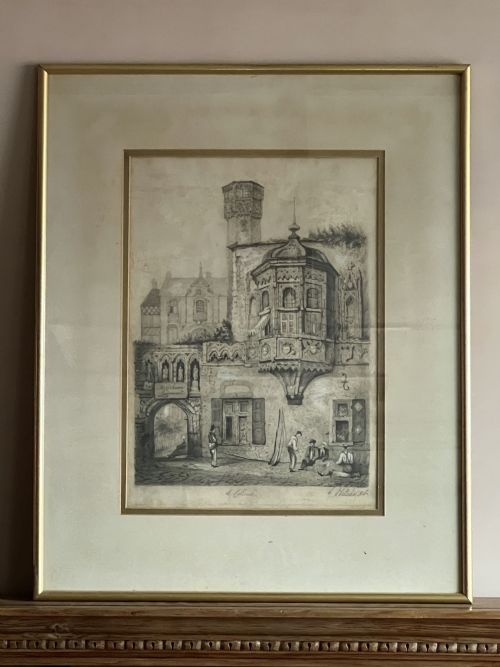
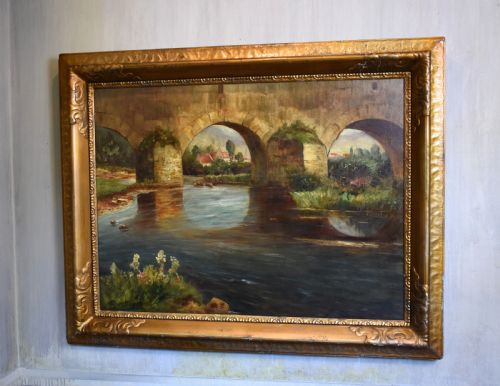
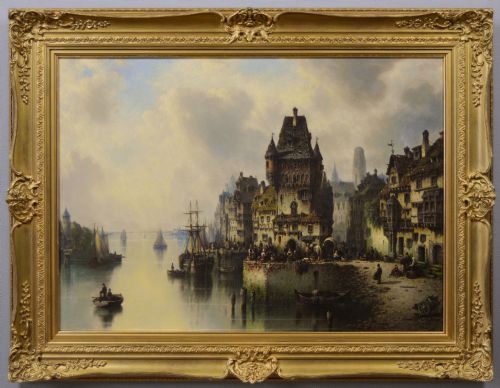
These antique german landscape works and objects capture views across forests, rivers, and castles through oil on canvas, hard-paste porcelain, and enamel.
Antique German Landscape
When you search for an antique german landscape, you encounter oil paintings on canvas or board, alongside delicate hard-paste porcelain cabinet cups and enamel pendants depicting regional views. The selection spans the Georgian period through the nineteenth century into early twentieth-century German Expressionism.
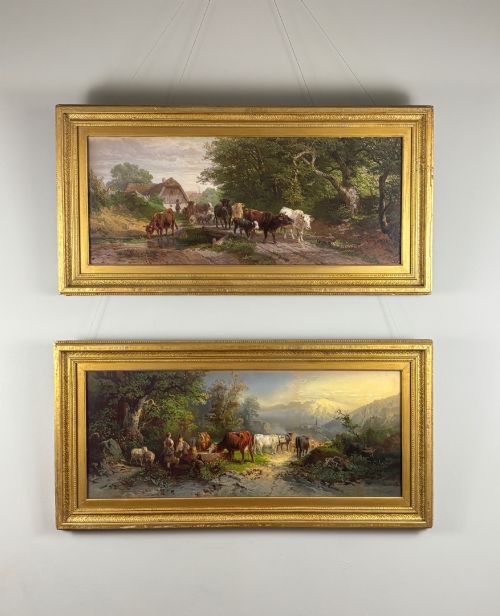
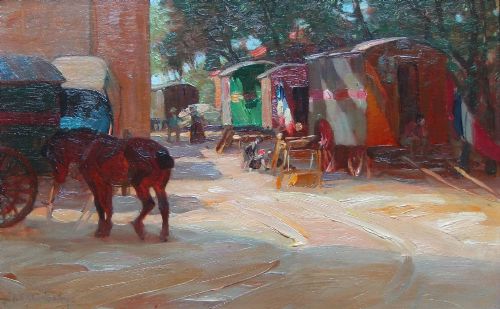
Oil paintings dominate the offerings, created by artists working within nineteenth-century realism, romanticism, and the German School. These canvases and panels range from intimate forest path studies to large castle scenes.
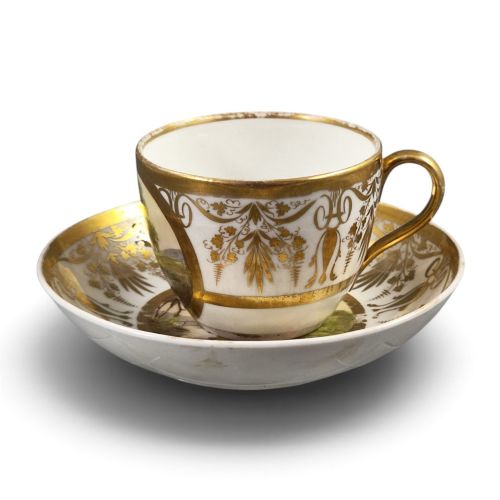
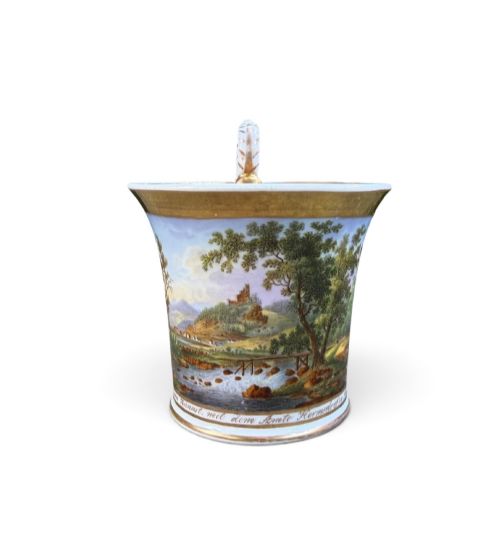
Ceramic pieces such as cabinet cups and saucers from factories like KPM Berlin and Meissen introduce painted topographical vistas onto porcelain. Enamel pendants integrate landscape motifs into wearable silver and pearl jewellery.
How they were made
Painters applied oil paint to stretched canvas, wood panels, or paper supports, utilising gold leaf and giltwood frames to finish the works. Draughtspersons employed pencil and wash on paper for preparatory or topographical drawings.
Ceramic artists hand-painted hard-paste porcelain forms with delicate enamel colours, fired at high temperatures to vitrify the decoration. Goldsmiths combined silver, enamel, and pearls to construct pendant necklaces framing miniature landscape scenes.
Cattle and horses frequently wander through these antique scenes, occasionally interrupting quiet moments near nineteenth-century rivers.
What varies in quality
The sophistication of brushwork and compositional balance dictate the merit of oil paintings, distinguishing hurried sketches from finished salon pieces by named artists. Pigment preservation and the condition of the original canvas or board also influence the standard.
In porcelain and enamel works, the precision of the hand-painted miniature details and the crispness of the gilt embellishments determine the grade. Maker attributions and factory provenance to establishments like KPM Berlin elevate the standing of ceramic pieces.
KPM Berlin·Meissen·Johann Friedrich Voltz·Paul Ehrenberg·Carl Adolf Mende·Heinrich Harder·Wilhelm Fuhner·Hein Hoppmann·Karl Herrle·Franz Reder-Broili·Ludwig Hermann·Wilhelm Alexander Meyerheim·Warren Vernon
The Antique German Landscape Glossary
- Hard-paste porcelain
- A dense, durable ceramic composed of kaolin and petuntse, fired at very high temperatures. It provides a smooth white ground ideally suited for miniature landscape painting on cabinet cups.
- Biedermeier
- A style period spanning the early to mid-nineteenth century characterised by clean lines and domestic utility. Cabinet cups and furniture from this era reflect a focus on home and local scenery.
- German Expressionism
- An early twentieth-century artistic movement prioritising emotional experience over physical reality. Canvases from this period employ bold brushwork and striking colour to render landscapes.
Antique German Landscape: Frequently Asked Questions
What is an antique german landscape painting?
These works are oil paintings on canvas or wood panels depicting rural scenes, rivers, forests, and castles created by German artists across the nineteenth and early twentieth centuries.
They capture regional topography, romantic ideals, and impressionistic light studies characteristic of European schools from the period.
How were porcelain cups decorated with landscapes?
Factories like KPM Berlin and Meissen utilised hard-paste porcelain forms painted by hand with detailed enamel scenes of towns and rivers. These cabinet cups were fired to set the pigments permanently.
They functioned as decorative display items rather than everyday tea ware for dining tables.
How do I identify nineteenth century German art?
Examine the support materials, framing techniques, and signatures or attribution labels associated with the piece. Nineteenth-century works frequently utilise oil on canvas or board, framed in giltwood.
Subject matter often points toward realism, romanticism, or specific regional schools tied to documented artists and locations.
How should I care for antique oil paintings?
Keep paintings away from direct sunlight, high humidity, and extreme temperature fluctuations that can crack oil paint or warp wooden panels. Dust the surface gently with a soft, dry brush.
Avoid using water, chemical cleaners, or abrasive cloths on the canvas or the original giltwood frame.