






Antique German Glass
These pieces of antique german glass span robust dining roemers and delicate enamelled wine vessels, offering rich colour and historic craftsmanship for the table.
Antique German Glass
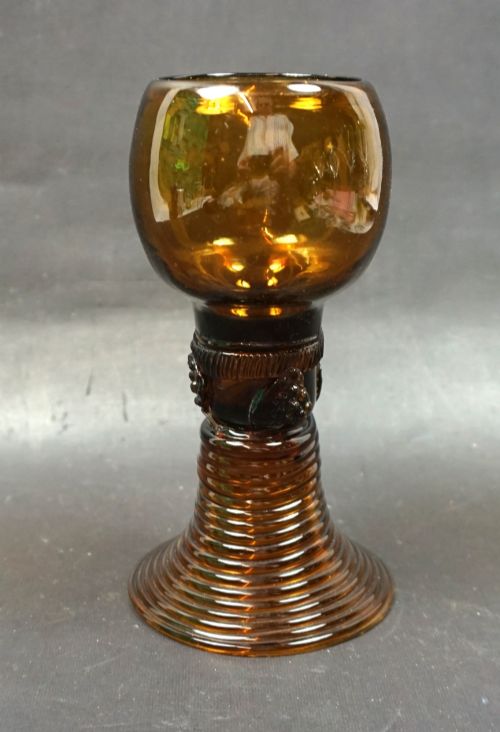
When you search for antique german glass, you encounter a variety of drinking vessels, from dark amber roemers with coiled feet to tall crystal hock glasses finished with polychrome enamel decoration. Many examples date from the late nineteenth and early twentieth centuries, reflecting Jugendstil and Art Nouveau aesthetics alongside earlier traditions.
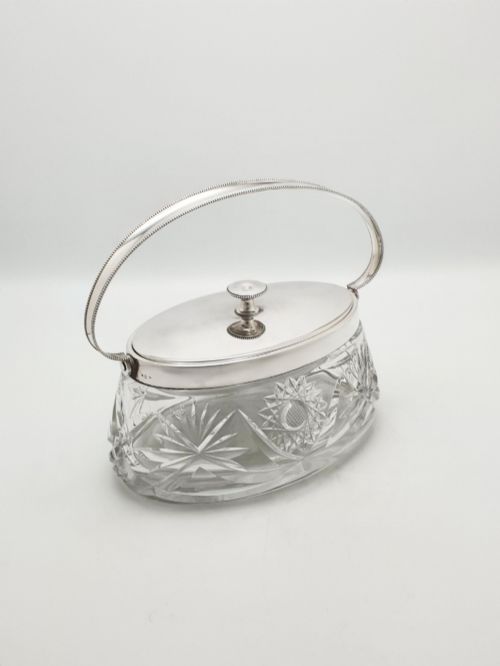
The selection also encompasses decorative table pieces, including silver plated baskets and centrepiece bowls that incorporate coloured glass inserts like cobalt blue or mercury glass kugeis. Wine glasses often appear in sets, decorated with heraldic motifs or delicate floral enamel work characteristic of makers such as Theresienthal.
How they were made
Makers utilised free-blown and mould-blown techniques to shape the vessels, often adding applied threads of glass around the foot for grip and decoration. Cut glass elements required careful wheel-cutting to achieve deep facets and geometric patterns across clear, amber, amethyst, or green metal.
Surface decoration frequently involved polychrome enamelling and gilding, fired to bond pigments permanently to the glass body. Metal mounts in silver plate, solid silver, brass, or wrought iron were then fitted securely to carafes, biscuit boxes, and centrepieces.
Antique German Glass Retail Price Guide 2026
Typical asking prices for german glass among the pieces listed under this phrase on Sellingantiques today, from the lower quarter to the upper quarter. They describe what is for sale here now, not the wider market.
Listings feature periods from the 18th century through the 1930s, utilising materials including cut glass, enamel, silver plate, and gold leaf.
What varies in quality
Quality rests upon the crispness of the glass cutting and the hand-painted precision of the enamel work. Finer drinking vessels show smooth, even coloration in the metal and delicate, controlled brushstrokes on floral or heraldic motifs.
The integration of secondary materials also defines the tier of a piece, distinguishing standard production items from those with heavy cast silver plated mounts, engraved glass carafes, or substantial metal framing.
Theresienthal·WMF·Frits Hechert·Posen of Frankfurt and Berlin·Emmy Seyfried
The Antique German Glass Glossary
- Roemer
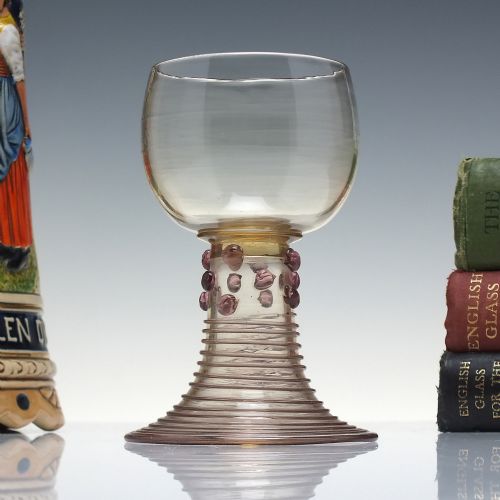
- A traditional Germanic drinking glass featuring a wide bowl atop a cylindrical foot decorated with applied prunts or coiled glass threads. These vessels are typically formed in green, amber, or amethyst glass.
- Hock glass
- A tall-stemmed wine glass often featuring an elongated coloured bowl and intricate enamel decoration. They were widely produced by houses like Theresienthal during the late nineteenth and early twentieth centuries.
- Enamel
- Opaque or translucent glass paste applied to the surface of a vessel as decoration before firing. In antique pieces, this technique creates raised, colourful floral or heraldic patterns.
- Mercury glass
- Double-walled blown glass silvered on the interior with a liquid mercury solution and sealed at the pontil mark. This process produces a reflective, mirror-like finish seen in decorative spheres and ornaments.
- Silver plate
- A thin layer of silver fused to a base metal foundation, utilised extensively by metalware manufacturers for tableware mounts, baskets, and frames. This technique provided the appearance of solid silver at a lower production cost.
Antique German Glass: Frequently Asked Questions
What is an antique german glass roemer?
A roemer is a traditional wine goblet with a rounded bowl resting on a stacked or coiled foot, usually formed in amber, green, or amethyst glass.
These vessels were designed for the dining table and frequently display enamelled heraldic or floral decoration from the nineteenth century.
How are enamelled glasses cleaned safely?
Enamelled drinking vessels require gentle hand washing in lukewarm water with mild soap, avoiding abrasive sponges or soaking.
Because the coloured enamel sits as a fused surface layer on the glass, harsh chemicals or dishwashers can damage the historic pigments.
What periods do these glass pieces date from?
The listings span from the eighteenth century up through the Art Deco era of the 1920s and 1930s, with a strong concentration around 1900.
Victorian, Edwardian, and Jugendstil styles appear frequently alongside earlier Georgian and Biedermeier influences.
How can you identify Theresienthal glass?
Theresienthal pieces often feature delicate crystal forms paired with precise hand-enamelled floral or heraldic motifs typical of the early twentieth century.
They appear as sets of hock glasses, cordial glasses, and wine vessels reflecting fine Bavarian craftsmanship.