




Antique German Glass Goblet
These antique german glass goblet pieces combine historical forms and enamelling, offering tactile weight and deep colour for any collector.
Antique German Glass Goblet
When you search for an antique german glass goblet, you encounter drinking vessels spanning multiple centuries from Georgian to the 1930s. The selection includes roemers, hock glasses, wine glasses, cordial glasses, and chalices representing various European traditions.
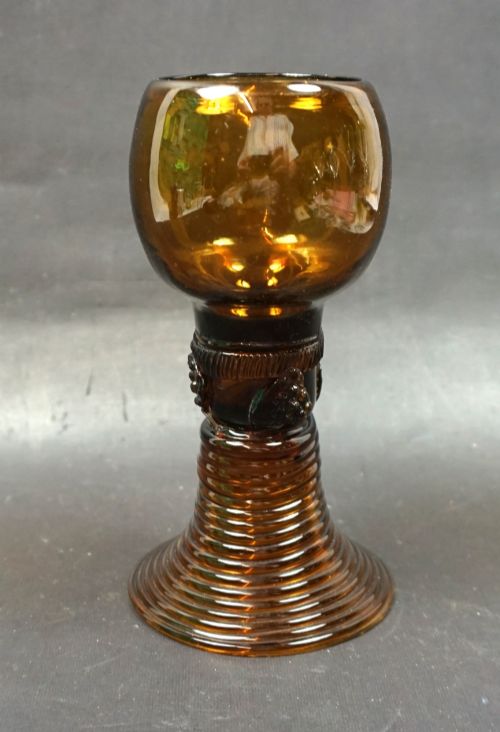
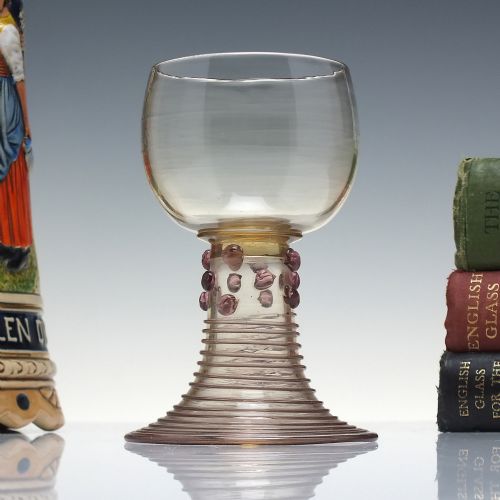
You are most likely to meet roemers featuring traditional coiled feet alongside enamelled and engraved examples from Bohemia, Germany, and Theresienthal. These drinkware items reflect regional craftsmanship traditions reaching from the eighteenth century into the twentieth.
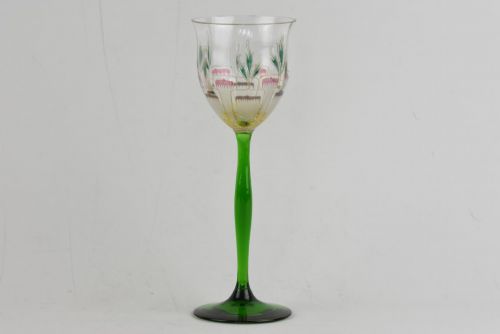
The forms range from large green glass vessels with polychrome enamel to amber bowls and crystal hock glasses. Each piece demonstrates distinct historical styles including German Baroque, Biedermeier, Historicism, Art Nouveau, and Jugendstil.
How they were made
Glassmakers utilised traditional techniques involving hand-blown and blown glass to form the basic vessel shapes. Molten material was manipulated to create robust forms such as roemers with coiled feet and chalices.
Makers applied surface enrichment through cutting, engraving, and enamel decoration. Artisans also utilised gold leaf and polychrome enamels to render heraldic motifs and floral patterns across the glass surface.
Antique German Glass Goblet Retail Price Guide 2026
Typical asking prices for german glass goblet among the pieces listed under this phrase on Sellingantiques today, from the lower quarter to the upper quarter. They describe what is for sale here now, not the wider market.
Listings feature items from the Georgian period through to the 1930s, utilising materials such as gold leaf, crystal, and coloured glass.
What varies in quality
Quality differences emerge in the complexity of the enamel work and the precision of the engraving. Pieces featuring detailed polychrome heraldic motifs or delicate floral hand-enamelling demonstrate higher artistry than plain vessels.
The choice of medium also distinguishes the work, with amber, amethyst, dark amber, pale green, and coloured glass providing varied visual depth. Crystal and hand-blown pieces exhibit distinct optical qualities depending on the purity of the material.
Theresienthal·Frits Hechert·Adelbert Niemeyer
The Antique German Glass Goblet Glossary
- Roemer
- A traditional Germanic drinking vessel featuring a wide bowl and a decorative coiled foot. This form evolved from sixteenth-century designs into nineteenth-century revivals.
- Hock glass
- A tall-stemmed wine glass traditionally used for white wine. These often feature coloured glass bowls and elaborate enamel decoration.
- Historismus
- A nineteenth-century artistic movement reviving historical styles such as German Baroque. Pieces in this manner often display heraldic motifs and traditional enamelling.
- Jugendstil
- The German manifestation of Art Nouveau popular around the turn of the twentieth century. This style prioritises organic lines and innovative floral ornamentation.
- Enamel
- A fused glassy substance applied to the surface of the vessel for decoration. Polychrome versions allow for vibrant heraldic and floral imagery.
Antique German Glass Goblet: Frequently Asked Questions
How do I identify a roemer?
A roemer is defined by its distinctive heavy base and coiled foot supporting a rounded bowl. These vessels often appear in green or amber glass.
Historismus and nineteenth-century examples frequently feature enamel coats of arms or floral scrollwork around the bowl.
What is a hock glass used for?
Hock glasses were traditionally designed for serving white wine, particularly German hock. Their tall stems and coloured bowls kept the wine cool.
Many examples showcase crystal construction paired with detailed enamel decoration from makers like Theresienthal.
How do I date an antique goblet?
Dating relies on stylistic clues such as Jugendstil floral motifs from the early twentieth century or Biedermeier cutting from the mid nineteenth century. Georgian and eighteenth-century pieces display earlier roemer proportions.
Maker attributions and specific enamelling techniques also help narrow the period of manufacture.
Can I use these glasses for drinks?
While these items functioned originally as drinkware, their age and delicate enamel decoration mean many owners choose display over active use. Hand-blown crystal and enamelled surfaces require careful handling.
Gentle hand washing preserves the gold leaf and polychrome details found on nineteenth and twentieth-century examples.