
Antique Geometric Sideboard
An antique geometric sideboard brings structured pattern and deep timber grain into a room, offering robust storage built to last centuries.
Antique Geometric Sideboard
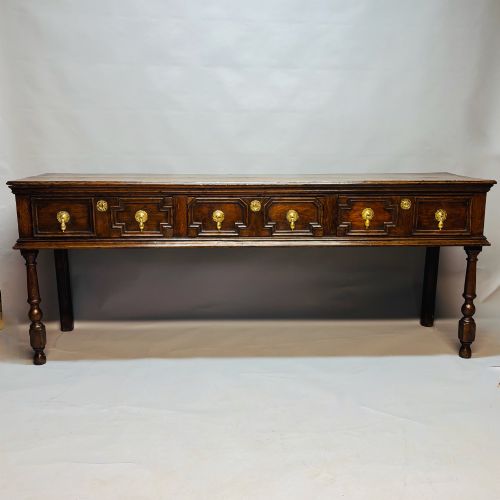
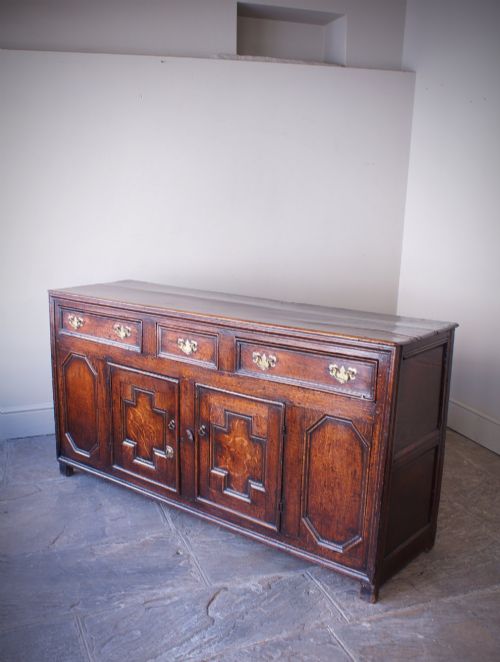
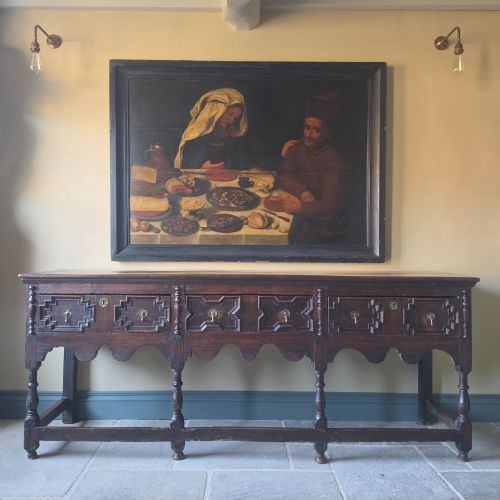
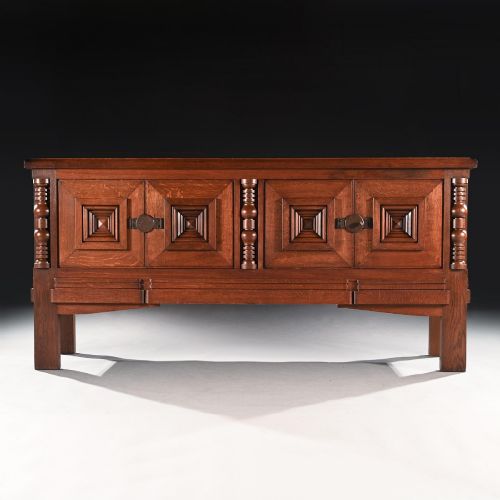
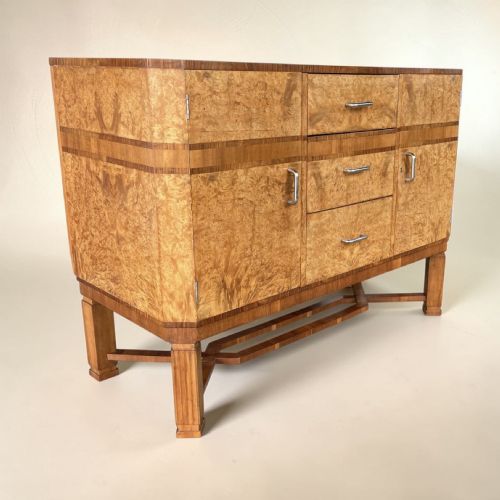
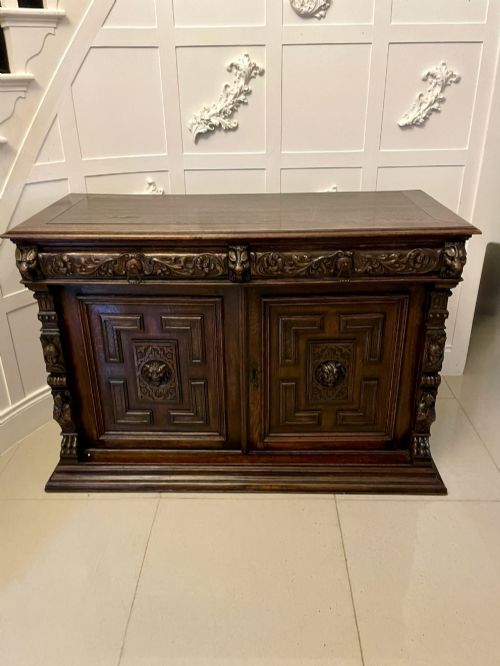
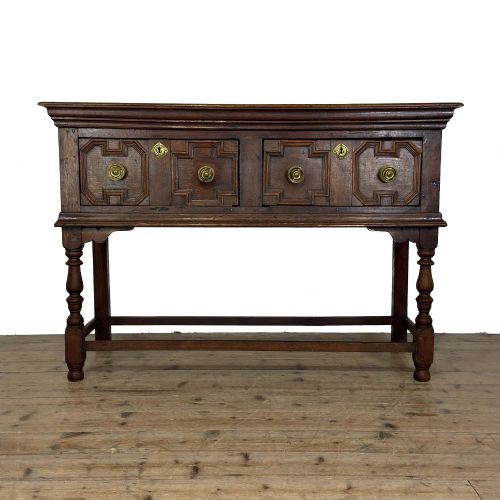
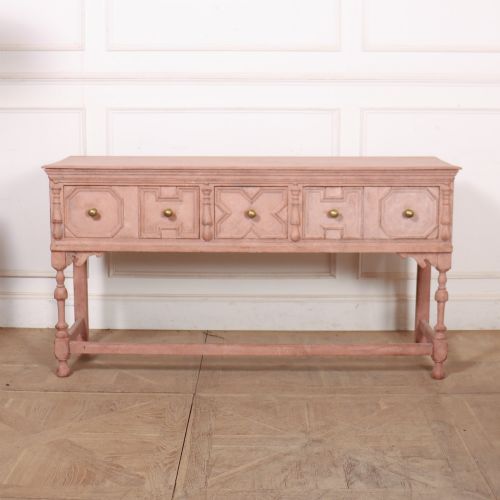
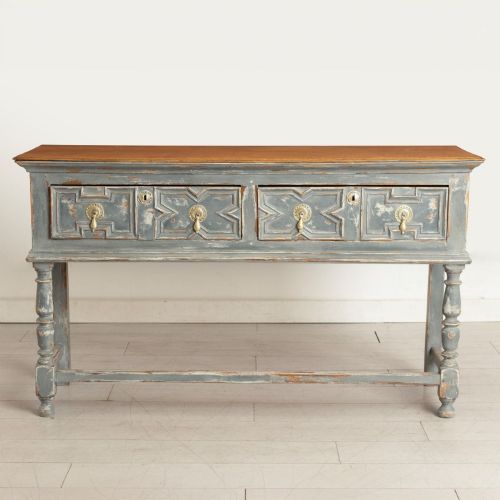
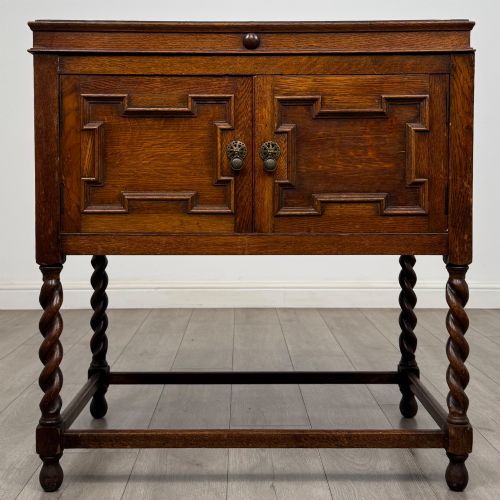
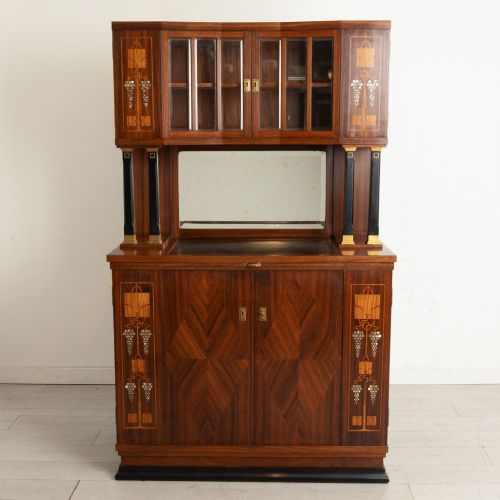
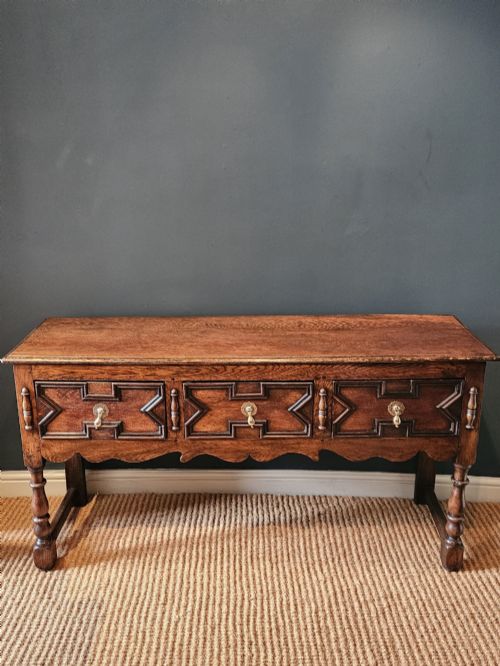
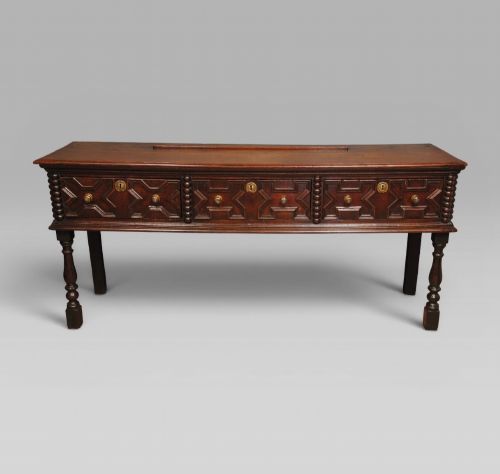
An antique geometric sideboard is a substantial storage piece defined by surface decoration constructed from applied mouldings, panelling, and contrasting timbers. Buyers encounter these primarily as seventeenth-century low dressers, eighteenth-century moulded base cabinets, and later revivals inspired by Jacobean and Art Deco design.
The form spans centuries, taking shape as servers, court cupboards, and dresser bases equipped with drawers and lower shelving. Oak serves as the principal foundation material across these early periods, occasionally enriched with walnut, fruitwood, and snakewood detailing.
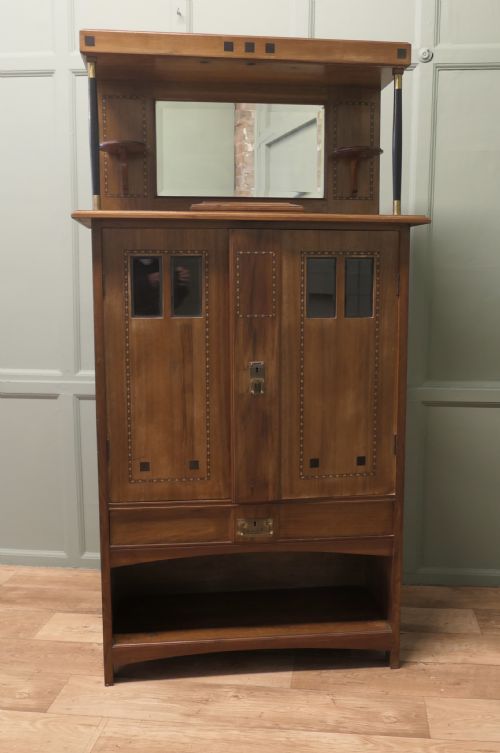
Regional variations appear alongside period revivals from the nineteenth and early twentieth centuries. Pieces range from straightforward English country oak to Continental interpretations bearing Secessionist and Amsterdam School influences.
Materials and construction methods
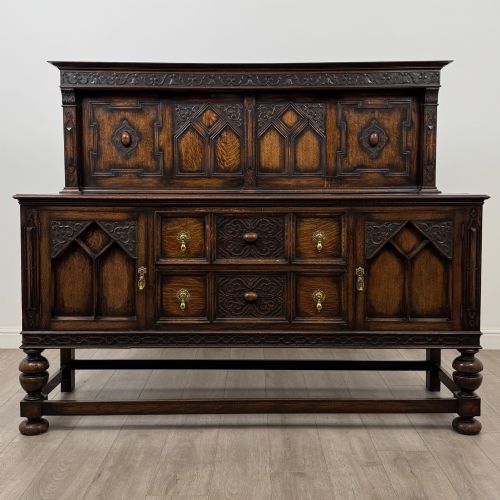
Makers relied heavily on solid oak, walnut, and fruitwood, selected for durability and rich figure. Surfaces were frequently embellished with intricate geometric panel assemblies built from small lengths of timber glued and pinned to drawer fronts and doors.
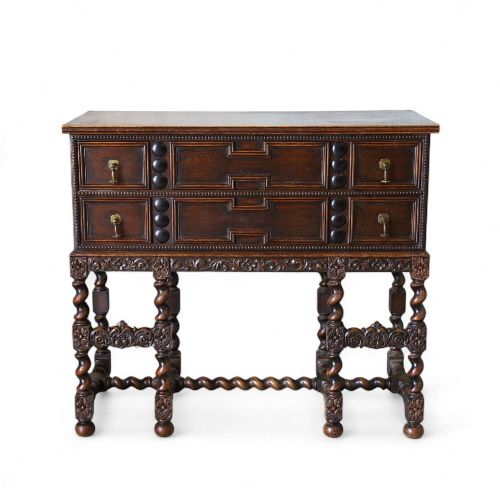
Joinery techniques relied on traditional mortise and tenon frames, pegged joints, and hand-cut dovetails for drawer construction. Metalwork hardware, notably brass drop handles and escutcheons, complemented the dark timber tones alongside carved details and applied barley twist legs.
Some seventeenth-century drawers hide secret compartments behind their geometric mouldings, built to guard family silver from passing travellers.
Judging construction and period integrity
Quality rests in the precision of the applied mouldings and the integrity of the timber. Finely executed geometric panels fit flush without excessive filler, showing crisp mitres and consistent grain matching across drawer fronts and doors.
The relationship between the primary structure and secondary woods reveals much about a piece's history. Original timber patination, untouched drawer linings, and matching period brassware separate unaltered examples from heavily restored or later revival pieces.
August Ungethüm·Heals of London·Étienne Kohlmann
The Antique Geometric Sideboard Glossary
- Geometric moulding
- Raised wooden strips applied to a flat surface in repeating rectilinear patterns. This technique defined seventeenth-century case furniture and later revival pieces.
- Dresser base
- A low wooden storage cabinet featuring multiple drawers and often a lower pot board or shelf. These pieces formed the foundation of traditional dining room furniture.
- Court cupboard
- A heavy enclosed wooden cupboard featuring upper and lower tiers. These sixteenth and seventeenth-century forms often display elaborate carving and panel work.
- Barley twist
- A turned wooden column resembling a spiral rope. This decorative leg style appeared frequently on seventeenth-century furniture and Edwardian revivals.
- Block front
- A cabinet or drawer face divided vertically into three sections, with the outer sections projecting forward and the centre section recessed.
Antique Geometric Sideboard: Frequently Asked Questions
What is a geometric sideboard?
A geometric sideboard is a heavy wooden storage unit characterised by decorative raised mouldings arranged in patterns across the doors and drawer fronts. These pieces derive their visual appeal from the interplay of shadow and timber grain rather than applied ornament.
Such furniture evolved from seventeenth-century joinery traditions and reappeared in later revival styles. They provide functional dining room storage while serving as a focal point through architectural woodwork.
How do I date an oak sideboard?
Dating an oak sideboard involves examining the construction methods, tool marks, and timber patination. Seventeenth-century examples typically display hand-split boards, pegged mortise and tenon joints, and distinct hand-planed surfaces.
Revival pieces from the nineteenth and twentieth centuries often reveal mechanical saw marks and standardised fixings beneath the surface. Comparing the handle types and secondary woods helps confirm the era of manufacture.
Where were these sideboards used?
These sideboards originated in dining halls and kitchens for storing platters, linens, and dry goods. Their robust surfaces served as serving stations during meals.
In modern homes, they function well in dining rooms, hallways, and living spaces. Their deep drawers and cupboards offer practical concealment for modern items while maintaining a traditional aesthetic.
How do I care for antique oak?
Antique oak benefits from stable indoor humidity and protection from direct sunlight, which can dry and split the ancient timber. Regular dusting with a dry, soft cloth prevents particle buildup.
Occasional application of traditional beeswax feeds the wood and maintains its natural lustre. Avoid modern silicone polishes, as they build up over time and attract dust.