






Antique Game Counters
These antique game counters and related paraphernalia bring tactile history to the Victorian and Edwardian parlour table.
Antique Game Counters
When you search for antique game counters, you are looking at small tokens, markers and scoreboards used in traditional parlour pastimes across the Georgian, Victorian and Edwardian eras. These pieces include bone and ceramic tokens, cribbage boards, Trump markers and larger gaming boxes designed to organise social entertainment.
The versions most commonly met on this page span the nineteenth and early twentieth centuries, reflecting the period's passion for card games, billiards and board pastimes. From humble bone teetotums to fitted mahogany boxes, each object served a distinct role in keeping score or holding counters during long winter evenings.
How they were made
Makers utilised natural materials such as bone, stag horn, boxwood, ebony and mahogany, shaping them through traditional turning, carving and joinery techniques. Wood surfaces often received careful hand-polishing to highlight the grain, while metal components employed silver plating or brass fittings for dials and indicators.
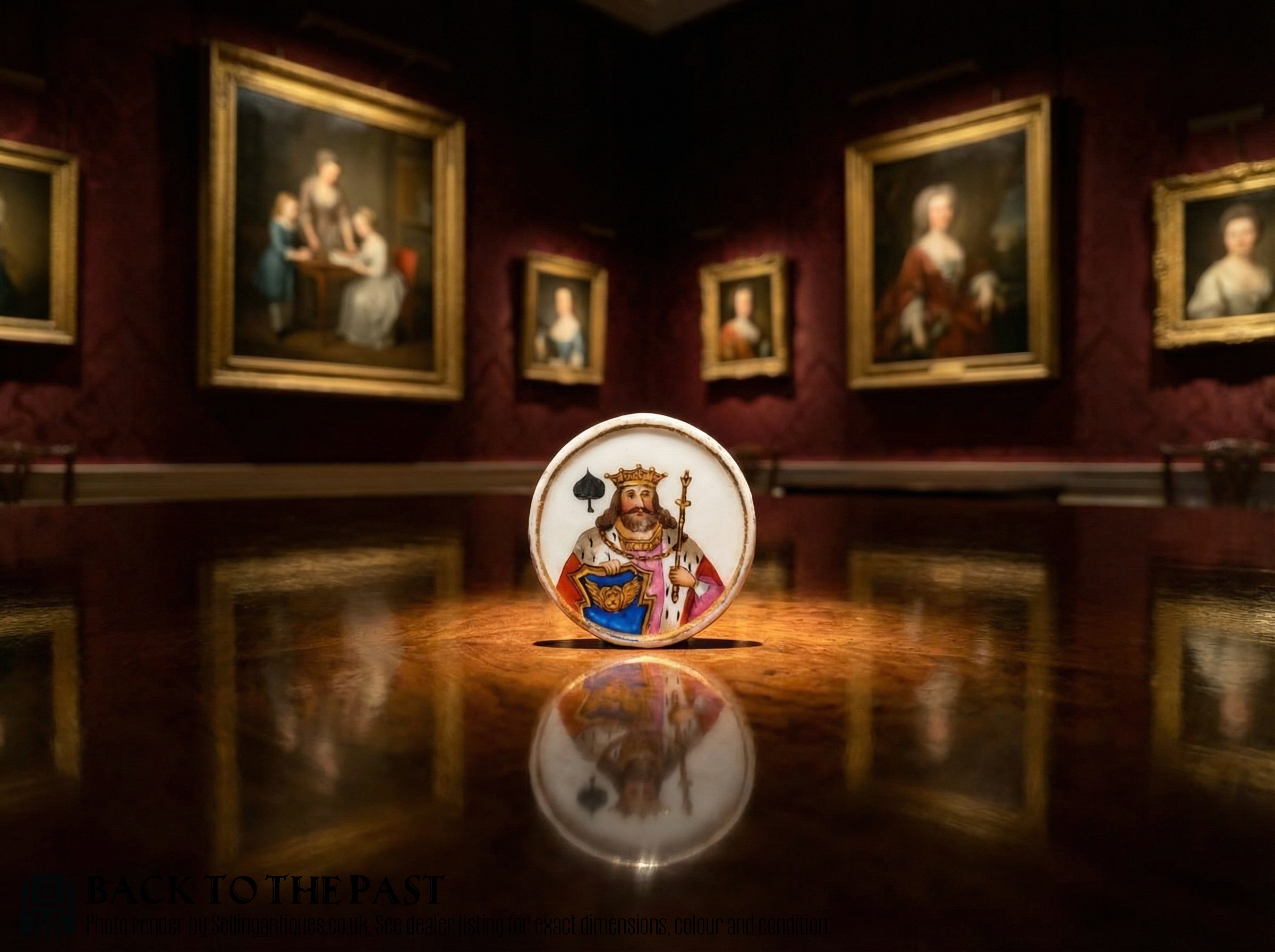
Ceramic and porcelain counters relied on moulded clay finished with hand-painted or transferred numbers and suit symbols. Leather, shagreen and paper found use in protective cases and boxes, often finished with marbled interiors or simple fastening hardware.
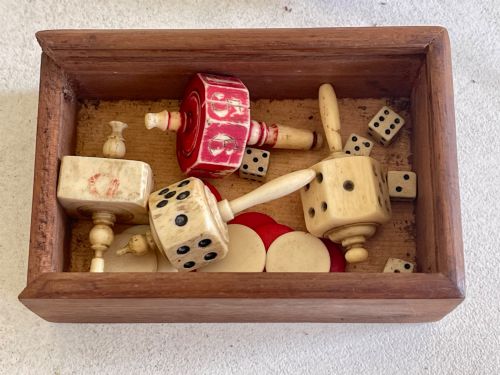
Prisoners of war spent idle hours carving intricate bone teetotums, leaving behind tiny spinning tops with stories to tell.
What varies in quality
Quality rests in the crispness of the carving, the selection of dense timbers like Cuban mahogany or walnut, and the survival of complete sets with their original boxes. Superior items show careful attention to internal divisions and fitted compartments rather than purely utilitarian construction.
The clarity of engraved numerals on bone or metal markers and the retention of original surface patination distinguish finer examples from standard production pieces. Complete sets possessing matching counters and original lids hold greater cohesion as historical objects.
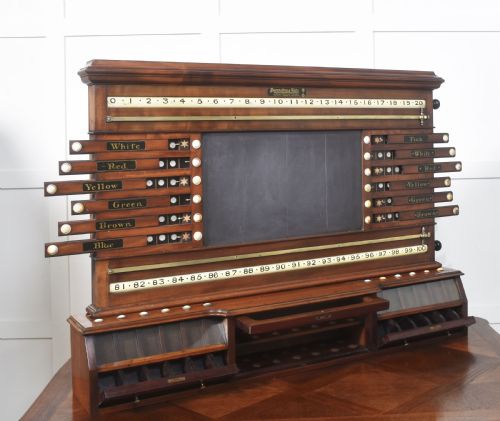
Orme & Sons Manchester·Cox & Yeman London
The Antique Game Counters Glossary
- Teetotum
- A small spinning top used in gambling and parlour games, often marked with letters or numbers on its faces. These are frequently found carved from bone by prisoners of war in the nineteenth century.
- Cribbage Board
- A board with tracks of holes used to keep score in the card game cribbage, typically featuring continuous scoring runs. They appear in woods like mahogany and boxwood, as well as animal horn.
- Shagreen
- Untanned skin from the back of a shark or ray, dried and dyed to create a distinctive granular texture. It surfaces on smart gaming counter and poker chip boxes from the early twentieth century.
- Trump Marker
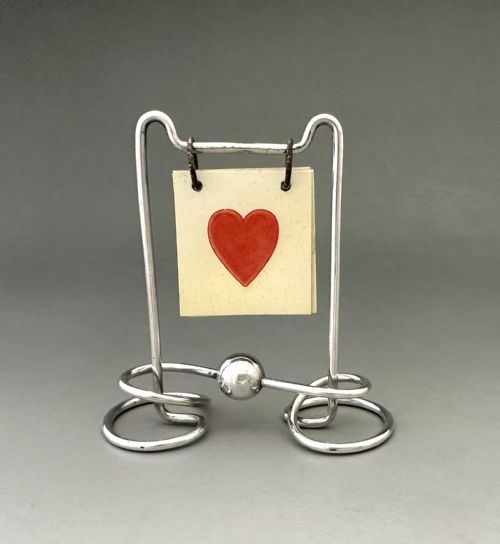
- A small dial device used during card games to indicate which suit is currently trumps. They are often executed in silver plate with rotating indicators.
- Pope Joan
- A traditional multi-player board game played with counters, revolving around a partitioned board and a central pool. Surviving sets frequently retain their original bone counters and printed rules.
Antique Game Counters: Frequently Asked Questions
What are antique game counters made from?
The listings show a variety of materials including bone, stag horn, ceramic, porcelain, brass and various woods like mahogany and boxwood.
Some pieces also incorporate paper, glass, tinplate and shagreen for boxes and markers.
How were scoreboards used?
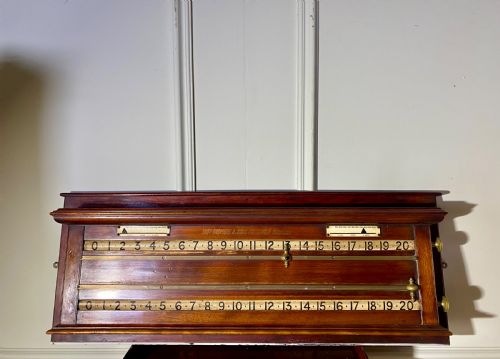
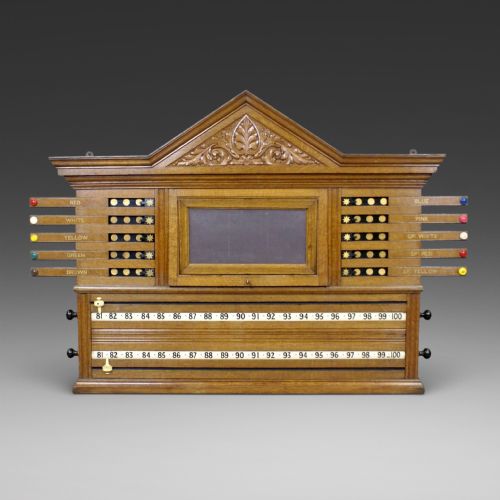
Larger wooden scoreboards were mounted on walls or placed on tables to track scores for billiards and snooker during the Victorian and Edwardian periods.
Smaller markers, such as Trump markers, sat directly on the card table to indicate the active suit.
How do I date an antique games box?
Dating relies on the timber used, such as Georgian Cuban mahogany versus later Edwardian oak, alongside construction methods and style indicators like Art Deco or Black Forest carving.
Makers' marks or engraved details on scoreboards also help narrow down the period.
Are games sets usually complete?
Survival varies, with many boxes retaining their original wooden or bone counters while others are assembled collections.
Checking individual listings reveals whether original leather boxes and complete sets of tokens remain intact.