

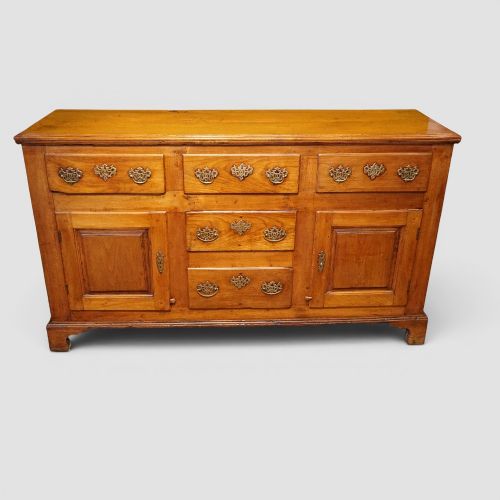


Antique Fruitwood Dresser
An antique fruitwood dresser brings warmth and rich grain to a room, offering generous storage through centuries-old joinery.
Antique Fruitwood Dresser
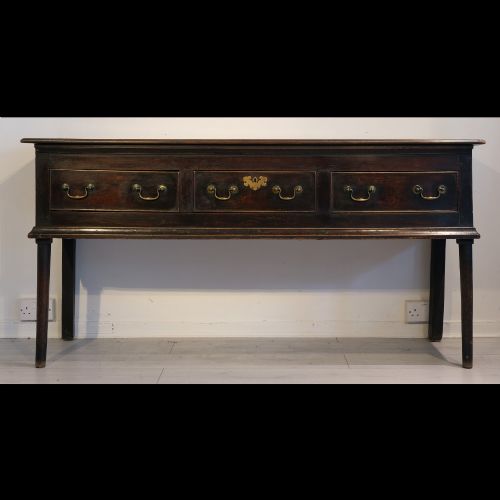
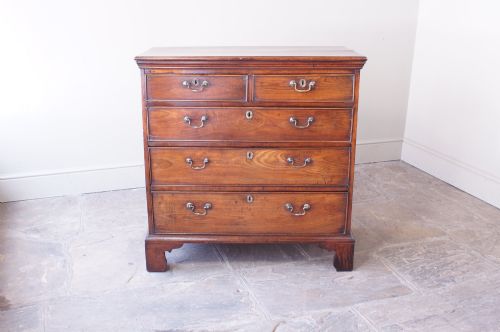
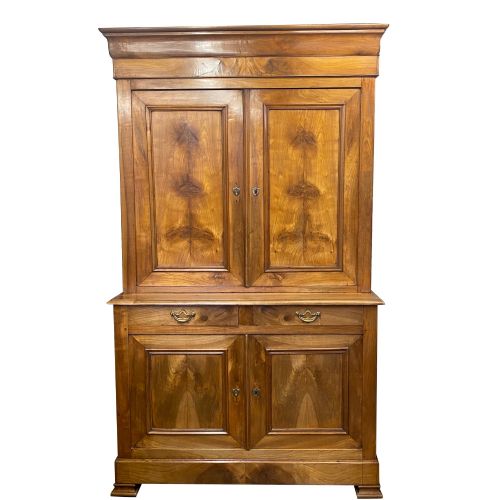
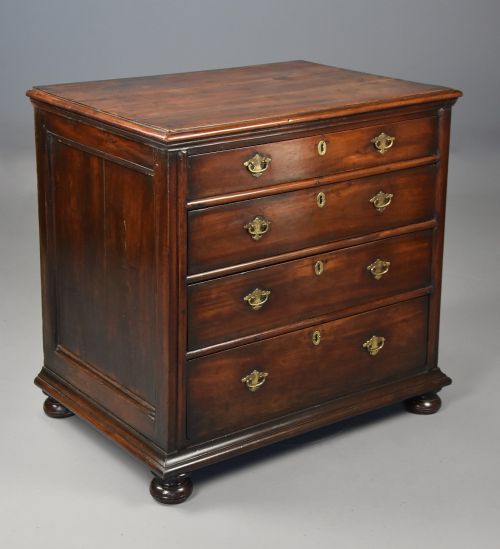
When you search for an antique fruitwood dresser, you are looking at practical storage furniture shaped from native orchard woods rather than standard mahogany or oak. The pieces on this page span the seventeenth, eighteenth, and nineteenth centuries, taking forms from Welsh plate racks to French commodes and housekeeper cupboards.
You are most likely to meet solid fruitwood dresser bases, low chests of drawers, and tall cupboards originating from regional cabinetmakers in Britain and continental Europe. These pieces combine utilitarian origins with the decorative patination that only centuries of handling can produce.
The category also encompasses related forms such as serpentine commodes and harvest serving tables built using fruitwoods alongside oak, walnut, and cherry. Each piece reflects the local timber available to rural workshops rather than metropolitan timber merchants.
Distinguishing quality in fruitwood furniture
The distinction between ordinary and exceptional pieces lies in the depth of the timber's patina and the integrity of the original construction. Cabinets with untouched surfaces, crisp moulding, and minimal timber replacement command greater appreciation than those with heavy restoration.
Proportion and regional character also dictate worth, as provincial makers balanced rustic utility with sophisticated serpentine or bombe outlines. Finer examples display harmonious grain matching across drawer fronts and well-preserved internal carpentry.
Antique Fruitwood Dresser Retail Price Guide 2026
Typical asking prices for fruitwood dresser among the pieces listed under this phrase on Sellingantiques today, from the lower quarter to the upper quarter. They describe what is for sale here now, not the wider market.
Early cabinetmakers occasionally utilised wild fruitwood branches for rustic drawer pulls, leaving the knobby natural shape intact for an honest grip.
The Antique Fruitwood Dresser Glossary
- Fruitwood
- Timber harvested from fruit-bearing trees such as pear, apple, plum, and cherry. It yields a warm tone and fine grain that deepens with age and polishing.
- Dresser base
- A lower sideboard or cabinet section without the upper plate rack, used historically for food preparation and storage.
- Commode
- A low chest of drawers or cabinet of French origin, often featuring decorative veneering and curved serpentine or bombe outlines.
- Patina
- The surface sheen and softening of colour developed over decades through light, wear, and wax application.
- Housekeeper cupboard
- A large storage cabinet designed for domestic linens and dry goods, typically constructed in two sections for transport.
Antique Fruitwood Dresser: Frequently Asked Questions
How do I care for fruitwood furniture?
Keep your dresser away from direct heat sources and strong sunlight to prevent the timber from drying out and splitting. Apply a traditional beeswax polish sparingly to nourish the grain and maintain the protective surface sheen.
Avoid using modern silicone sprays or damp cloths, which can damage the historic finish. Gentle dusting with a dry, soft cloth is sufficient for daily maintenance.
Are these pieces made of solid fruitwood?
Many of the pieces feature solid fruitwood construction, particularly in provincial furniture where regional woods were readily available. Secondary timbers like oak or pine are frequently found in drawer linings and internal framing.
Later or more decorative examples may incorporate fruitwood veneers laid over a stable secondary wood base to create geometric patterns or contrasting borders.
Where were these dressers and cabinets made?
The pieces originate from various workshops across Britain and continental Europe, including regional French provinces, Italy, and Wales. Provincial cabinetmakers utilised local orchards and forests rather than imported tropical hardwoods.
This regional independence gives each piece distinct structural characteristics and timber choices unique to its area of origin.
How can I tell the age of a dresser?
Examine the construction methods, tool marks on internal boards, and the wear patterns around drawer pulls and handles. Hand-cut dovetails and pegged joints generally indicate an eighteenth or seventeenth-century origin.
The natural fading of the timber and the depth of the wax build-up also provide reliable indicators of age.