


Antique French Pearl Jewellery
These antique french pearl jewellery pieces bring together delicate seed pearls, 18ct gold settings and religious iconography from the nineteenth and early twentieth centuries.
Antique French Pearl Jewellery
Beyond devotional medals, the selection includes gem-set bar brooches, diamond and pearl cluster rings, and multi-gem necklaces incorporating rubies, emeralds and sapphires. These items trace French craftsmanship from nineteenth-century revival styles through the fluid lines of Art Nouveau and the geometric precision of the 1930s.
How they were made
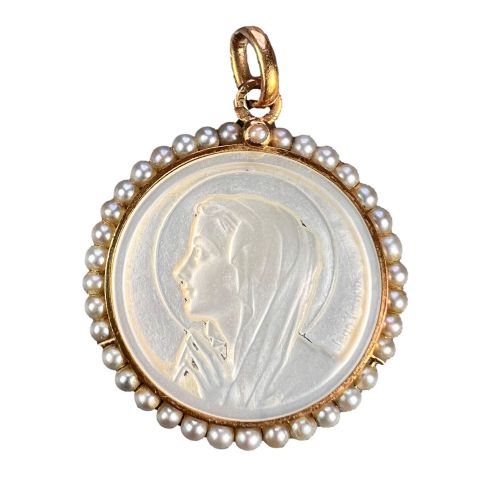
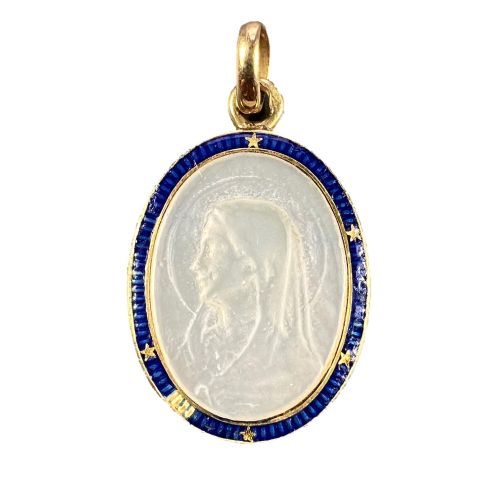
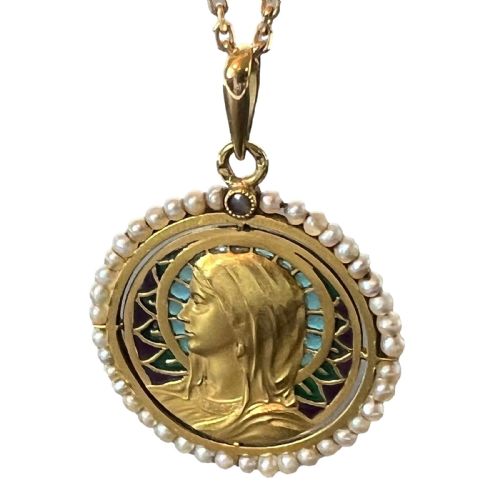
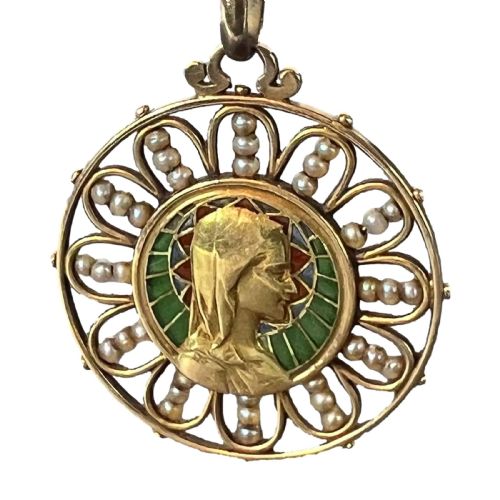
Goldsmiths worked primarily in 18ct yellow and white gold, alongside platinum in later Edwardian and Art Deco pieces, utilising techniques such as plique-a-jour enamel to let light pass through translucent coloured glass. Mother-of-pearl was carved and inlaid into frames of twisted wire or gilt ormolu, often paired with delicate seed pearls threaded or pinned individually.
Gemstones including old-cut diamonds, rubies, emeralds and amethysts were hand-set into cluster and coronet mounts. Artisans also integrated painted miniatures and fine enamel work directly into the gold frames of lockets and charm pendants.
One lucky horse head carved into black onyx shares space with diamonds and pearls.
What varies in quality
Quality in these pieces rests upon the crispness of the goldwork and the preservation of delicate elements like plique-a-jour enamel and painted miniatures. Superior examples display precise chasing on the 18K gold frames and securely mounted natural pearls rather than mismatched replacements.
The sophistication of the design dictates the upper tier, where makers integrate signed components, balanced diamond halos, and flawless mother-of-pearl carvings. Lesser pieces show simpler stamped mounts and plain bezels with minimal secondary gem embellishment.
Christian Dior·Chaumet
The Antique French Pearl Jewellery Glossary
- Seed pearl
- A very small, naturally formed pearl, often drilled and strung together in rows or clustered to form floral and geometric motifs. These tiny gems define the delicate aesthetic of Edwardian and Victorian ornamentation.
- Plique-a-jour
- An enamelling technique where enamel is applied in cells without a backing, resembling miniature stained glass. This method allows light to shine through the translucent coloured glass panels.
- Locket
- A hinged pendant designed to hold a miniature portrait, lock of hair or photograph. Victorian and Edwardian examples frequently combine these compartments with pearl and diamond frames.
- Ormolu
- Gilt bronze created by applying a finely ground high-carat gold-mercury amalgam to a bronze object. It provides a rich golden finish on decorative boxes and frames.
- Toi et Moi
- A ring style featuring two main gemstones or pearls resting side by side, symbolising two souls intertwined. The design gained particular favour during the Edwardian era.
Antique French Pearl Jewellery: Frequently Asked Questions
What periods do these pieces date from?
The pieces span from the Georgian era through the Victorian and Edwardian periods up to the Art Deco designs of the 1930s. The selection reflects changing French tastes across more than a century of jewellery manufacturing.
Most items cluster around the late nineteenth century and the early decades of the twentieth century, encompassing Belle Epoque and Art Nouveau movements.
How were religious medals worn?
Religious pendant medals depicting the Virgin Mary or holy chalices were typically suspended from gold chains as personal devotional items. They served as both spiritual talismans and decorative accessories for the wearer.
Many incorporate mother-of-pearl backgrounds and seed pearl borders, elevating simple acts of faith into intricate wearable art.
What is a tussie mussie?
A tussie mussie, also known as a nosegay or posy holder, is a small decorative metal trumpet used to carry fresh flowers. These nineteenth-century pieces often combined ormolu frames with mother-of-pearl and turquoise.
Ladies wore or carried them during social events to enjoy the scent of fresh blooms or to communicate through the language of flowers.
Are the pearls natural or cultured?
The listings feature both natural saltwater pearls and cultured pearls depending on the date of manufacture. Georgian and Victorian items generally feature natural seed or saltwater pearls.
Later pieces from the 1930s occasionally incorporate cultured pearls alongside old-cut diamonds in white gold and platinum settings.