

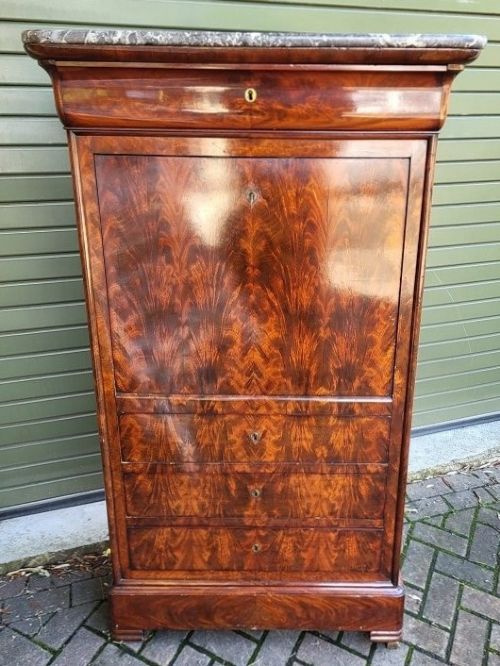


Antique French Drop Desk
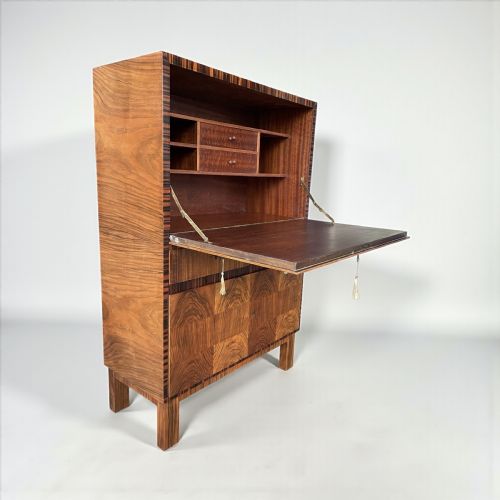
An antique french drop desk offers a clever vertical writing solution that conceals a fitted interior behind a folding front.
Antique French Drop Desk
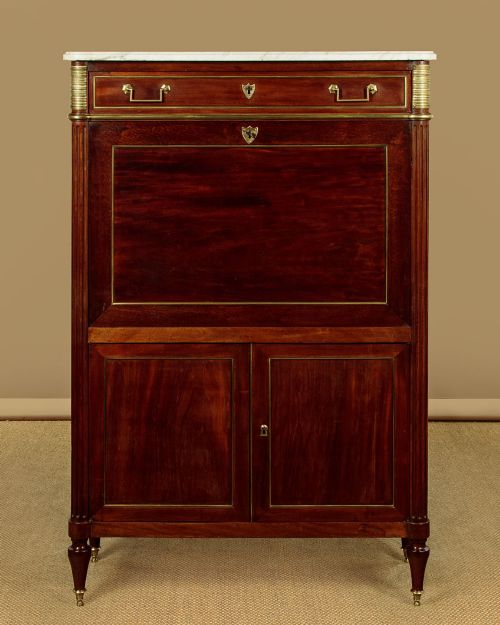
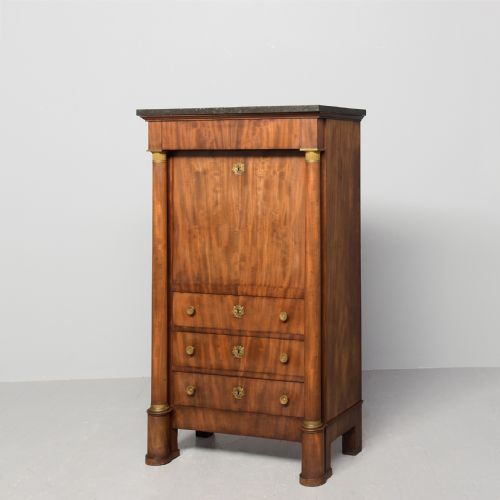
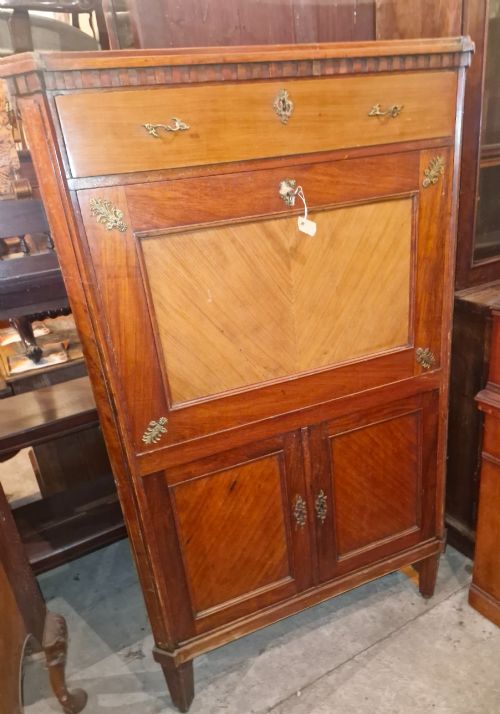
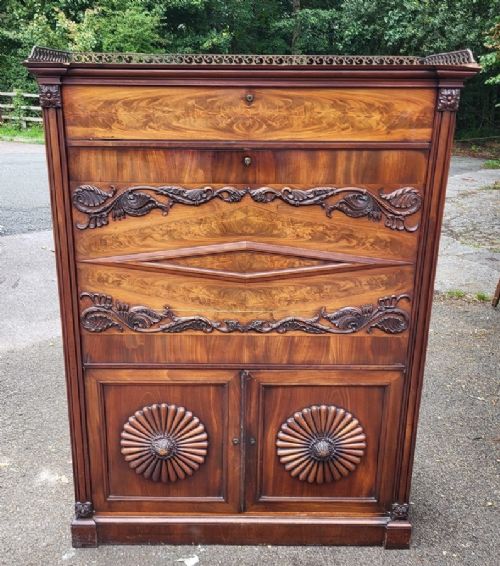
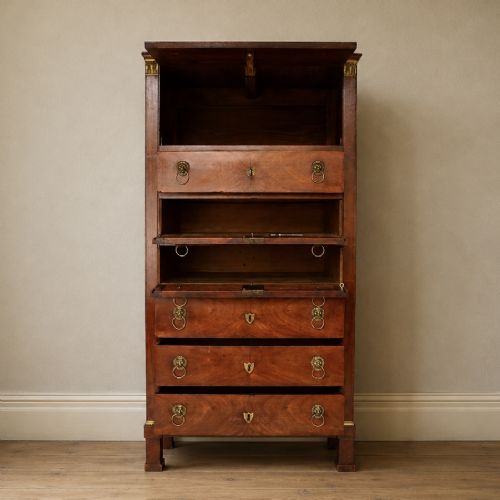
When you search for an antique french drop desk, you enter a world of upright writing furniture designed to save floor space while concealing papers and stationery. These pieces typically take the form of a secretaire abattant or escritoire, featuring a vertical cabinet with a drop-down writing flap that opens to reveal internal drawers and pigeonholes.
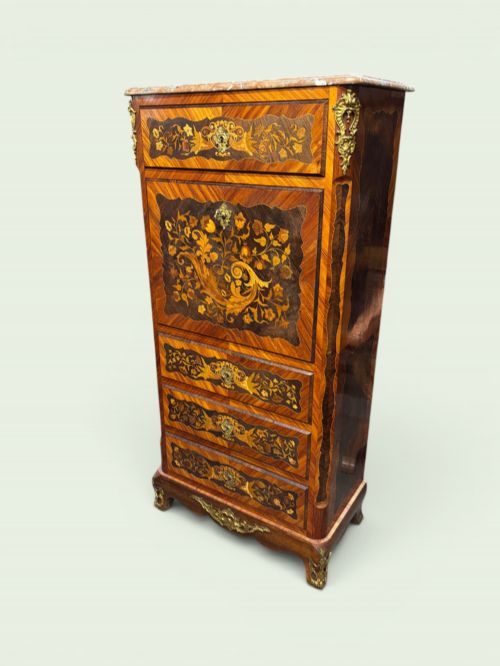
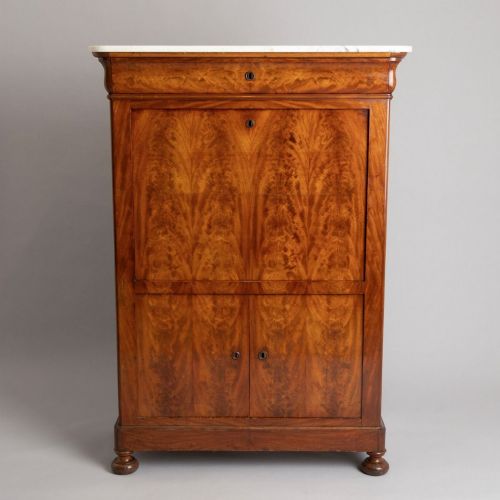
The version you are most likely to meet on this page is a nineteenth-century mahogany or walnut cabinet standing tall against the wall, often topped with marble and detailed with gilt bronze mounts. Makers from the Empire, Louis XV Revival, and Louis XVI Revival styles dominate these listings, bringing classical proportions and decorative veneers to the domestic study.
How they were made
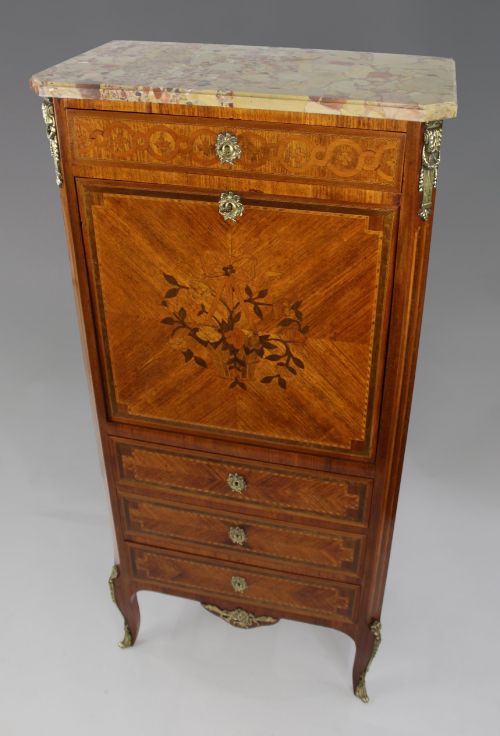
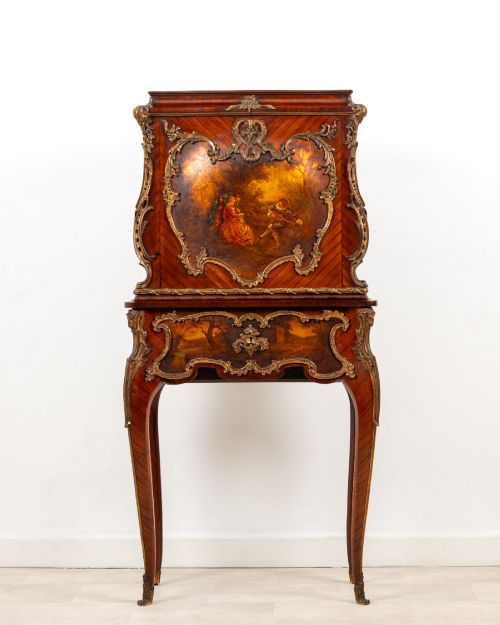
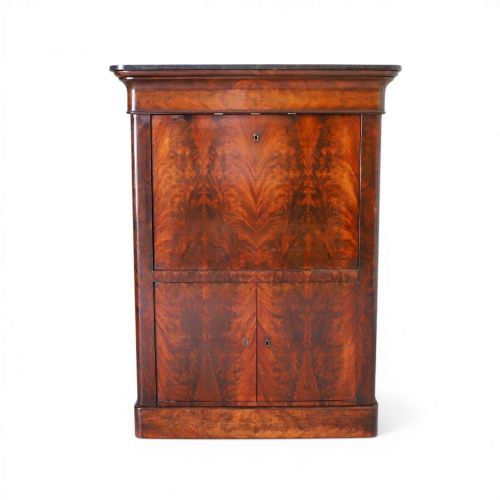
Cabinetmakers built these vertical carcases using solid timbers such as mahogany, walnut, and rosewood, often applying decorative veneers like kingwood and satinwood in geometric parquetry or floral marquetry patterns. Flame mahogany provides striking grain movement across the large drop front, while Vernis Martin finishes add painted pastoral scenes beneath clear varnish.
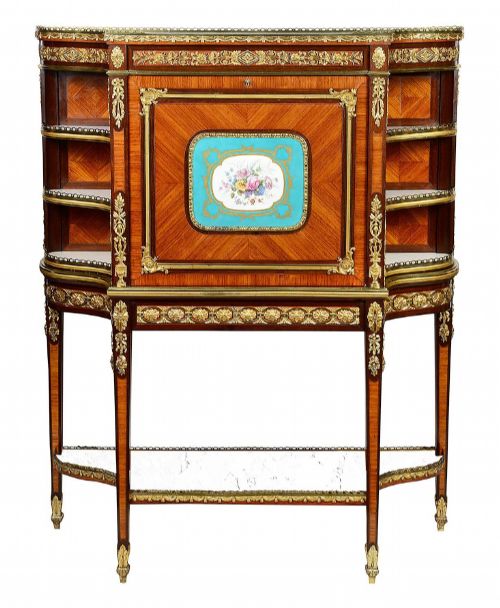
Mounts in ormolu and brass accent the corners, keyholes, and feet, while inset panels of leather line the writing surfaces. Marble slabs, frequently in white or grey, crown the tops of many nineteenth-century examples to create a durable and weighty surface.
Listings feature mahogany, kingwood, walnut, and rosewood alongside marble tops and ormolu mounts across the nineteenth century.
What varies in quality
The distinction between ordinary and exceptional pieces rests upon the precision of the cabinetwork and the execution of the decorative details. Superior examples display seamless marquetry, crisply chased ormolu mounts, and finely grained timbers that align naturally across the closing flap and drawer fronts.
Internal engineering also sets the better pieces apart, particularly the complexity of the concealed secret drawers and the smooth action of the internal fittings. The integration of original marble tops and well-preserved leather writing inserts completes the standard of the upper tier.
Blake, London·Jean-Joseph Chapuis
The Antique French Drop Desk Glossary
- Secretaire abattant
- A tall writing cabinet with a hinged drop-down front panel that serves as a writing surface. This form conceals a cluster of small drawers and pigeonholes inside.
- Escritoire
- A light writing desk or cabinet designed for correspondence. It shares functional similarities with the larger secretaire formats.
- Ormolu
- Gilded bronze used for decorative mounts and furniture trim. It brings metallic contrast to dark woods like mahogany and kingwood.
- Marquetry
- The art of applying pieces of veneer to a structure to form decorative patterns and pictures. Craftsmen use varied wood tones to create pictorial depth.
- Parquetry
- A geometric mosaic of wood pieces used for surface decoration on tabletops and cabinet fronts. It relies on regular angles and contrasting grains.
Antique French Drop Desk: Frequently Asked Questions
How do I use a drop desk?
Lower the vertical front panel to horizontal, supported by internal stays or the key, to create an immediate writing surface. The interior compartments organise letters, pens, and small documents.
When writing is finished, simply lift the panel back into its vertical position and lock the fall front to secure the contents out of sight.
Where did these desks originate?
These writing cabinets developed primarily in French workshops throughout the eighteenth and nineteenth centuries. Cabinetmakers refined the upright format to suit Parisian townhouses where floor space carried a premium.
Revival movements later reinterpreted these earlier monarchical styles during the nineteenth century, producing the majority of the pieces found in this category.
How do I care for the marble top?
Wipe the marble surface regularly with a soft, damp cloth using plain water or mild soap. Avoid acidic cleaners, vinegar, or citrus solutions that etch polished stone.
Place protective felt pads beneath heavy desk accessories or lamps to prevent scratching the surface over time.
How do I identify the wood types?
Examine the grain patterns and natural colour under good daylight. Mahogany shows a reddish-brown tone with straight or ribbon grain, while walnut exhibits darker, swirling figures.
Exotic veneers like kingwood and rosewood display distinct contrasting stripes and rich colour variations that distinguish them from standard domestic timbers.