

Antique French Desk Bronzes
Antique french desk bronzes unite utilitarian writing furniture with sculptural cast metalwork from the nineteenth and early twentieth centuries.
Antique French Desk Bronzes
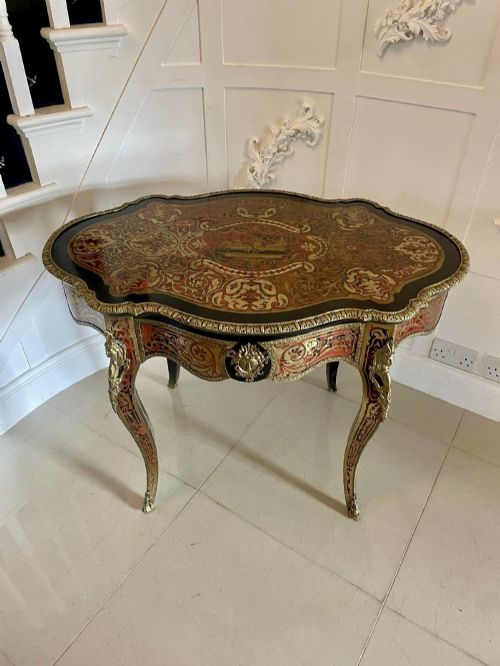
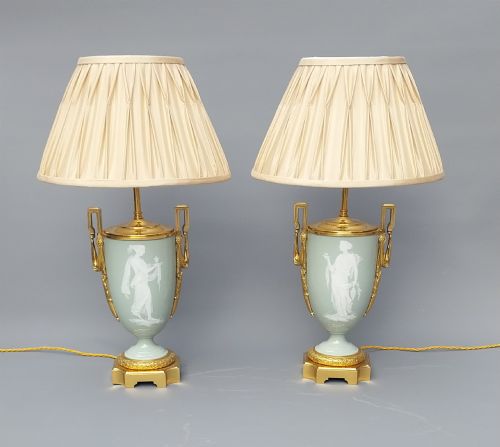
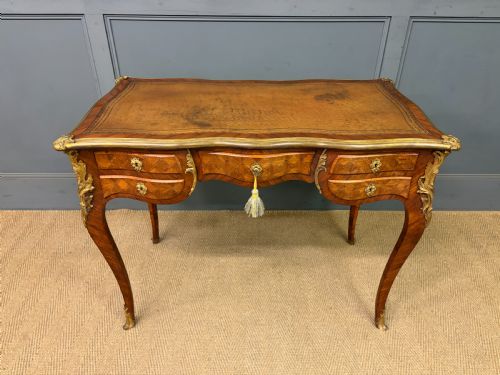
Buyers seeking antique french desk bronzes encounter a selection centred on writing furniture embellished with cast metal mounts, alongside standalone desk sculptures and ornamental timepieces. The material evidence spans the nineteenth century through to the art deco period, drawing heavily on revival styles such as louis xv and louis xvi.
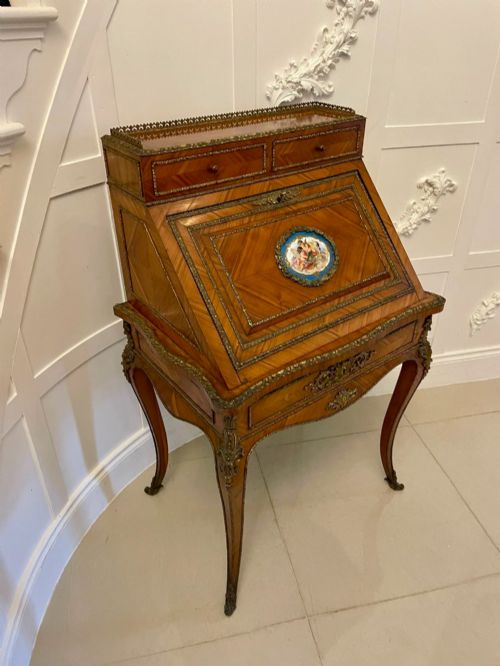
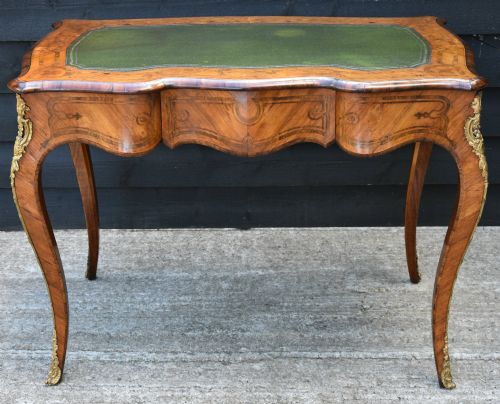
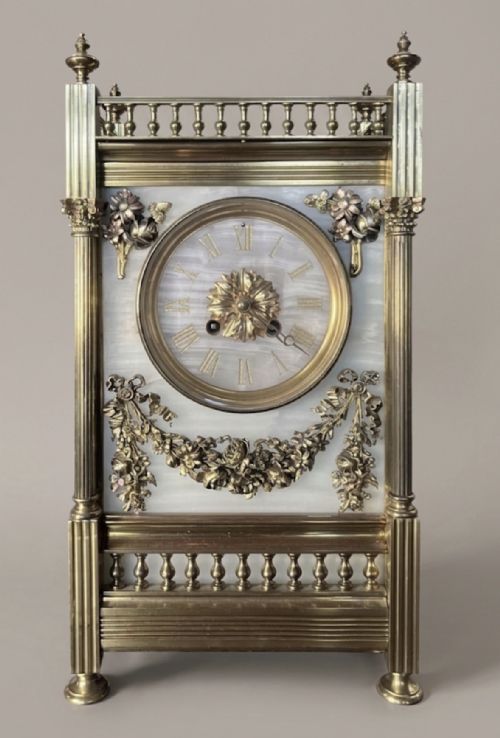
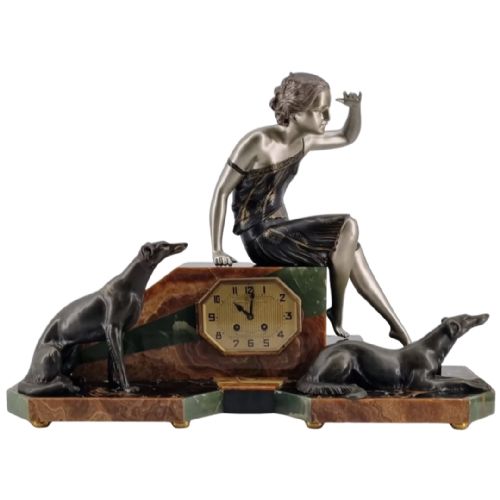
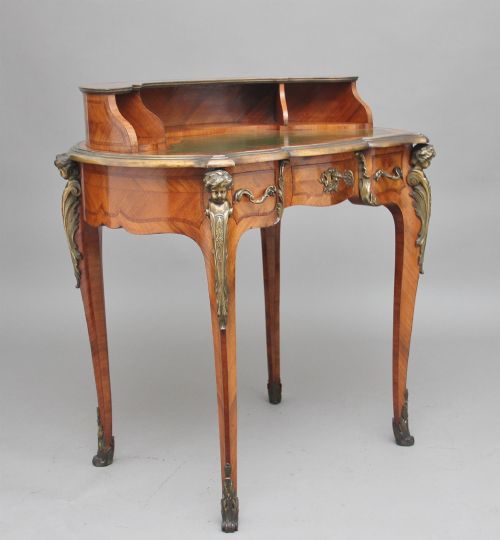
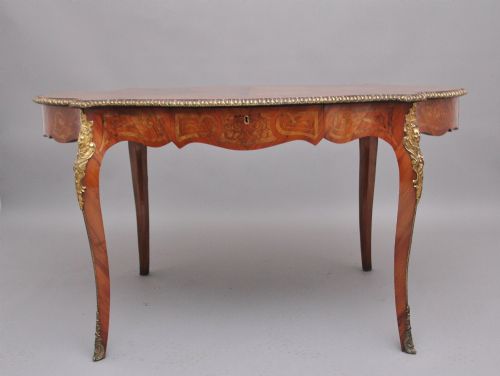
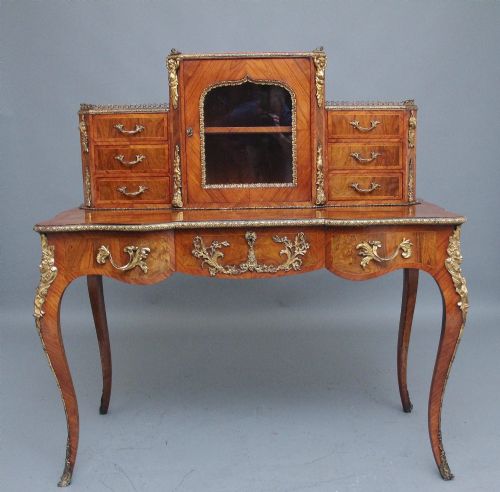
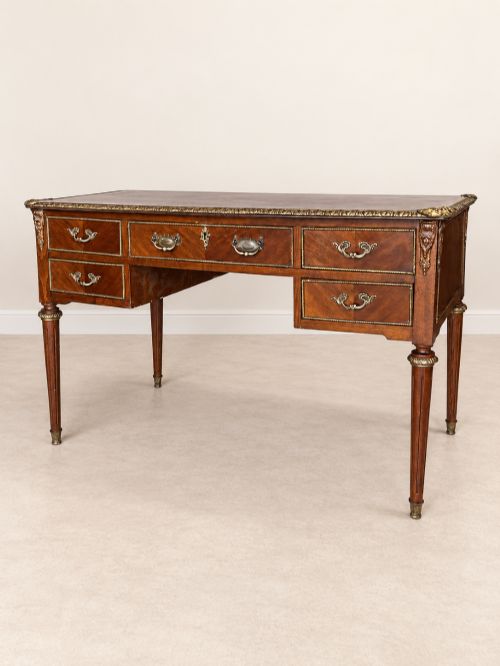
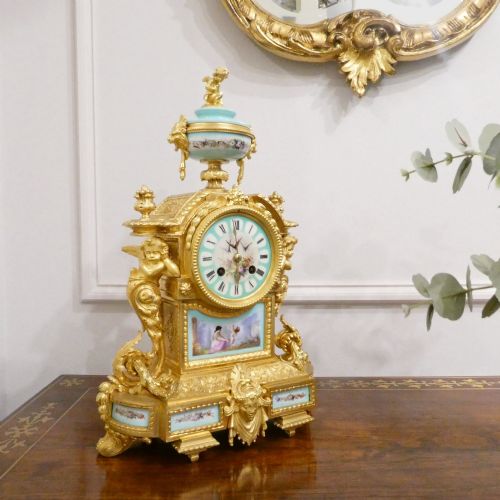
Bureau plats, cylinder desks and bonheur de jours form the core of the furniture selection, frequently paired with gilt bronze or ormolu mounts. Alongside these writing tables, mantel clocks and figural bronzes populate the category, reflecting the broader domestic ornamentation of french interiors.
Materials and construction
The construction relies on timber carcasses veneered in kingwood, rosewood, and mahogany, often enhanced with intricate parquetry and marquetry inlay. Ormolu and gilt bronze mounts are cast, chased, and fire-gilded to create crisp decorative accents along desk borders and drawer fronts.
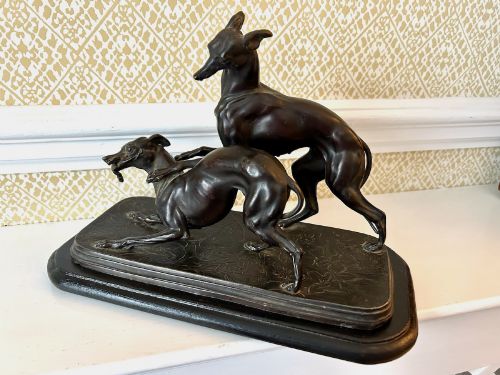
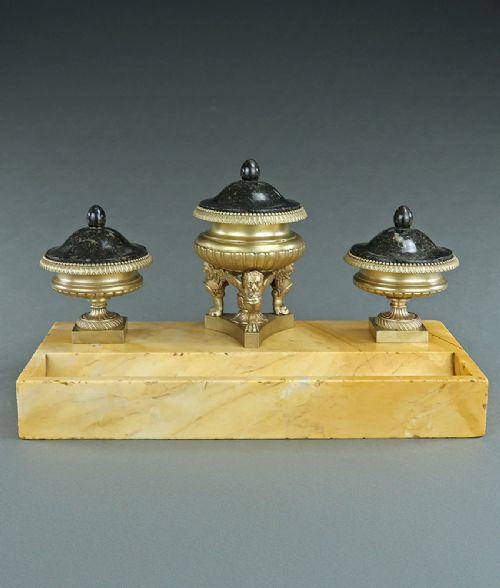
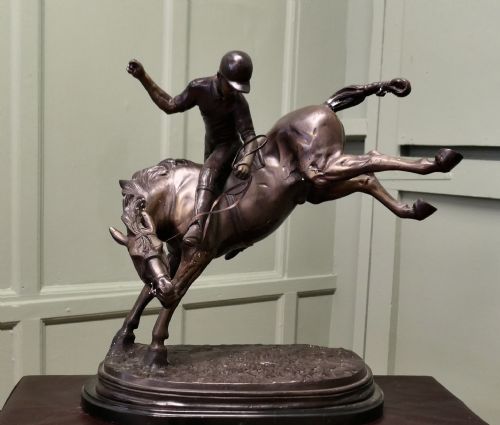
Bronze figures and clock mounts incorporate lost-wax or sand-casting techniques, followed by hand-finishing with chisels and files to define surface textures. Marble and onyx bases frequently anchor sculptures and timepieces, adding weight and tonal contrast to the metalwork.
The listings span the nineteenth century and early twentieth century, featuring ormolu, bronze, kingwood, and marble across desks and timepieces.
Assessing quality and execution
Quality rests upon the crispness of the bronze chasing and the depth of the gilding applied to mounts and figures. Superior pieces display sharp, clean lines in the metalwork where secondary hand-chiselling accentuates drapery, hair, and foliage.
Joinery and timber selection distinguish finer items, with cabinetwork showing precise matching of veneers and well-fitted drawer construction. Maker attribution to established workshops elevates standard production pieces through superior finishing and proportion.
Francois Linke·Paul Sormani·Japy Freres·Achille Brocot·Maison Krieger·Edwards and Roberts
The Antique French Desk Bronzes Glossary
- Ormolu
- Gilded bronze, produced by applying a mercury and gold amalgam to a bronze object and heating it to drive off the mercury. This technique yields a durable, warm metallic lustre characteristic of nineteenth-century decorative arts.
- Bureau plat
- A freestanding writing table fitted with drawers across the frieze, typically finished on all sides to allow placement in the centre of a room. These desks frequently feature leather-inset writing surfaces and gilt bronze mounts.
- Bonheur de jour
- A small, light ladies' writing desk featuring a super-structure of small drawers, pigeonholes, or a cabinet above the main writing surface. Originating in the eighteenth century, variants continued to be produced through the nineteenth century.
- Animalier
- A nineteenth-century artistic movement focusing on the realistic depiction of animals, particularly in bronze sculptures. Practitioners captured creatures in dynamic movement or natural repose.
- Parquetry
- Geometric wood inlay work arranged in patterns such as squares, lozenges, or cubes across furniture surfaces. Craftsmen selected contrasting wood veneers to accentuate the geometric design.
Antique French Desk Bronzes: Frequently Asked Questions
How do I care for ormolu mounts?
Ormolu mounts require gentle dusting with a soft, dry cloth to prevent the accumulation of dirt in recessed chasing. Avoid abrasive cleaners, polishes, or chemical solvents that strip the historical gold layer from the bronze substrate.
Maintaining stable room humidity protects the underlying timber and prevents the adhesive bonds between the wood and metal mounts from failing over time.
What distinguishes louis xv from louis xvi style?
Louis xv style relies on asymmetrical curves, rococo scrolls, and flowing naturalistic forms inspired by nature. Mounts on these pieces emphasise movement and undulating contours across the desk or clock frame.
Louis xvi style marks a return to classical symmetry, straight lines, and geometric precision derived from antiquity. Pieces from this aesthetic incorporate architectural motifs, fluted columns, and restrained bronze mounts.
Where were these desk bronzes made?
The majority of these desk bronzes and mounted furniture pieces originated in workshops centred around paris. Parisian cabinetmakers and bronze-founders dominated the luxury goods market throughout the nineteenth century.
Retailers and department stores across europe subsequently imported and retailed these works, distributing french designs to international buyers and collectors.