




Antique Floral Silver Dish
These antique floral silver dishes bring botanical decoration to the table in sterling and plated forms.
Antique Floral Silver Dish
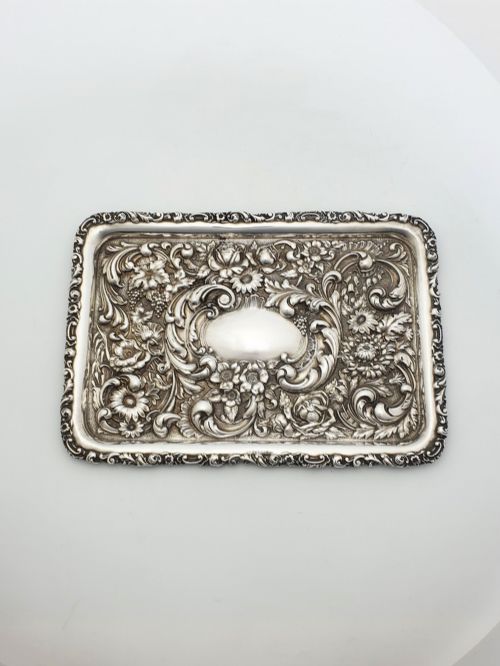
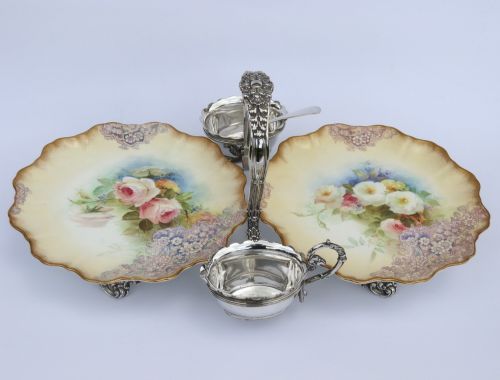
When you search for an antique floral silver dish, you are looking at domestic vessels shaped like bowls, baskets, trays, and serving dishes that incorporate plant ornamentation. The pieces on this page span the Georgian, Victorian, and Edwardian periods, stretching from the early nineteenth century into the opening decades of the twentieth.
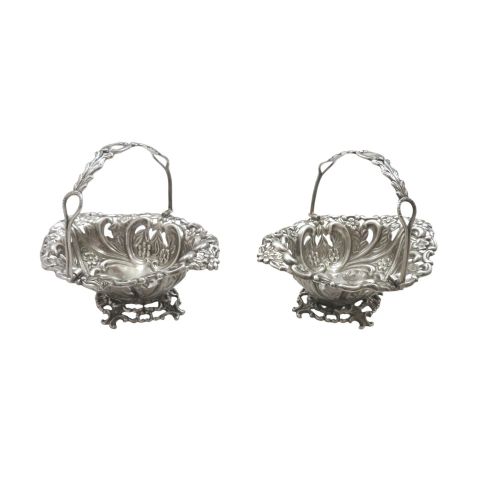
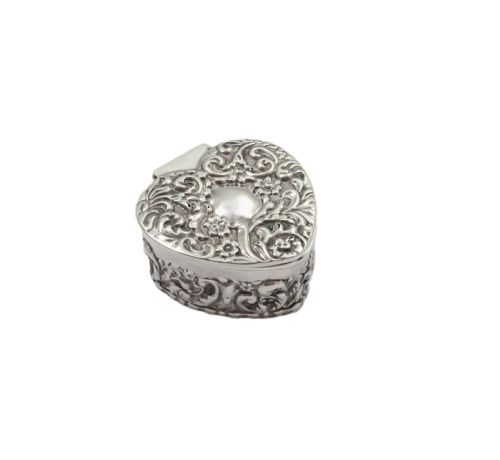
You will most commonly meet items fashioned from sterling silver or silver plate, alongside occasional examples in white metal, solid silver, and pewter. These range from small bonbon dishes and salt cellars to larger dessert sets, chargers, and platters.
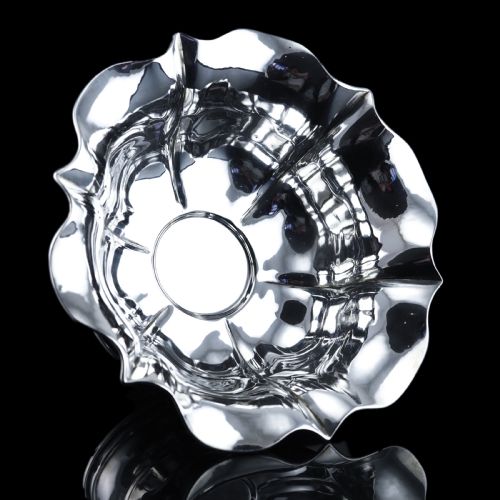
Stylistic influences vary widely across the inventory, taking in traditional British designs, Chinese Export work, Austro-Hungarian pieces, and continental Art Nouveau or Secessionist creations. Each version adapts botanical motifs to practical household use.
How they were made
Silversmiths utilised solid sterling silver and silver plate over base metals, alongside pewter and Britannia metal, shaping the body through hammering, casting, or spinning. Cast elements like handles and feet were often soldered onto the main vessel.
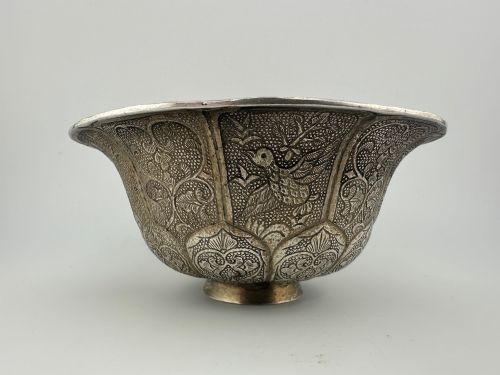
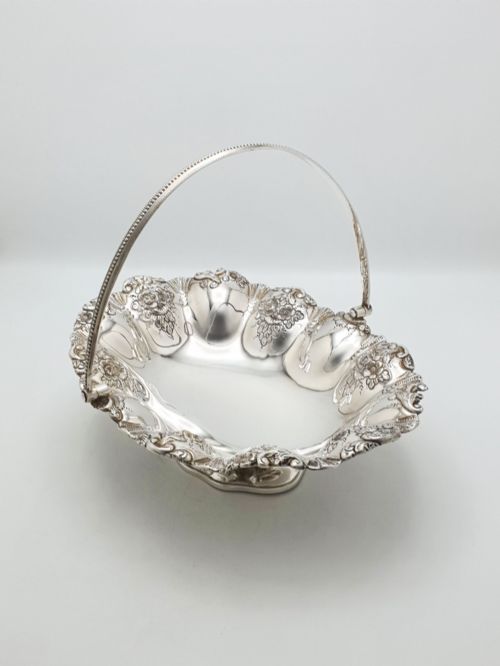
Decoration relied on repoussé work, chasing, and engraving to raise or cut floral patterns into the metal surface. These techniques allowed makers to render naturalistic flowers, scrolling foliage, and repeating botanical borders with distinct depth and texture.
Periods represented span from Georgian and Victorian times through to Edwardian and Art Nouveau eras.
What varies in quality
The standard of a piece rests heavily on the crispness and depth of the floral ornamentation, where hand-chased or deeply hammered repoussé work outshines shallow machine stamping. Superior examples show careful definition in every petal and leaf rather than a soft, blurred imprint.
Construction details also separate finer items from standard production, particularly in the weight of the metal and the solidity of applied handles and rims. Pieces that retain structural integrity without excessive thinning from polishing represent the higher tiers of craftsmanship.
Walker and Hall·William Bateman·William Comyns·Thomas Bishton·Josef Margold
The Antique Floral Silver Dish Glossary
- Repoussé
- A metalworking technique where the design is hammered into relief from the reverse side. This method gives floral motifs a tactile, three-dimensional quality that rises above the surface of the dish.
- Sterling silver
- An alloy containing a high proportion of pure silver alongside strengthening metals, traditionally marked with standard hallmarks. It forms the primary durable material for higher-end antique tableware.
- Bonbon dish
- A small vessel designed specifically for holding sweets or confectionary during dessert courses. These items frequently feature pierced decoration or floral chasing suited to small-scale presentation.
- Tazza
- An ornamental shallow cup or bowl mounted on a stem and foot. In silver and pewter work, this form elevates floral centrepieces above the table surface.
- Chasing
- The complementary technique to repoussé, worked from the front to refine details and push metal inward. This adds texture and shadow lines to leaves and petals.
Antique Floral Silver Dish: Frequently Asked Questions
How were silver floral dishes used originally?
These vessels served various functions at the dining table and in the drawing room, holding fruit, sweets, nuts, or calling cards. Larger platters and baskets acted as centrepieces or held dessert courses for guests.
Smaller items like salt cellars and trinket boxes performed specific domestic tasks, combining utility with ornamental botanical design.
How do I care for antique silver dishes?
Regular, gentle dusting and occasional cleaning with a specialist silver cloth maintain the metal surface without wearing away thin plating. Avoid harsh abrasive dips that strip the character from engraved or chased floral details.
Store pieces in dry conditions away from direct sunlight to slow down natural tarnishing processes.
How can I tell the period of a dish?
Hallmarks stamped onto sterling silver pieces provide the most reliable guide to date and origin, indicating assay offices and active years. Stylistic clues like Art Nouveau curves or heavy Victorian casting also point toward specific decades.
Comparing construction methods helps place unmarked silver plate and white metal items into broad historical windows.