

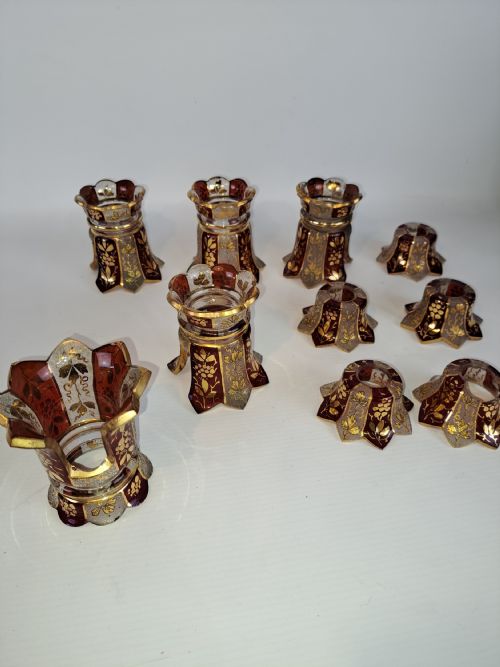


Antique Floral Sconces
Antique floral sconces bring botanical form and period illumination together on the wall, offering sculptural branching and hand-painted petals.
Antique Floral Sconces
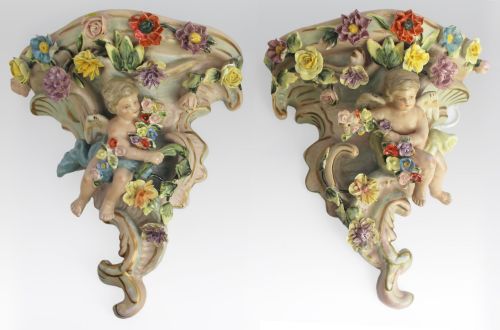
Antique floral sconces encompass wall-mounted lighting and brackets formed with botanical motifs, spanning from eighteenth-century figures with bocage to twentieth-century toleware branches.
The pieces on this page originate predominantly across the nineteenth and twentieth centuries, featuring European porcelain, giltwood, and painted metal.
Materials and construction
Craftsmen shaped these pieces using porcelain, gilt metal, toleware, and wrought iron, often combining moulded ceramic blooms with gilded frames or painted iron stems.
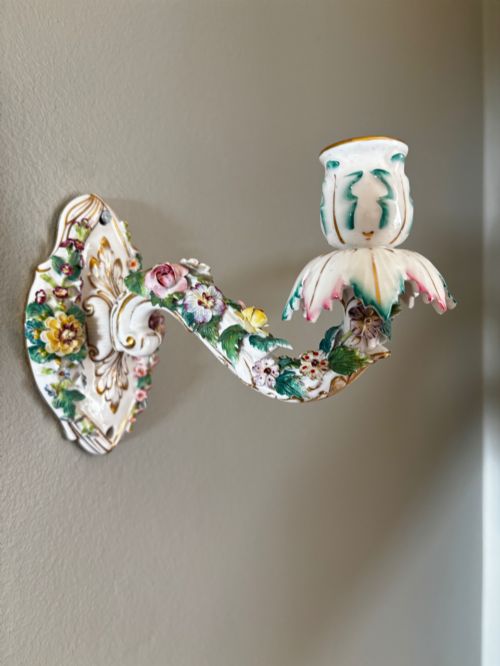
Porcelain elements display hand-applied paint and delicate modelling, particularly seen in botanical bocage and figural candlesticks from German and English factories.
Metal components involve chasing, gilt bronze, and painted sheet metal shaped into leaves and vines to support candles or electrical fittings.
Evaluating craftsmanship and detail
Quality rests in the crispness of the botanical modelling and the subtlety of the hand-painting upon the porcelain petals and leaves.
The integration of the metal armature or carved giltwood frame dictates the structural weight and visual harmony of the piece against the wall.
Meissen·Sitzendorf·Derby·Minton·Von Schierholz
The Antique Floral Sconces Glossary
- Bocage
- A decorative background of carved or modelled foliage and flowers, commonly found behind figures on eighteenth and nineteenth-century porcelain candlesticks. This leafy screen surrounds the figures to create a naturalistic garden setting.
- Toleware
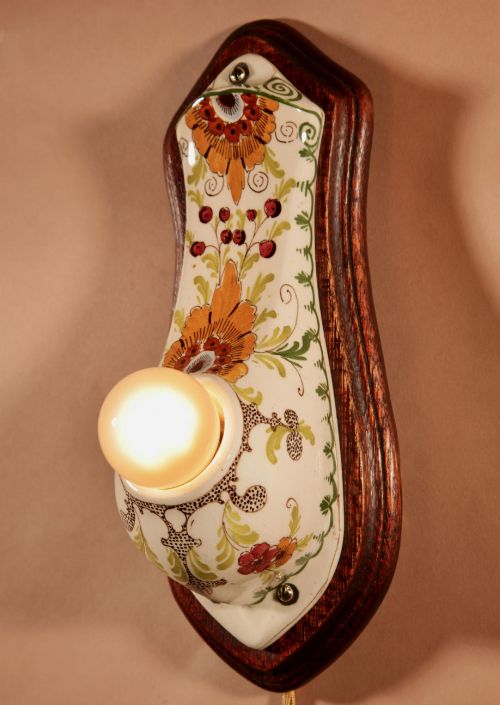
- Painted or lacquered sheet metal utensils and decorative objects originating in France and Britain. This tinware receives multiple coats of varnish and hand-painted floral motifs.
- Champlevé
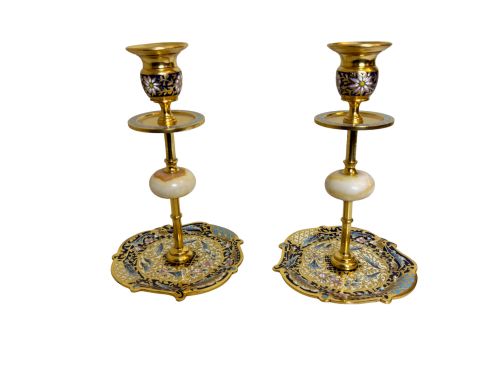
- An enamelling technique where troughs are sunk into a metal surface and filled with vitreous enamel before firing. The remaining metal partitions form the outlines of the design.
- Giltwood
- Timber, typically gessoed and carved, that has been coated with thin gold leaf or gilt powder. This finish provides a reflective, opulent surface for wall lights and mirrors.
Antique Floral Sconces: Frequently Asked Questions
How do I hang heavy porcelain sconces?
Wall brackets and porcelain sconces require secure fixings into wall studs or appropriate masonry plugs to support the combined weight of ceramic and metal.
Heavier figural pairs benefit from professional installation to distribute the load evenly across the mounting plate.
Are these sconces wired for electricity?
Many period wall lights adapt to modern electrical standards while retaining their original sockets, branches, or candle drip pans.
A qualified electrician can assess the internal wiring components safely during installation.
How do I clean antique porcelain flowers?
Delicate ceramic petals require gentle dusting with a soft, dry brush rather than liquid cleaners that might loosen applied paint.
Careful maintenance preserves the fragile hand-modelled edges of nineteenth-century botanical forms.
How do I date an antique sconce?
Dating relies on stylistic markers such as Art Nouveau curves, Victorian ornamentation, or Rococo Revival asymmetry, alongside material analysis.
Factory marks on porcelain bases and the construction methods of the metal armature provide further chronological evidence.