


Antique Floral Nursing Chair
An antique floral nursing chair brings low, compact seating and patterned textile upholstery to a bedroom or parlour.
Antique Floral Nursing Chair
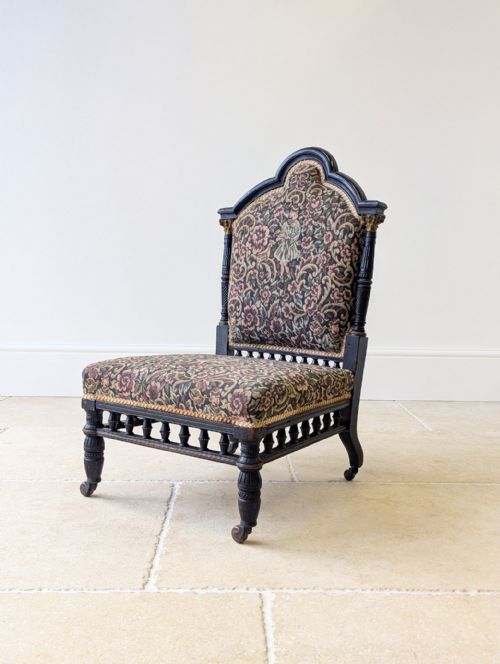
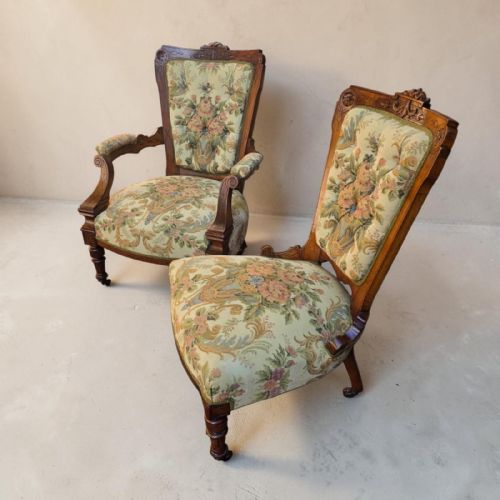
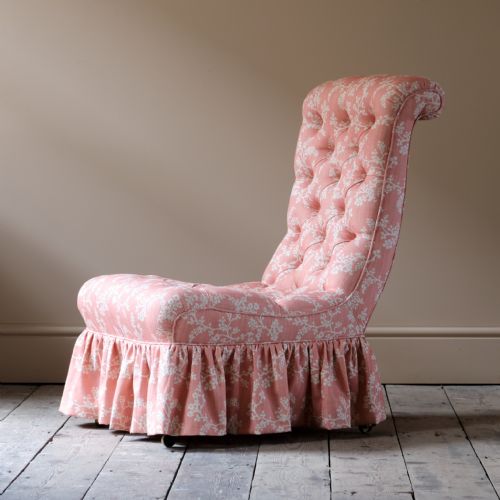
An antique floral nursing chair is a low-seated upholstered chair designed originally for comfort and tending to infants, though today it serves primarily as a decorative bedroom or salon seat. When searching this phrase, a buyer looks at a variety of Victorian and Edwardian forms, including low salon chairs, slipper chairs, and bedroom chairs.
The pieces appearing on this page span the Victorian and Edwardian periods, stretching from the mid-nineteenth century into the early twentieth century. Walnut and mahogany frames frequently support patterned fabric, tapestry, or vintage linen upholstery, reflecting the domestic tastes of their respective eras.
Makers and workshops of the nineteenth and early twentieth centuries produced these items in various regional styles, ranging from English walnut frames to French Napoleon III designs. Buyers encounter everything from simple beech rocking chairs to elaborately carved walnut ladies chairs with button backs.
How they were made
Makers constructed the frames of these chairs using hardwoods such as mahogany, walnut, oak, beech, and ebonised timber, often shaping the wood through carving or turning. Metal components like brass and iron appeared in internal frames, castors, and leg mounts.
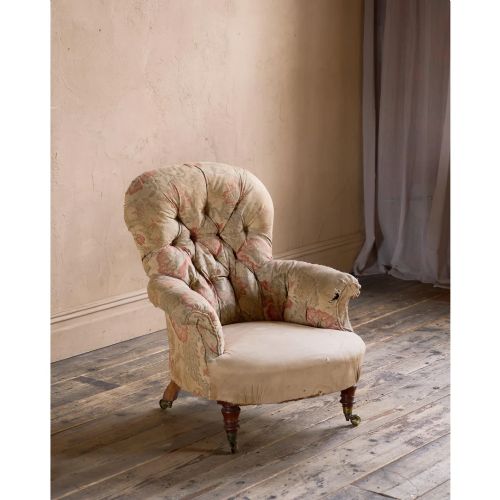
Upholstery techniques relied on traditional stuffing materials covered in durable fabrics, tapestry, or linen, secured sometimes with button backing. Details like gilt legs, floral inlay, and exposed carved wooden frames completed the construction.
What varies in quality
The calibre of timber and the crispness of hand-carved details separate standard production items from workshop pieces bearing maker stamps. Cabinetmaking skill shows in the solidity of the frame joints and the proportion of the low seat.
The integrity of the upholstery foundation and the choice of covering fabric also influence the standard of a piece. Original maker attributions add historical weight, distinguishing documented examples from anonymous nineteenth-century seating.
Holland and Sons·Gillows·Howard and Sons·Hindley and Sons·R Whytock of Edinburgh
The Antique Floral Nursing Chair Glossary
- Nursing chair
- A low-seated upholstered chair designed in the nineteenth century for comfort while feeding or tending to children. These pieces typically feature a compact frame suitable for bedrooms and dressing rooms.
- Slipper chair
- A low-to-the-ground bedroom chair originally utilised for sitting while putting on shoes or slippers. They share a similar low stature with nursing chairs.
- Prie-Dieu chair
- A devotional chair featuring a high, narrow back often fitted with an upper rail for kneeling or resting arms during prayer. These Victorian pieces frequently appear alongside standard bedroom seating.
- Button back
- An upholstery style where depressions are created in the padded back by sewing buttons deep into the stuffing in a diamond pattern. This technique adds both structural tension and decorative depth.
- Spoon back
- An upholstered chair back shaped in a concave oval resembling the bowl of a spoon, popular during the Victorian era. The wooden frame curves gently around the padded centre.
Antique Floral Nursing Chair: Frequently Asked Questions
What is a nursing chair?
A nursing chair is a low-seated Victorian or Edwardian armchair designed for comfort in bedrooms and nurseries.
Their reduced height made them practical for domestic tasks and sitting near fireplaces.
How do I tell Victorian from Edwardian chairs?
Victorian chairs generally feature heavier carved timber frames in walnut or mahogany, often with dark finishes and button upholstery.
Edwardian examples tend to use lighter woods like beech and incorporate simpler lines or subtle inlay work.
Where should I place a slipper chair?
Slipper chairs suit bedrooms, dressing rooms, and quiet corners due to their compact size and low profile.
They provide convenient seating without overwhelming smaller spaces.
Are these chairs comfortable for daily use?
Most antique chairs offer firm support thanks to traditional padding and sprung or webbed bases.
Their low seats make them relaxing for reading or resting.