

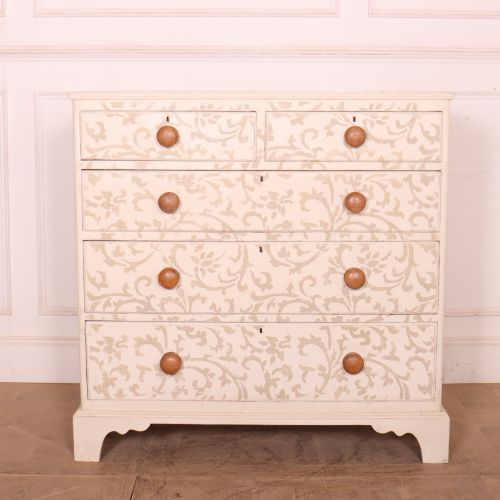
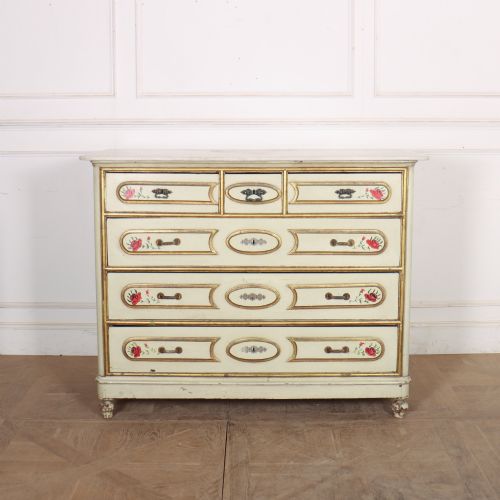


Antique Floral Dresser
An antique floral dresser brings intricate marquetry and inlaid botanical motifs into living spaces.
Antique Floral Dresser
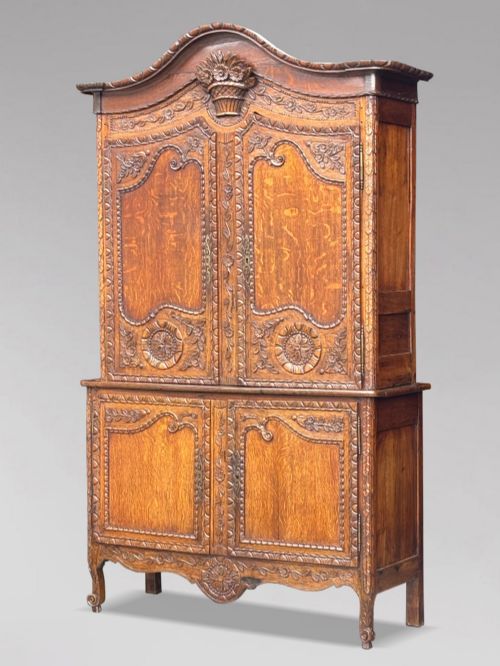
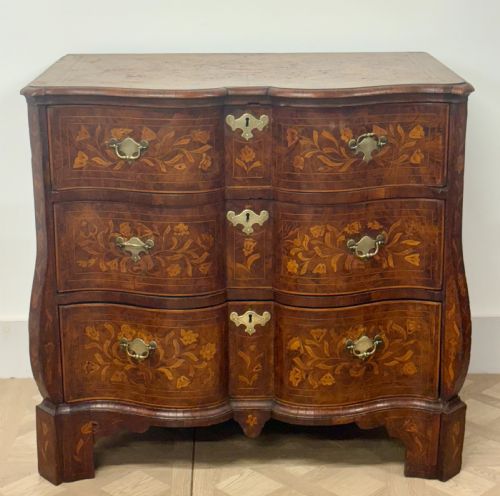
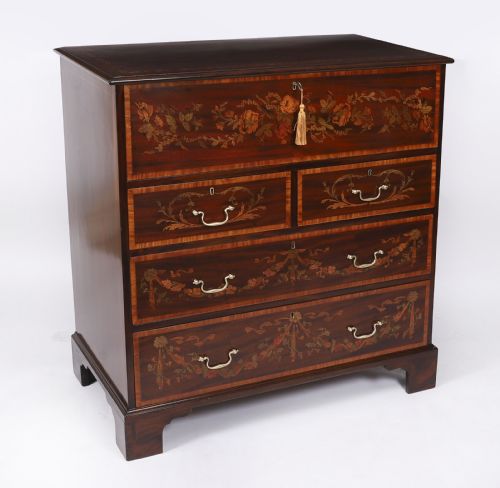
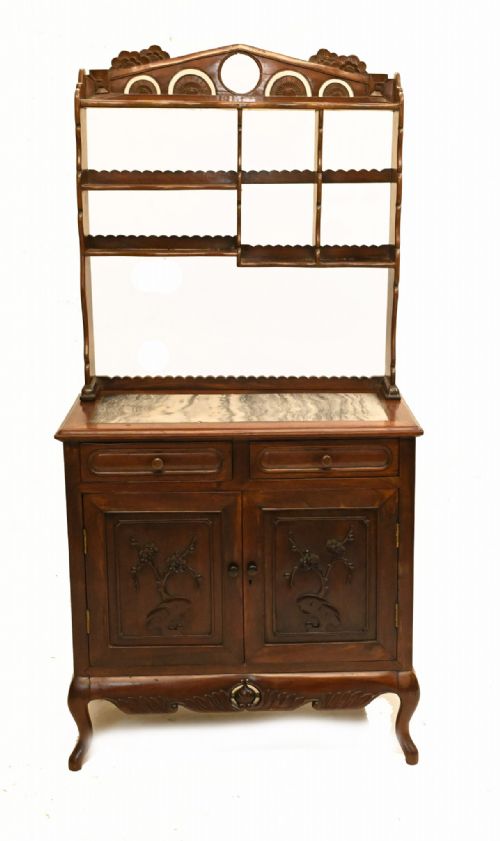
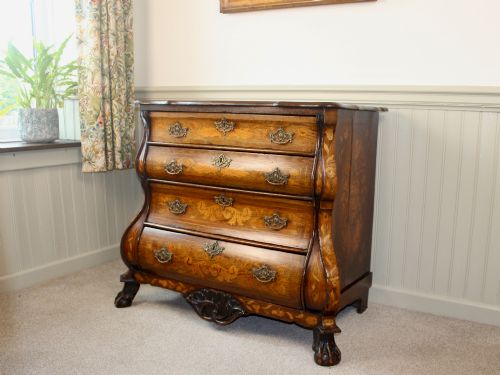
An antique floral dresser encompasses various forms featuring botanical inlay, marquetry, or painted floral decoration across centuries of craftsmanship. Buyers encounter pieces ranging from 17th-century William and Mary walnut chests to 18th-century Dutch bombe forms and Victorian kitchen dresser bases. These items function as storage chests, commodes, sideboards, and dressing table boxes rather than solely kitchen dressers.
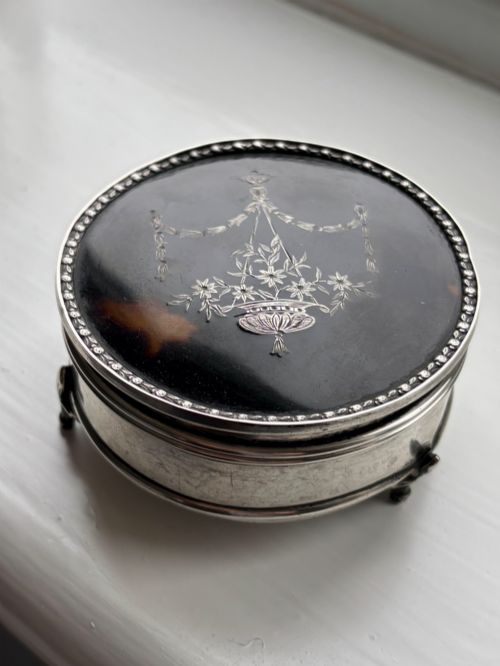
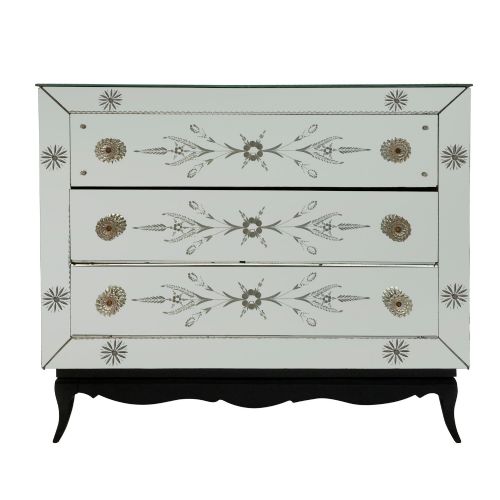
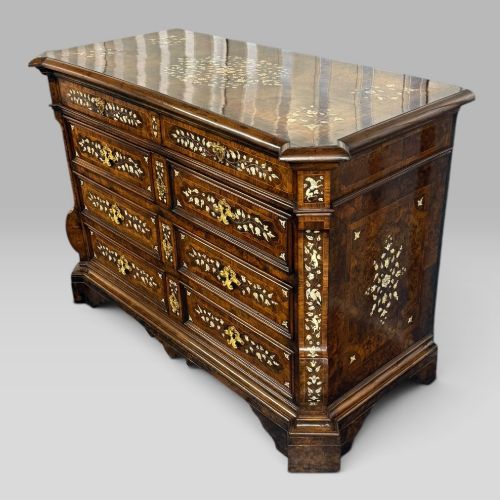
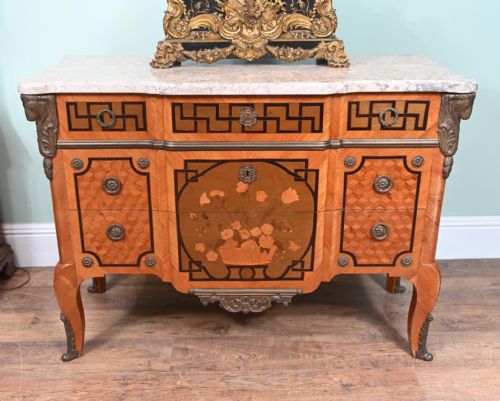
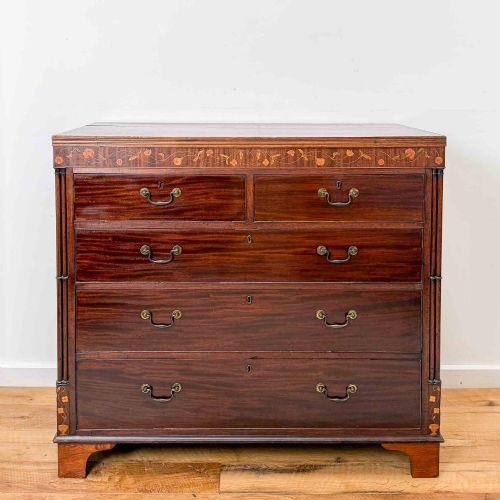
The selection on this page leans heavily toward continental marquetry chests of drawers and commodes alongside smaller English silver and glass trinket boxes. Walnut, oak, and mahogany provide the primary carcases for elaborate floral and foliage marquetry panels. Pieces from Dutch, French, and English workshops dominate the offerings across the 17th, 18th, and 19th centuries.
How they were made
Cabinetmakers constructed the carcases of these pieces using solid timbers like oak, walnut, and mahogany, applying fine veneers for decorative surfaces. Marquetry involves cutting contrasting woods, fruitwoods, and lighter veneers to form detailed floral and scroll motifs that are fitted into recesses on the drawer fronts and tops.
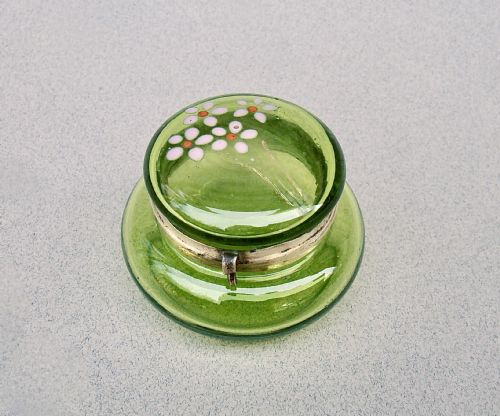
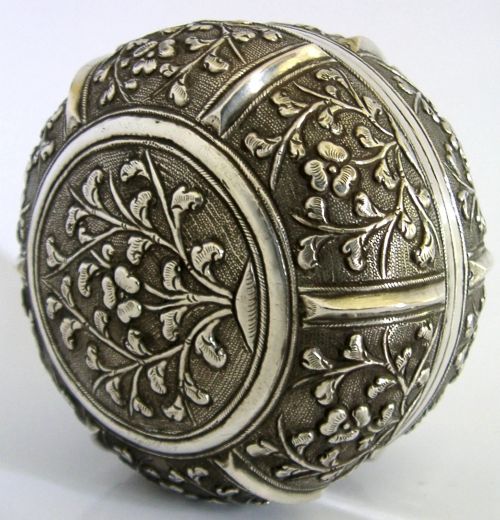
Surface ornamentation extends beyond timber veneer into hand-painted enamel on glass, sterling silver repoussé work, and brass mounts. Artisans utilised hand tools to achieve the shaped serpentine or bombe contours characteristic of Dutch and continental commodes, securing panels with traditional joinery.
Antique Floral Dresser Retail Price Guide 2026
Typical asking prices for floral dresser among the pieces listed under this phrase on Sellingantiques today, from the lower quarter to the upper quarter. They describe what is for sale here now, not the wider market.
Materials in these listings include walnut, mahogany, oak, fruitwood, sterling silver, brass, glass, and marble.
What varies in quality
Quality in these pieces rests upon the precision of the marquetry cutting and the depth of botanical detail in the floral design. Superior examples display intricate shading within the wood veneers to give petals and leaves a naturalistic, three-dimensional appearance, whereas simpler items rely on basic geometric floral repetition.
The choice of primary timber and secondary wood thickness dictates structural integrity, with burr walnut and figured mahogany representing the higher tier of cabinetmaking. Original brass hardware, well-fitted drawer linings, and crisp carving on mounts or solid wood elements elevate the standing of a commode or chest.
Ollivant and Botsford·A and J Zimmerman Ltd·Christopher Dresser·Grand Ducal Workshops
The Antique Floral Dresser Glossary
- Marquetry
- Decorative veneer work arranged in intricate patterns, such as floral sprays or scrolling foliage, using various coloured woods.
- Bombe
- A swelling, outward-curving chest or commode shape popular in continental furniture design.
- Serpentine
- A furniture front or top shaped with a central convex curve flanked by two concave curves.
- Repoussé
- Metalwork hammered or pressed from the reverse side to form a raised design on the front.
- Trinket box
- A small lidded container utilised on dressing tables to store jewellery or small personal items.
Antique Floral Dresser: Frequently Asked Questions
What periods do these pieces date from?
The listings span from the 17th century through the Victorian and Edwardian eras up to the early 20th century. Earlier examples showcase William and Mary marquetry, while later pieces include Arts and Crafts oak and Edwardian silver boxes.
Cabinetmaking styles shift from seventeenth-century walnut to eighteenth-century Dutch bombe forms and nineteenth-century revival pieces. Each era employs distinct timber choices and decorative techniques.
How do I care for wooden marquetry?
Keep wooden chests and commodes away from direct sunlight and sudden temperature changes to protect the delicate veneer and floral marquetry. Apply appropriate furniture wax sparingly to maintain the finish without building up residue.
Avoid placing damp items directly onto antique timber surfaces. Gentle dusting with a soft, dry cloth preserves the inlaid details and the surrounding grain.
What is the difference between a commode and a chest?
A commode typically refers to a low, decorative chest of drawers of continental origin, often featuring shaped serpentine or bombe fronts. Standard chests of drawers generally present a more upright profile for general storage.
Both forms frequently feature elaborate floral marquetry or painted details across the drawer fronts and top surfaces.
Are all floral dressers made of wood?
While the larger furniture pieces consist of timber carcases with wood marquetry, smaller items incorporate various other materials. The selection includes sterling silver boxes with engraved floral scrolls and enamelled green or blue glass dressing table jars.
Metalwork, glass, and ceramics expand the scope of floral decoration beyond traditional cabinetmaking veneers.