



Antique Floral Carved Couch
An antique floral carved couch brings heavy timber frames and scrolling floral woodwork into a drawing room, offering deep seats upholstered in period fabrics.
Antique Floral Carved Couch
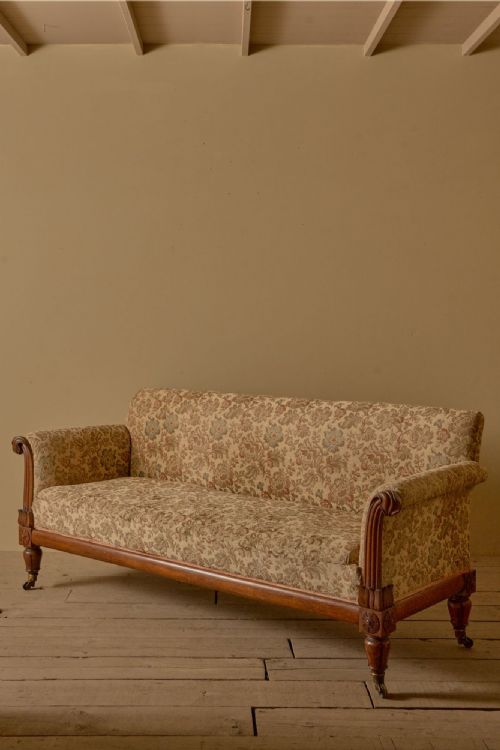
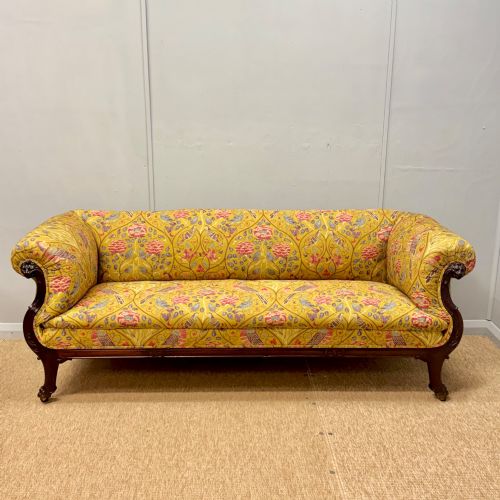
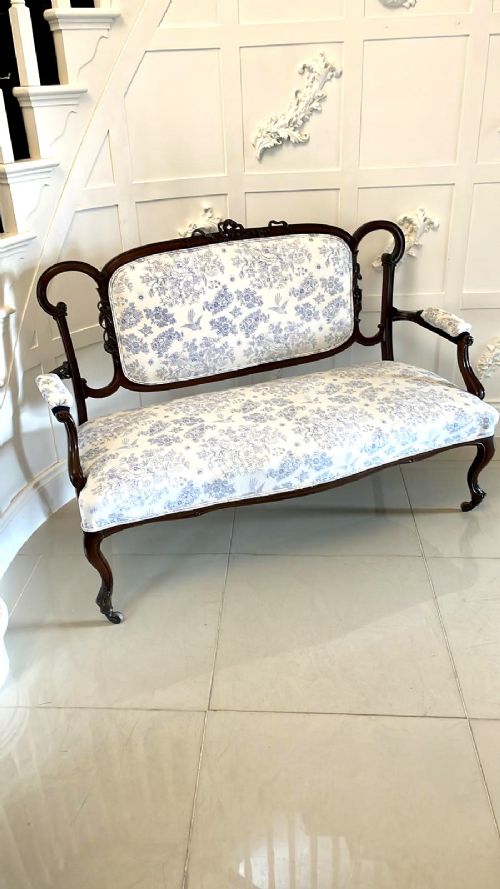
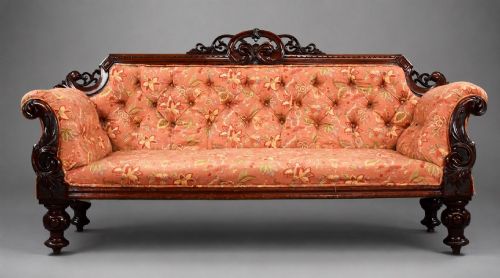
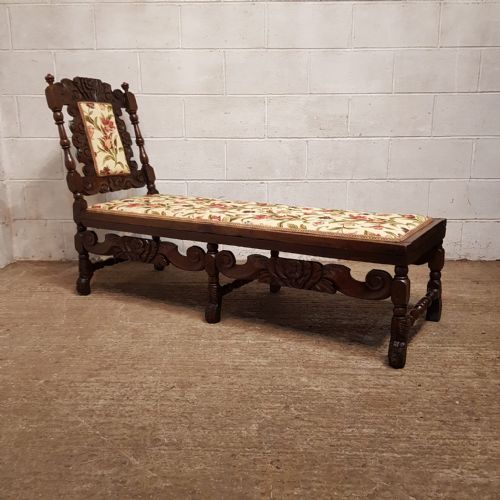
An antique floral carved couch comprises sturdy wooden frames fashioned into sofas, settees, chaise longues, and daybeds, with floral carving defining the structural woodwork. These pieces emerge chiefly from Victorian workshops, alongside Regency, Georgian Revival, and Louis XV style interpretations.
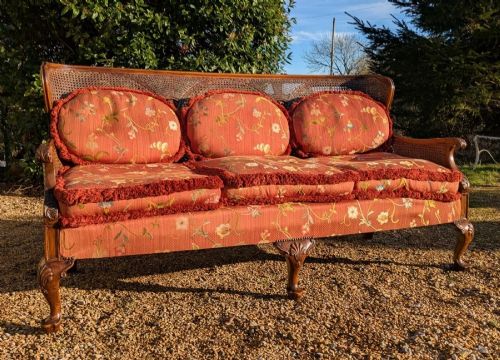
The common form on this page is the Victorian mahogany or walnut settee or chaise longue, often featuring exposed showwood and hand-carved floral motifs along the crest rail and frame. Alongside these, buyers find daybeds, camel back sofas, and double end settees with textile or leather upholstery.
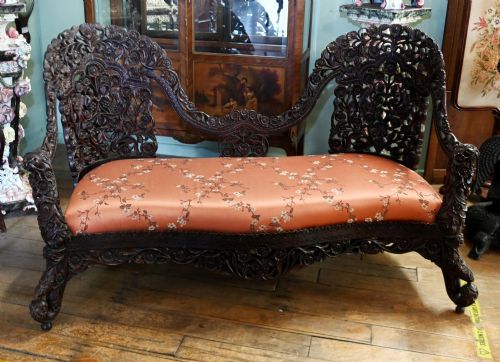
Origins span English, French, and Anglo-Indian colonial traditions, showing a geographical breadth in nineteenth-century seating. Materials range from solid hardwoods like mahogany and walnut to teak and hardwood frames fitted with brass castors.
What varies in quality
The crispness and depth of the hand-carved floral woodwork separate standard production from finer work, as skilled carvers achieved sharper leaf and petal contours in the solid mahogany or walnut. The quality of the timber frame itself, including the selection of figured veneers and dense hardwoods, determines structural integrity.
Antique Floral Carved Couch Retail Price Guide 2026
Typical asking prices for floral carved couch among the pieces listed under this phrase on Sellingantiques today, from the lower quarter to the upper quarter. They describe what is for sale here now, not the wider market.
One nineteenth-century library study sofa rests upon carved hawk claw and ball feet, keeping a sharp grasp on the floor.
H. Goodall & Sons
The Antique Floral Carved Couch Glossary
- Chaise longue
- An upholstered long chair or daybed designed for reclining, featuring a backrest and partial or full armrests. These pieces often exhibit carved wooden frames and textile coverings.
- Showwood
- The exposed polished timber frame of an upholstered seat, frequently decorated with carved floral details. It allows the grain and craftsmanship of the wood to remain visible around the fabric.
- Bergere
- An enclosed upholstered armchair or sofa with wooden framing and woven cane panels or padded sides. Examples from the twentieth century utilise feather cushions for added comfort.
- Camel back
- A sofa style characterised by a serpentine, convex curve along the top rail that resembles a camel's hump. This profile appears on eighteenth-century and revival-style settees.
- Button upholstered
- A seating technique where buttons are pulled deep through the padding and secured to create a geometric diamond pattern across the leather or fabric surface. This method adds firmness and visual texture.
Antique Floral Carved Couch: Frequently Asked Questions
What is an antique floral carved couch?
An antique floral carved couch is a nineteenth-century or revival-period seating piece, such as a settee, sofa, or chaise longue, defined by hand-carved floral woodwork. These items utilise timber frames like mahogany or walnut.
They combine structural woodwork with upholstered cushions, textile covers, or leather to serve as both decorative and functional seating.
How do I identify a Victorian settee?
Victorian settees are identified by heavy hardwood frames, prominent showwood, and dense floral carvings applied directly to the crest rails and legs. They frequently appear in mahogany, walnut, or oak.
Many examples feature button-upholstered surfaces, serpentine fronts, or brass castors, reflecting mid-to-late nineteenth-century cabinetmaking styles.
What materials were used for these couches?
Makers built the foundational frames from solid hardwoods, predominantly mahogany and walnut, alongside teak and general hardwood timbers. Brass hardware, including castors, often supported the feet.
Upholstery materials range from traditional textiles and horsehair to quilted William Morris fabrics, feather cushions, and hand-dyed aged brown leather.
How do I care for antique upholstery?
Care for antique upholstery involves gentle vacuuming with a soft brush attachment to remove dust without stressing fragile historic fabrics or leather surfaces. Direct sunlight should be avoided to prevent fading.
Leather surfaces benefit from appropriate conditioning balms, while professional conservation is recommended for fragile silk or wool textiles.