


Antique Floor Magazine Stand
An antique floor magazine stand keeps papers tidy while bringing period woodwork or metalwork directly to your sitting room floor.
Antique Floor Magazine Stand
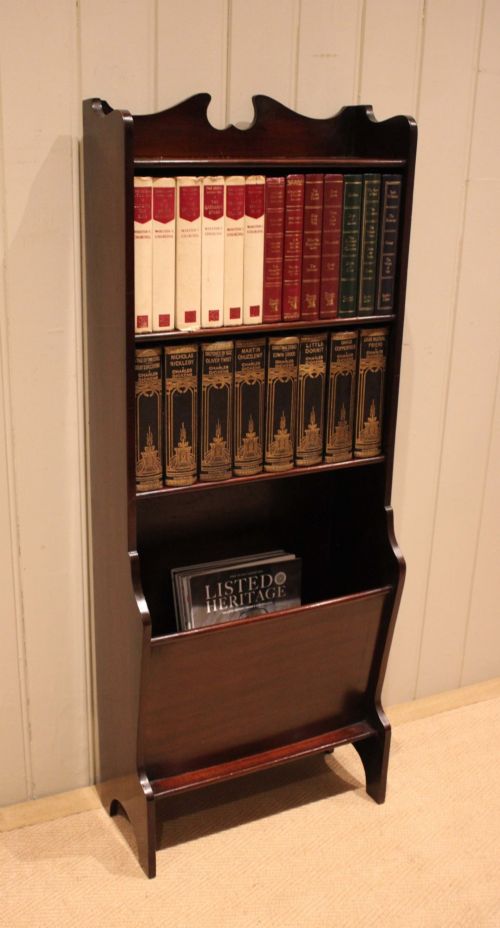
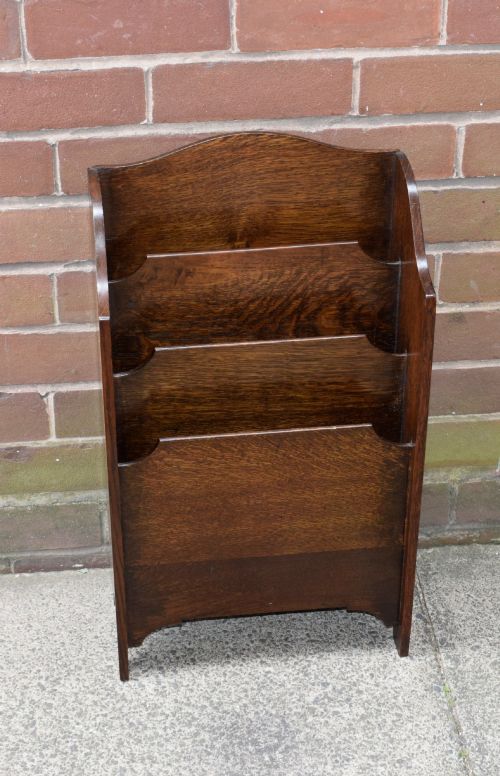
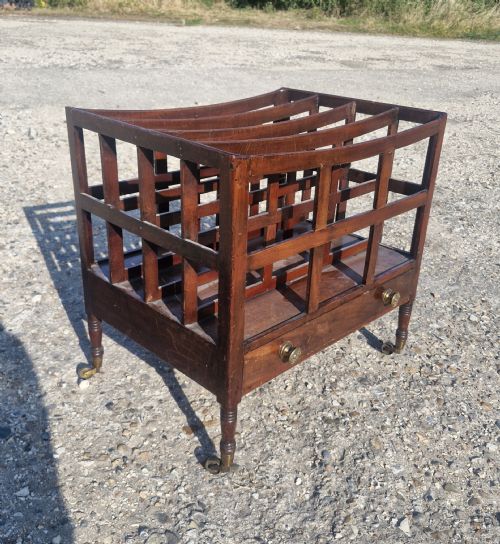
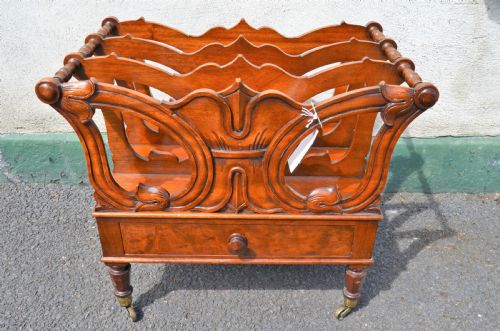
An antique floor magazine stand brings order to periodicals and papers through dedicated slots or troughs resting directly upon the ground. When you search for an antique floor magazine stand, you encounter varied forms including canterburys, book troughs, and revolving racks.
Most examples you meet on this page hail from the Victorian and Edwardian eras, spanning mahogany, oak, and bamboo construction. These pieces served to keep weekly journals and daily newspapers close to hand in the library or drawing room.
Many variants double as music stands or folio holders, reflecting how Victorian and Edwardian households stored their printed matter. Mahogany and oak predominate among the wood choices, often accompanied by brass fittings or rattan details.
Materials and construction methods
Cabinetmakers built these stands using solid timbers such as mahogany and oak, frequently shaping the wood with turned uprights and carved accents. Bamboo and rattan appear in specific aesthetic movements, offering a lighter alternative to traditional hardwoods.
Metal components play a structural role, particularly in revolving stands where brass actions permit smooth rotation. Painted finishes and gilt details also emerge on select pieces, adding decorative surface variety to the underlying woodwork.
Listings feature woods like mahogany and oak alongside alternative materials such as bamboo and rattan across Victorian and Edwardian eras.
Assessing quality in period stands
The distinction between standard utility items and superior examples lies in the choice of timber, such as figured Cuban mahogany, and the crispness of any carved detailing. Joinery methods reveal the maker's hand, with dovetailed joints and solid dividers outlasting simpler nailed construction.
Functional hardware marks out better pieces, especially in revolving designs that turn without wobble or binding. The integration of brass fittings and the overall weight of the timber speak directly to the original cost and ambition of the piece.
The Antique Floor Magazine Stand Glossary
- Canterbury
- A low stand with partitioned sections for holding sheet music, books, or periodicals, often featuring legs with castors. This form originated in the late eighteenth century and remained popular through the Victorian period.
- Folio stand
- A piece of furniture designed to hold large art folios, prints, or newspapers upright or at a sloping angle. These often feature adjustable sides or folding X-frame supports.
- Book trough
- A small, open-topped receptacle designed to hold a selection of books on a table or floor. They frequently appear in Edwardian libraries and sitting rooms.
- Revolving bookcase
- A freestanding tiered stand mounted on a pivot and heavy base, allowing access to books from any seated angle. Brass mechanisms are typically concealed within the central column.
- Black Forest
- A style of highly carved wooden furniture and decorative objects originating from the mountainous region of Germany and Switzerland. Pieces in this tradition often feature naturalistic foliage or animal carvings.
Antique Floor Magazine Stand: Frequently Asked Questions
What is a canterbury?
A canterbury is a low stand divided into partitions specifically designed to hold sheet music, periodicals, or books. They often include low legs fitted with castors for easy movement across the floor.
Originally created for the Archbishop of Canterbury, the form evolved to become a household staple for keeping reading materials tidy in the drawing room.
How do revolving stands work?
Revolving stands utilise a concealed internal pivot and bearing mechanism mounted on a heavy base. This allows the tiers of books or magazines to turn smoothly in either direction.
Makers used brass hardware within the central column to ensure durability and a steady rotation under the weight of heavy volumes.
Where were these stands used?
These stands found their place beside armchairs and writing desks in Victorian and Edwardian libraries, studies, and drawing rooms. They kept daily newspapers and current periodicals within arm's reach.
Larger folio stands served more specialised purposes in artist studios and music rooms for holding oversized sheets.
How do I date an oak magazine rack?
Dating an oak rack involves examining the style, construction marks, and hardware. Pieces from the Arts and Crafts period often display simple, sturdy frames with exposed joinery and hand-hammered copper or brass.
Edwardian examples tend to feature lighter proportions and standard machine-cut joints beneath polished wood surfaces.