


Antique Flatweave Tapestry
These antique flatweave tapestry pieces bring centuries of textile artistry into a room, offering tactile warmth and complex regional designs that anchor modern spaces.
Antique Flatweave Tapestry
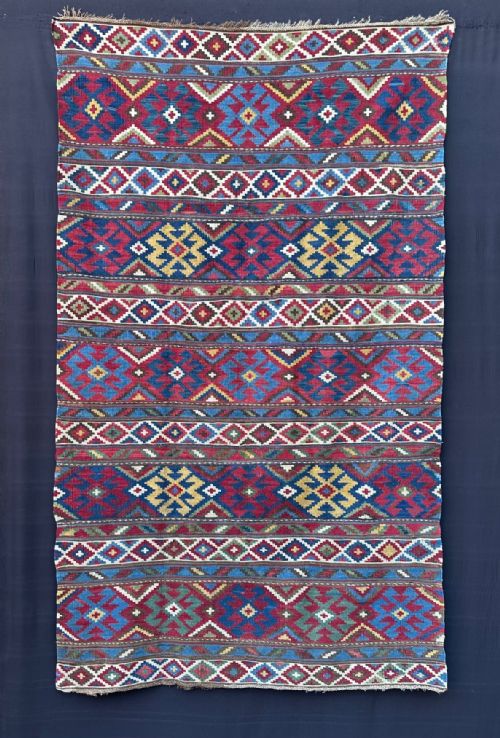
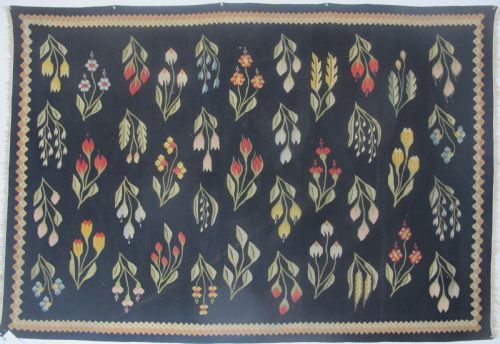
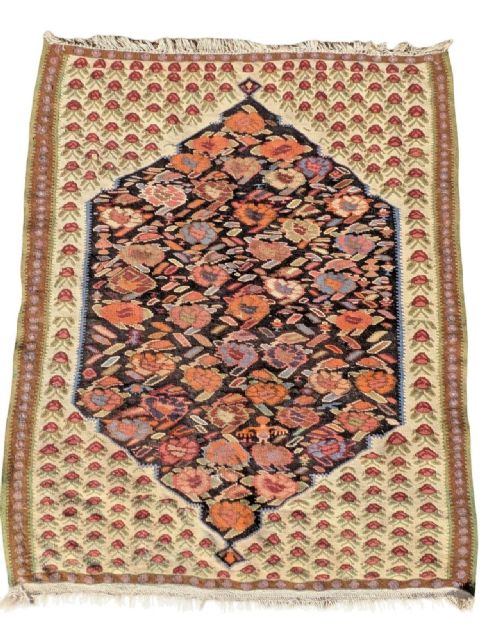
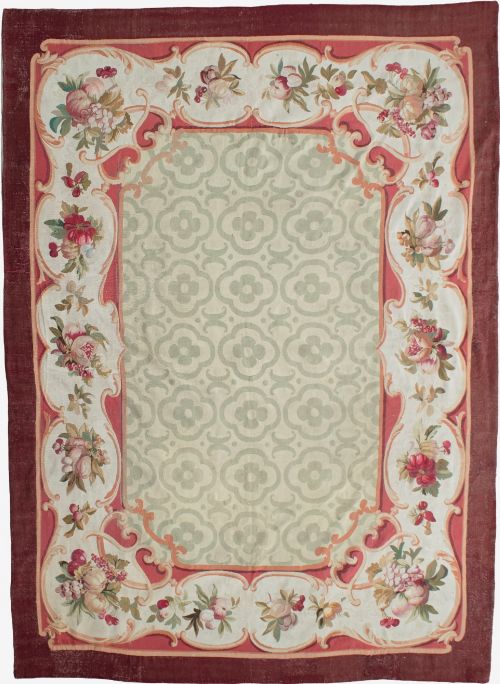
When searching for antique flatweave tapestry, buyers encounter an array of utilitarian textiles, floor coverings, and decorative wall hangings originating from European, Caucasian, and Asian regions. The selection spans nineteenth-century French Aubusson carpets, Romanian Bessarabian kilims, and tribal weavings from Persian, Anatolian, and Central Asian makers.
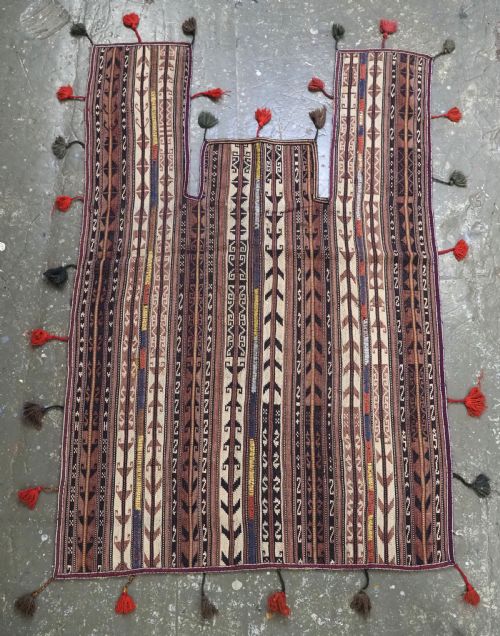
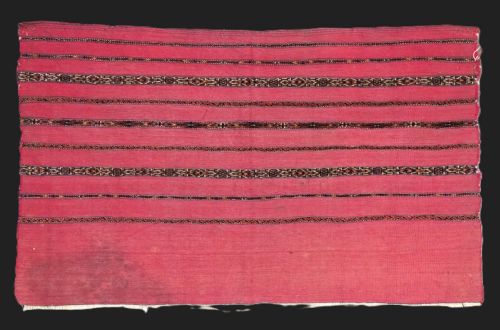
Most pieces on this page take the form of flatweave kilims, saddlebags, tent bands, and needlepoint rugs dating primarily from the mid-nineteenth century through to the 1920s. These textiles served various nomadic and domestic functions, ranging from floor carpets and storage containers to ceremonial horse blankets and eating cloths.
How they were made
The construction of these textiles relies predominantly on wool, hand-spun wool, and cotton foundations, occasionally incorporating camel hair and canvas. Artisans employed traditional flatweaving techniques alongside embroidery and needlepoint methods to build dense, durable fabrics without a pile.
Colour comes from natural dyes applied to the fibres, producing the soft reds, earthy tones, and varied palettes seen across the regional styles. Many larger formats, particularly Uzbek and Central Asian panels, were constructed by weaving narrower strips together and joining them.
Materials across the listings include hand-spun wool, cotton, canvas, and camel hair dyed with natural pigments.
What varies in quality
Quality rests in the tightness of the weave, the clarity of the graphic design, and the integrity of the natural dye palette. Finer weaves and complex multi-strip constructions require greater technical skill from the weaver, distinguishing standard utility pieces from exceptional examples.
Condition and visual balance also separate items at different levels of the range. Retaining structural stability alongside well-preserved natural colours enhances the presence of a textile within an interior setting.
The Antique Flatweave Tapestry Glossary
- Kilim
- A flat-tapestry-woven carpet or rug produced in countries of the former Persian Empire, the Caucasus, and parts of Eastern Europe. These pileless textiles gain their patterns through the interweaving of warp and weft threads.
- Sofreh
- A type of spread or cloth used by nomadic and village communities in Persia and Afghanistan for dining or food preparation. They often feature minimalist geometric compositions.
- Chuval
- A large face or front panel of a tent storage bag produced by Turkmen tribes. They are traditionally collected for their intricate gul motifs and fine knotting or weaving.
- Aubusson
- A French style of carpet and tapestry woven in the town of Aubusson, typically featuring neoclassical, floral, or rococo decorative schemes. These pieces utilise a canvas foundation rather than traditional nomadic flatweaving.
- Cicim
- A type of embroidered flatweave textile originating from Anatolia, where supplementary patterns are sewn onto the base warp and weft threads. This technique creates a raised surface texture distinct from standard flat tapestry.
Antique Flatweave Tapestry: Frequently Asked Questions
How were flatweave textiles used historically?
Nomadic and village communities utilised these flatweaves for practical domestic purposes such as floor covering, animal trappings, wall hanging, and food storage. Items like storage bags and horse blankets doubled as portable wealth and decorative furnishings within tents and homes.
Over time, many of these utilitarian textiles transitioned into decorative interior elements. Their lack of pile made them versatile for hanging on walls or placing in high-traffic areas where heavy carpets proved impractical.
How do I care for an antique flatweave?
Protect antique flatweaves by placing a quality rug underlay beneath them to prevent slipping and reduce fibre friction. Vacuum gently using low suction without a rotating brush roll to remove embedded dust.
Keep textiles out of direct, intense sunlight to prevent natural dye fading. Rotate the piece periodically to ensure even wear across the surface from foot traffic or furniture placement.
How do I distinguish regional styles?
Regional identity shows through specific motifs, dye palettes, and weaving structures unique to particular tribes or workshops. Caucasian pieces often display bold geometric symbolism, while Bessarabian examples favour naturalistic floral compositions.
Examining the edge finishes, strip construction, and fibre preparation offers further clues to origins. Turkmen and Uzbek textiles utilise specific banded layouts and colour combinations distinct from Persian tribal work.
Are these textiles suitable for modern floors?
These flatweaves function effectively on modern floors when paired with a supportive underlay that adds cushioning and stability. Their durable wool or cotton construction handles moderate walking traffic well.
Their low profile allows doors to swing easily over them, making them practical for hallways, dining spaces, and living rooms. The diverse range of sizes accommodates both compact areas and expansive rooms.