








Antique Flatweave Bag
An antique flatweave bag brings the tactile geometry of nomadic tribal weaving directly into a modern interior.
Antique Flatweave Bag
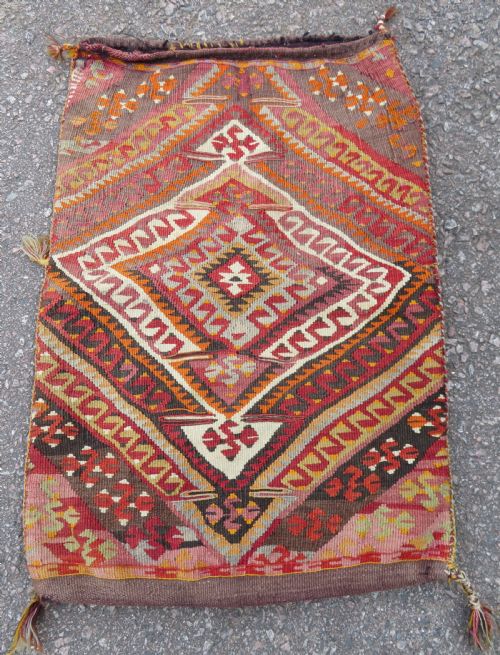
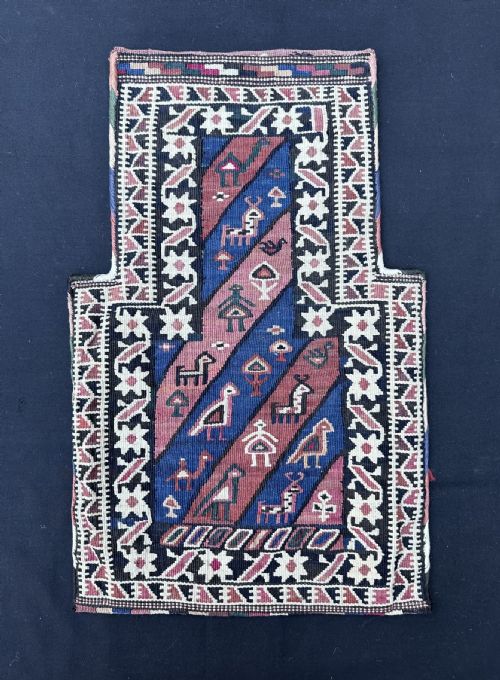
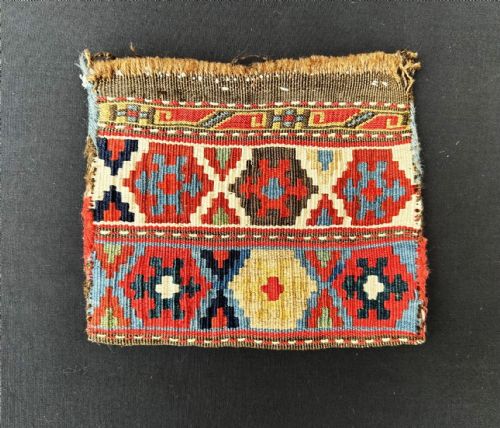
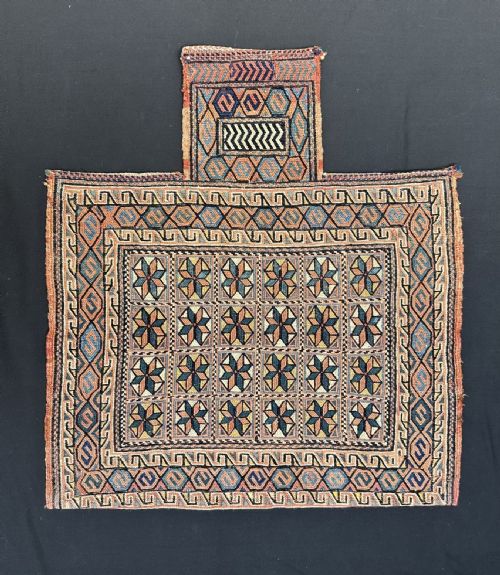
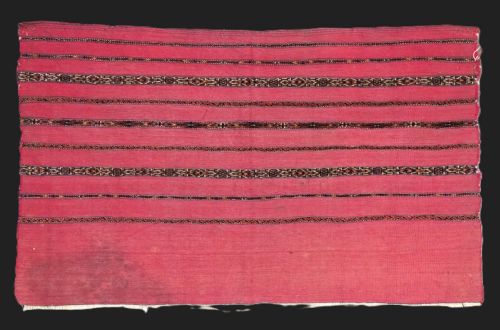
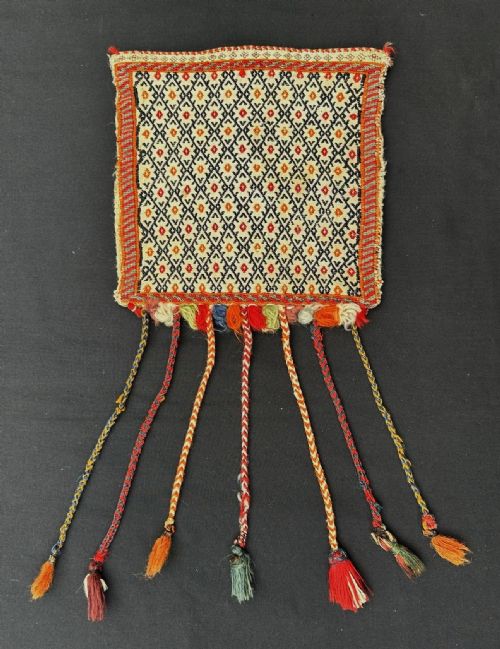
When searching for an antique flatweave bag, a collector encounters utilitarian containers made by tribal groups across Persia, the Caucasus, and Central Asia. These items include salt bags, grain sacks, vanity pouches, and larger storage containers known as mafrash or torba.
The pieces on this page span from the mid-nineteenth century into the early twentieth century, originating from nomadic and village workshops. Buyers most frequently meet bag faces, split saddlebags, and complete storage containers utilising traditional flatweave techniques rather than pile knotting.
Materials and construction methods
Weavers constructed these utilitarian objects primarily from hand-spun wool and cotton, occasionally incorporating goat hair and leather for structural durability. Natural dyes provided the deep reds, blues, and earth tones characteristic of nineteenth-century tribal textiles.
Techniques such as slit tapestry weaving and soumac wrapping created firm, durable surfaces capable of withstanding daily nomadic life. Artisans frequently embellished select pieces with cowrie shells and metal components.
Antique Flatweave Bag Retail Price Guide 2026
Typical asking prices for flatweave bag among the pieces listed under this phrase on Sellingantiques today, from the lower quarter to the upper quarter. They describe what is for sale here now, not the wider market.
Geographic origins span Anatolia, Persia, the Caucasus, and Central Asia through tribal work from nomadic groups.
Assessing quality and preservation
Quality in these textiles rests upon the fineness of the weave, the clarity of the tribal motifs, and the vibrancy of the natural palette. Tightly packed wefts and precise geometric alignment separate exceptional weaving from standard utilitarian output.
Survival of original backs, leather bindings, and supplementary closures significantly elevates the standing of a textile. Pieces retaining their structural integrity and untouched surfaces demonstrate the highest standard of tribal craftsmanship.
The Antique Flatweave Bag Glossary
- Chuval
- A large storage bag produced by Turkmen tribes, often woven with distinctive gul motifs. These containers held household goods inside the yurt.
- Soumac
- A brocade-like flatweaving technique where coloured weft threads wrap around the warp threads in a continuous motion. This method adds structural weight and distinct texture to the surface.
- Torba
- A smaller horizontal storage bag used by nomadic groups for provisions or personal items. They frequently display banded geometric designs.
- Tacheh
- A large square grain or bread sack woven by Lori and Bakhtiari tribes in western Persia. These utilities often double as decorative wall hangings in modern settings.
- Mafrash
- A rectangular storage chest or panel used in pairs to transport belongings on pack animals. They typically feature intricate flatweave or soumac designs on all sides.
Antique Flatweave Bag: Frequently Asked Questions
How do I clean and care for a flatweave bag?
Gentle surface vacuuming with a low suction setting removes accumulated dust without damaging the delicate hand-spun wool or cotton fibres. Professional textile conservators should handle any wet cleaning to protect natural dyes.
Keep the textile away from direct sunlight to prevent the natural pigments from fading over the years.
Can I use an antique bag as a cushion?
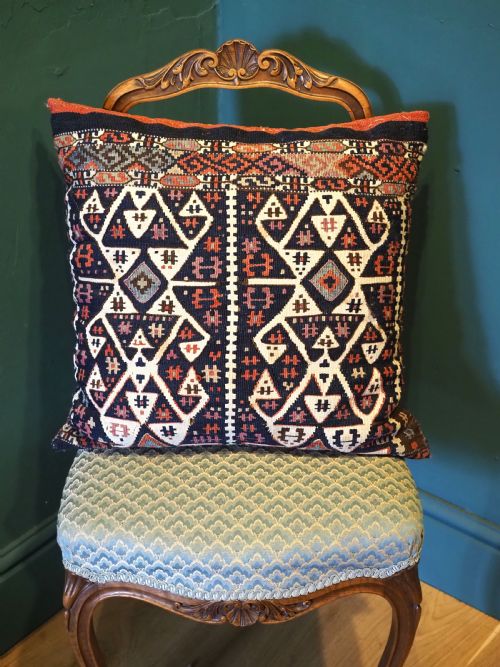
Many sturdy bag faces and smaller pouches adapt well as decorative pillows or floor cushions when fitted carefully by a specialist. The dense wool flatweave provides a durable surface for light domestic use.
Ensure the structural integrity of the textile can support daily interaction before converting it into soft furnishings.
How do I identify tribal origins?
Specific geometric patterns, colour palettes, and weave structures point directly to particular confederacies such as the Shahsevan, Qashqai, or Yomut Turkmen. Regional preferences in motifs and border designs act as signatures for each group.
Comparing structural details like soumac wrapping or slit-tapestry intervals helps narrow down the geographical source.