
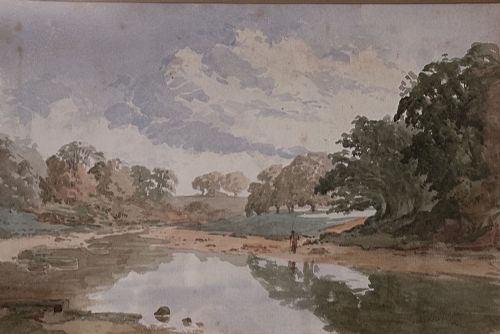


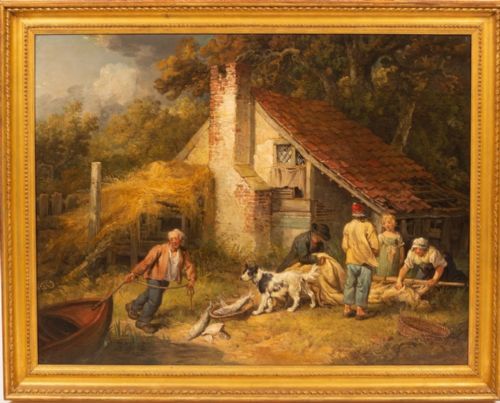


Antique Fisherman Oil Painting
These antique fisherman oil painting works capture coastal and river life through brushwork spanning the nineteenth and twentieth centuries.
Antique Fisherman Oil Painting
An antique fisherman oil painting depicts maritime and inland scenes involving those who earned their living from the water. The subjects range from French coastlines and Neapolitan bays to Scottish rivers and English harbours, showing figures hauling catches, tending boats or resting by banks.
The pieces on this page emerge primarily from the nineteenth century alongside early twentieth-century works dated through the nineteen-twenties, thirties and forties. Forms include coastal landscapes, harbour views, river scenes and intimate portraits on canvas, wood panel and board.
Regional movements shape the selection, connecting French Post-Impressionism, the Hague School, the School of Posillipo and Victorian genre painting. Buyers encounter everything from British folk art depictions to signed continental landscapes.
Distinctions in quality
Quality rests in the handling of light, atmospheric depth and the naturalistic rendering of figures within their coastal or river environments. Superior examples demonstrate confident brushwork that defines water, weather and human posture without relying on stiff convention.
Provenance and attribution elevate certain pieces, particularly those bearing signatures of known regional schools or documented artists. The integration of the original frame and the stability of the paint layer also distinguish finer survivals from simpler decorative works.
A lone pony once appeared in the archive, caught in the act of watching a fisherman.
The Antique Fisherman Oil Painting Glossary
- Oil on Canvas
- A traditional painting technique where pigments bound in drying oil are applied to stretched fabric. This combination allows for rich colour blending and textured impasto work.
- Oil on Panel
- A method using a rigid wooden support rather than fabric. Panels provide a stable, smooth surface that preserves fine brush detail.
- School of Posillipo
- A nineteenth-century Italian art movement centred around Naples focusing on landscape and marine painting. Artists in this circle captured the light and topography of the southern coast.
- Hague School
- A group of nineteenth-century Dutch artists inspired by realisitic rural and maritime subjects. Their palettes often used subdued, tonal greys and browns.
- Impressionism
- A style characterised by relatively small, thin yet visible brush strokes and an emphasis on accurate depiction of light. It emerged in France before influencing artists across Europe.
Antique Fisherman Oil Painting: Frequently Asked Questions
What periods do these paintings date from?
The works span the nineteenth century and extend into the nineteen-twenties, thirties and forties. Dates appear across Victorian production and early twentieth-century modern movements.
Evidence comes from artist signatures, stylistic markers and documented dates recorded in listing records.
Which materials were used for these artworks?
Painters utilised oil paint applied to canvas, wooden panels, mahogany panels and board. Frames are constructed from wood, gilt wood and gold leaf.
These materials match traditional studio practices of the nineteenth and early twentieth centuries.
Where were these fisherman scenes painted?
Locations include French coastal regions, the Bay of Naples, Scottish highlands, English rivers and Norman waterways. Artists recorded both British shores and continental harbours.
Paintings reflect specific regional schools such as the School of Posillipo and the Hague School.
How should I care for an antique oil painting?
Keep paintings away from direct sunlight, high humidity and sudden temperature fluctuations. Display them on stable interior walls using secure fixings suited to the weight of the frame.
Avoid touching the painted surface or applying modern cleaning agents to the canvas or panel.
How do I identify different painting styles?
Styles range from Victorian genre painting and folk art to French Post-Impressionism and Impressionism. Brushwork technique and colour palettes reveal the artistic movement.
Signed pieces and attribution to specific schools help place the work within its historical context.