





Antique Fish Ornament
An antique fish ornament brings the quiet movement of water indoors through carved jade, moulded glass, and polished silver.
Antique Fish Ornament
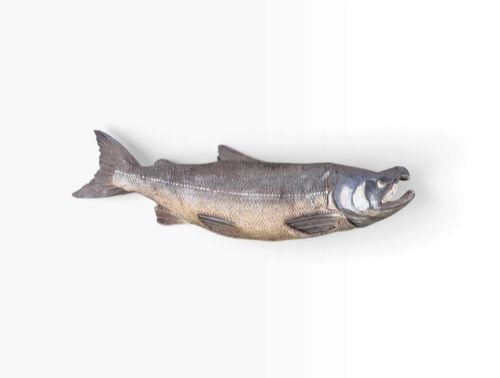
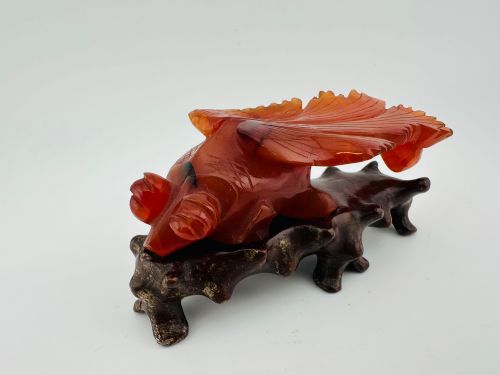
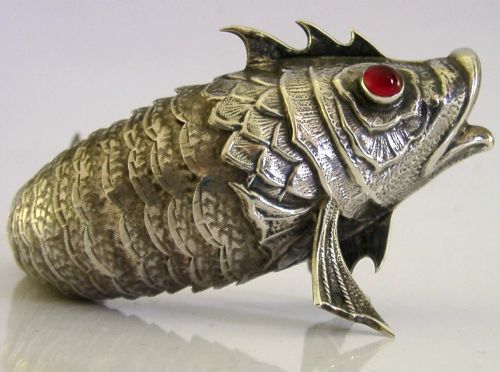
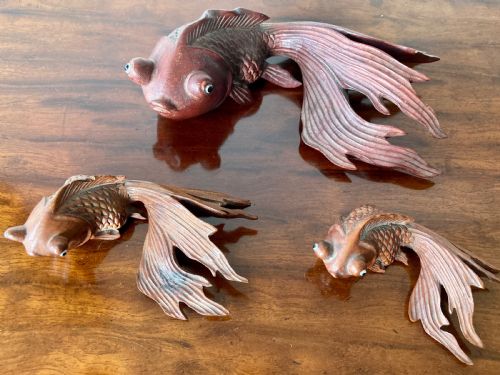
An antique fish ornament captures aquatic forms across diverse cultural traditions, ranging from Chinese carved jade and carnelian agate motifs to Japanese lacquer okimono and European silver or glass sculptures. These pieces take the shape of fantail goldfish, carp, shubunkin, and flying fish, reflecting both naturalistic observation and symbolic design.
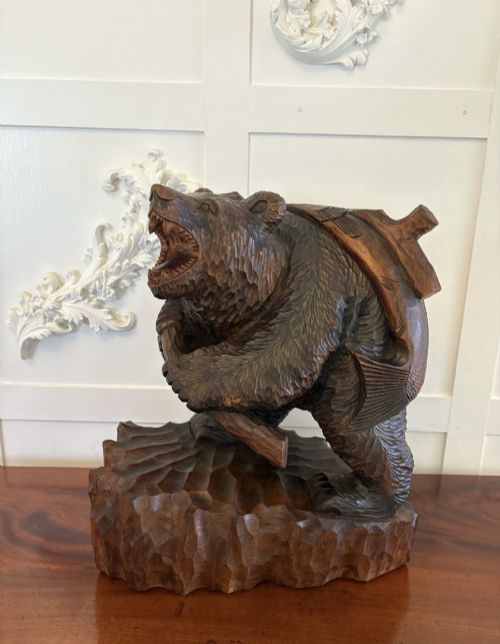
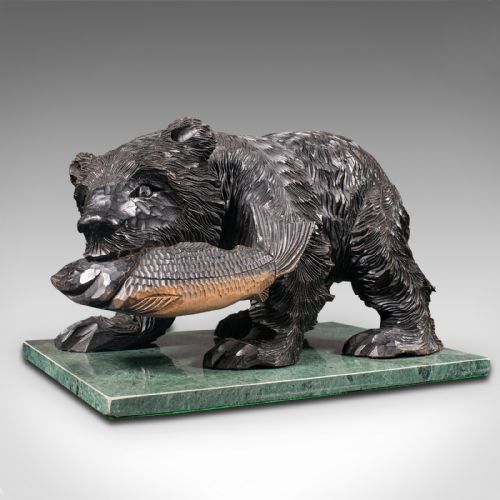
The objects on this page appear in materials such as hardstone, wood, bronze, ceramic, and glass, spanning periods from the nineteenth century through the mid-twentieth century. Buyers encounter smaller miniatures alongside larger decorative sculptures and fitted stand-mounted carvings.
Materials and construction
Makers shaped hardstones like jade and carnelian agate through intensive abrasive cutting and polishing to achieve smooth, luminous aquatic bodies. Wooden examples utilise timbers such as cedar, linden wood, and hardwood, often shaped with hand-carved details that define scales and fins.
Metal versions employ casting techniques in silver and bronze, while glass pieces utilise moulding and opalescent finishing to capture the translucency of water and scales. Fitted wooden stands are frequently custom-carved to support individual stone or mineral ornaments securely.
Antique Fish Ornament Retail Price Guide 2026
Typical asking prices for fish ornament among the pieces listed under this phrase on Sellingantiques today, from the lower quarter to the upper quarter. They describe what is for sale here now, not the wider market.
Listings span the nineteenth century, 1900, 1920, 1930, 1940, and 1950, uniting diverse global traditions in animal sculpture.
Distinctions in quality
Quality rests upon the precision of the carving and the natural characteristics of the chosen material, such as the translucency of the jade or the clarity of the moulded glass. Superior examples display anatomical conviction in the rendering of fins and tails, whereas lesser pieces rely on rigid outlines.
The preservation of delicate details, original surface patination, and the presence of any associated custom woodwork or fitted stands distinguish finer works from simpler decorative items.
Haruyama Shunzan·Rene Lalique·Lavergne
The Antique Fish Ornament Glossary
- Okimono
- A Japanese decorative sculpture designed for display on a shelf or in a tokonoma alcove. These small-scale carvings depict animals, figures, and natural subjects.
- Fantail goldfish
- A decorative fish motif characterised by a split, flowing caudal fin that spreads gracefully. This form appears frequently in Chinese jade and hardstone carvings.
- Car mascot
- An ornament mounted on the radiator cap of a motor car during the early twentieth century. Master glassmakers produced translucent examples depicting aquatic subjects.
- Hardwood
- Dense, durable timber utilised for carved ornaments and fitted display stands. It provides a stable base that complements intricate stone and mineral sculptures.
- Jade
- A tough, compact mineral traditionally carved into smooth, symbolic ornaments. Its natural variations in tone give depth to aquatic sculptures.
Antique Fish Ornament: Frequently Asked Questions
What materials were used?
These pieces utilise natural materials including jade, carnelian agate, cedar, linden wood, and general hardwoods alongside cast bronze, silver, ceramic bisque, and moulded glass.
Each medium dictates the method of creation, from abrasive stone carving to glass pressing and metal casting.
How are they displayed?
Smaller stone and mineral figures often rest upon custom-carved fitted hardwood stands to hold them securely on flat surfaces. Other forms include wall-mounted objects, shelf sculptures, and glass car mascots.
The addition of a fitted stand frequently accompanies high-quality hardstone carvings from Asian traditions.
How can I tell the period?
Dating relies upon material composition, stylistic conventions of specific eras such as the Meiji period or Qing dynasty, and manufacturing techniques. Signed glass or marked silver elements provide direct chronological markers.
Examining the tool marks on wood and the surface wear on stone helps confirm the age of unsigned decorative objects.
What cultural styles appear?
The listings incorporate Japanese folk art, Meiji period lacquerwork, Chinese Republic period and Qing dynasty jades, alongside European silver and glass work. Each tradition applies distinct decorative conventions to aquatic subjects.
These varied origins reflect international interest in naturalistic animal forms throughout the nineteenth and twentieth centuries.