



Antique Fire Surround Rail
These antique fire surround rail examples frame hearths with heavy brass, iron, and bronze, bringing period weight to a Victorian or Edwardian fireplace.
Antique Fire Surround Rail
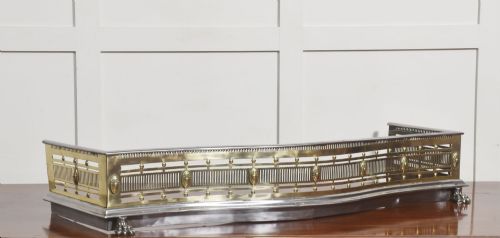
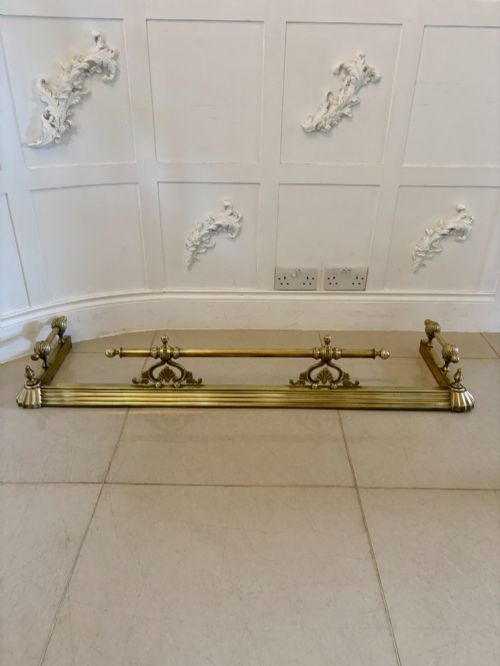
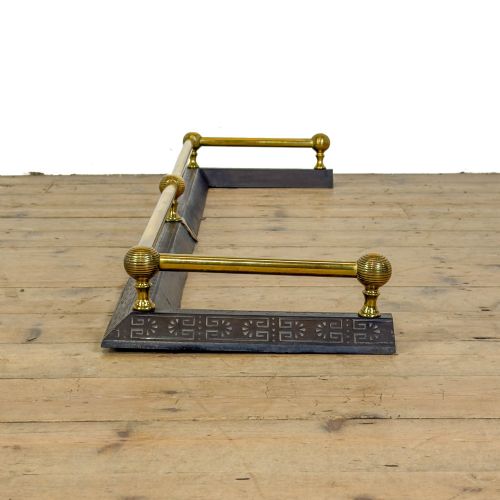
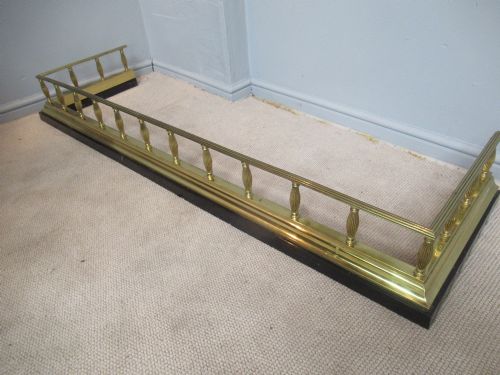
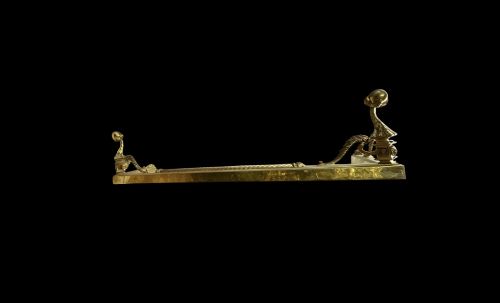
An antique fire surround rail typically takes the form of a fireplace fender or hearth fender, designed to sit directly on the floor around the hearth. These metal barriers protect the room from stray embers while defining the hearth space with period craftsmanship.
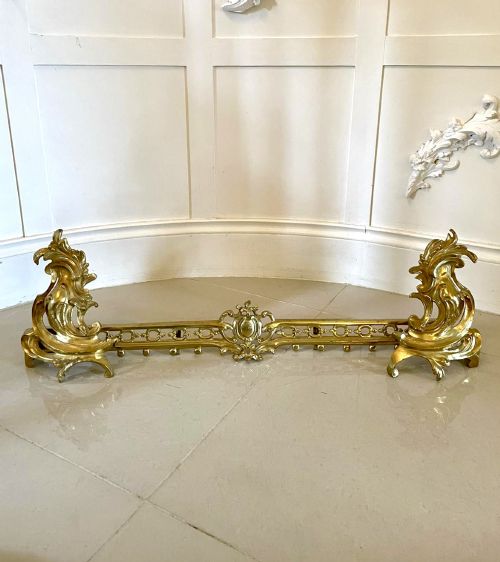
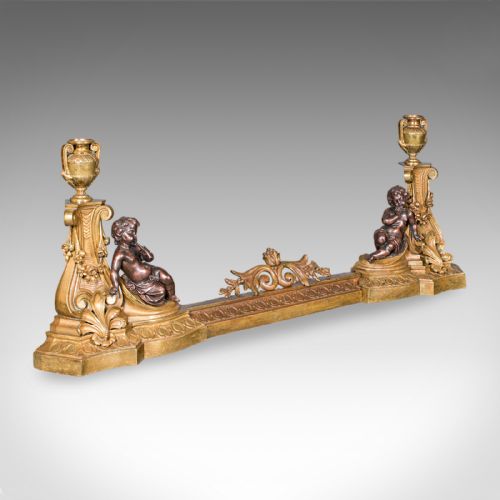
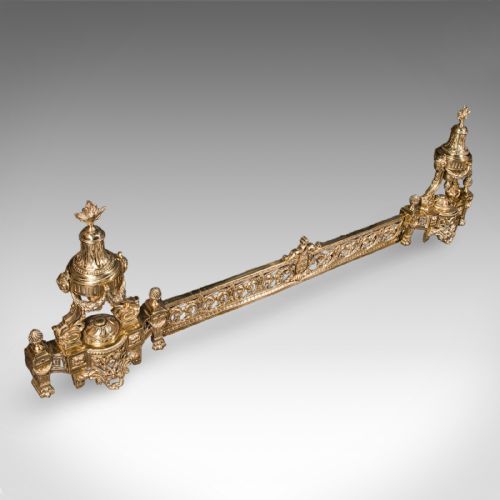
The versions most commonly met on this page span the Victorian and Edwardian eras, alongside pieces attributed to the nineteenth century and the Georgian period. Forms range from adjustable extending fenders to heavy gauge brass and steel kerbs, incorporating styles like French Rococo, Louis XVI Neoclassical, and Art Nouveau.
Makers and designers of these hearth furnishings utilised robust materials to create functional boundaries that also served as decorative centrepieces in period drawing rooms and parlours. Many examples feature detailed piercing, scrollwork, or cast motifs such as lions.
Materials and construction methods
Makers constructed these pieces predominantly from cast brass, iron, steel, and bronze, often combining metals to contrast bright polished surfaces with dark iron or black finishes. Gilt bronze and gilded brass appear on ornate French pieces, adding rich surface colour to the metalwork.
Heavy gauge cast iron and steel provide structural rigidity, particularly in adjustable and extending fender designs that required mechanical reliability. Piercing techniques and applied castings create intricate patterns across the metal rails, demonstrating skilled nineteenth-century metalworking methods.
Listings feature brass, iron, and bronze materials across Victorian, Edwardian, and Georgian periods.
Distinctions in quality and finish
The calibre of metal casting and the crispness of applied ornament separate standard production from superior examples. Heavy gauge brass and well-defined chased details indicate careful workshop execution rather than mass output.
The complexity of the style, from simple nineteenth-century iron rails to elaborate French Rococo or Art Nouveau brass work, dictates the visual impact of the fender. Intact finishes and functional adjustable mechanisms further distinguish the better pieces.
The Antique Fire Surround Rail Glossary
- Fender
- A low metal guard placed in front of an open fireplace to contain falling coals and sparks. These hearth furnishings anchor the fireplace grouping in a room.
- Kerb
- A low barrier framing the hearth floor, often synonymous with a fender. It creates a physical boundary between the fire and the carpet.
- Gilt bronze
- Bronze coated with a thin layer of gold or gold-coloured metal to give a rich surface finish. This material appears on decorative continental pieces.
- Pierced
- Metalwork perforated with decorative patterns through cutting or casting. This technique lightens heavy brass and steel rails with openwork designs.
Antique Fire Surround Rail: Frequently Asked Questions
How do I choose the right size?
Measure the width and depth of your hearth area before selecting a fender. Adjustable designs offer flexibility if your hearth dimensions fall between standard sizes.
Ensure the internal dimensions match the footprint of your fireplace surround so the metal barrier sits correctly on the floor.
How were these metal rails used?
These pieces sat on the floor around open coal or wood fires to protect rugs and flooring from rolling embers. They also provided a physical barrier to keep people at a safe distance from the heat.
In daily life, households polished the brass and iron regularly to maintain the reflective finish of the metalwork.
How do I clean brass and iron fenders?
Dust the metal regularly with a soft cloth to prevent soot and dirt accumulation. Avoid harsh chemical cleaners that can strip historic finishes or damage patination.
For brass components, a gentle metal polish suitable for antique surfaces maintains the shine without wearing away fine details.
How do I tell Victorian from Edwardian pieces?
Victorian examples often display heavier cast brass, ornate scrolling, or dark iron finishes associated with nineteenth-century manufacturing. Look for robust gauge metal and traditional decorative motifs like lions or Gothic elements.
Edwardian pieces tend to show lighter forms or early twentieth-century influences, sometimes incorporating simpler lines or distinct Art Nouveau curves.