





Antique Fire Pokers
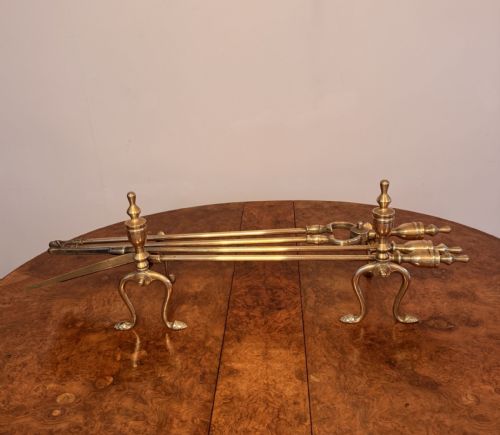
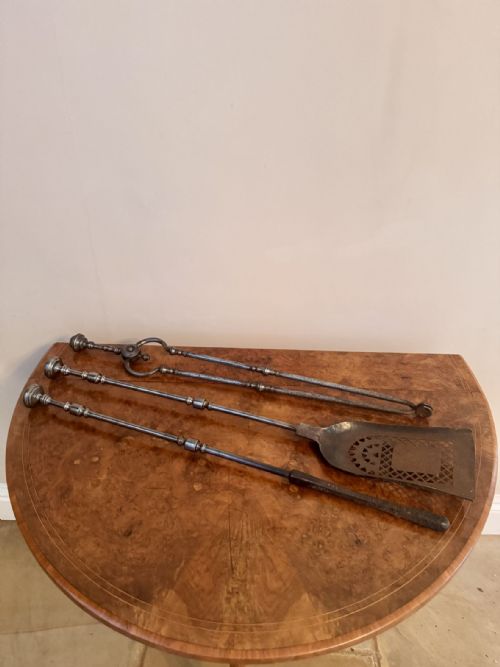
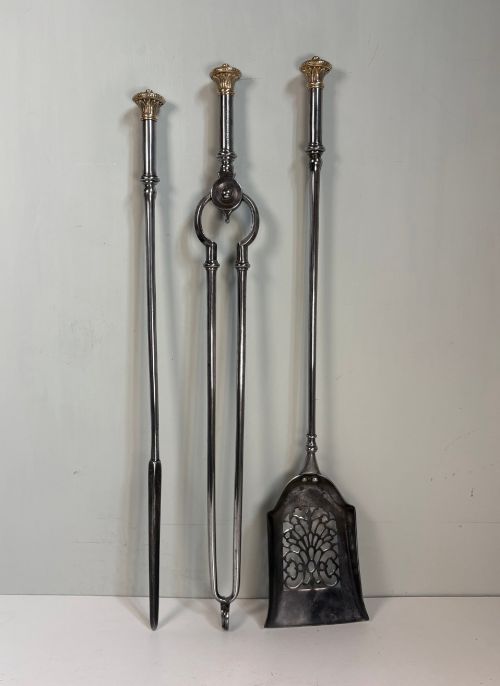
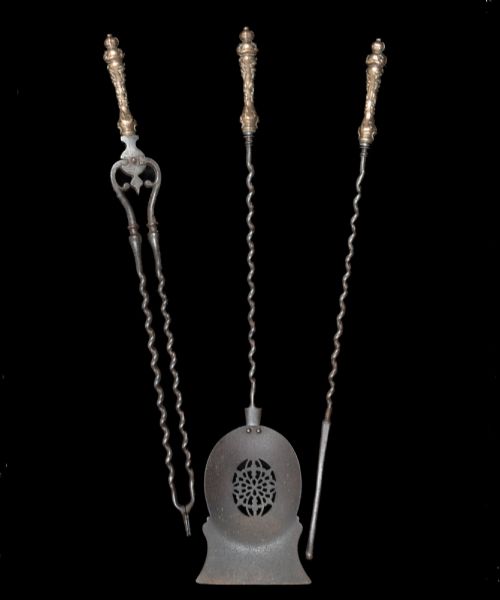
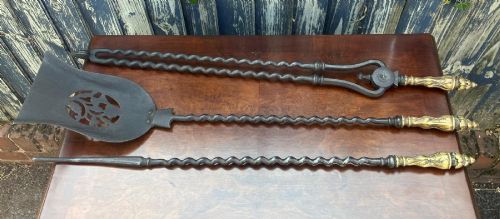
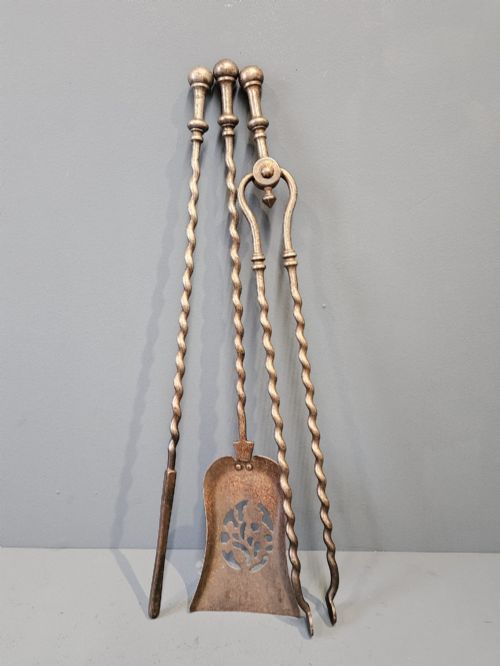
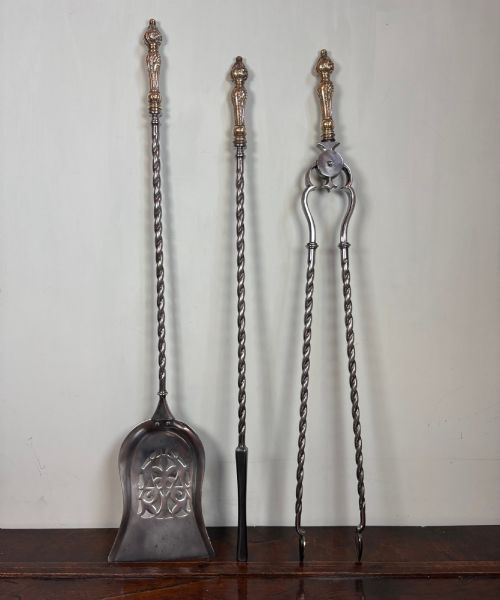
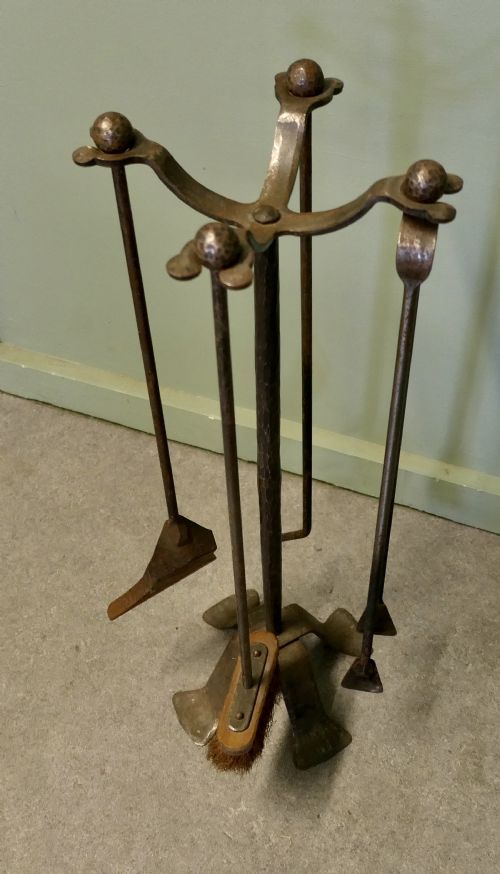
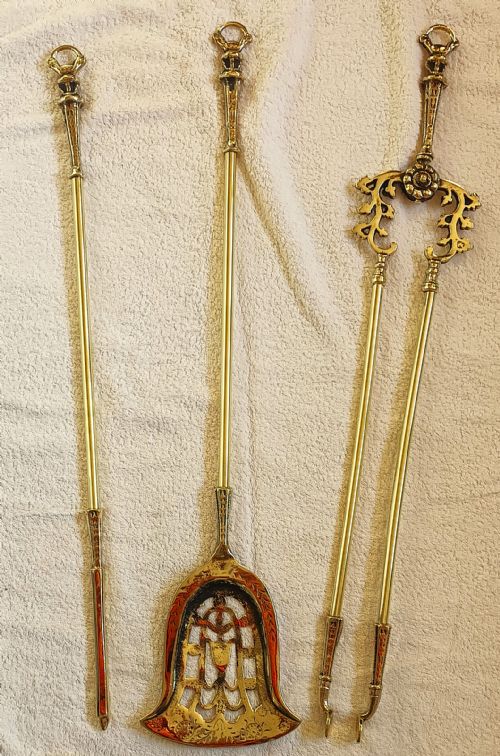
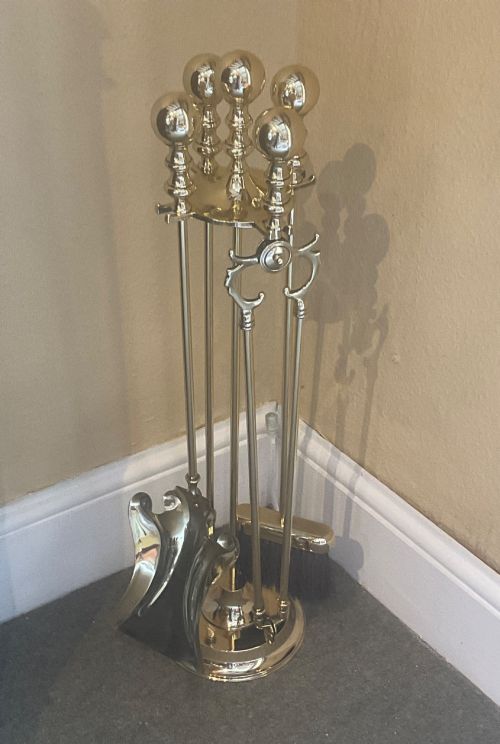
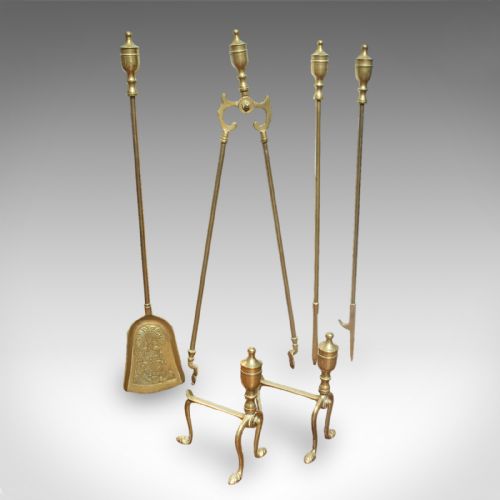
Antique fire pokers are essential hearth implements that stir the coals, appearing here alongside matching shovels and tongs in brass, steel, and iron.
Antique Fire Pokers
Antique fire pokers form part of utilitarian fireplace accessories designed for tending open coal and wood fires in domestic settings. Buyers searching for antique fire pokers most frequently encounter complete sets spanning the Georgian, Regency, and Victorian periods.
The inventory on this page ranges from robust nineteenth-century country house companion sets to refined Edwardian brass assemblies. These pieces typically include a poker paired alongside a shovel and tongs, often accompanied by fire dogs or rests.
Origins vary from English traditional workshops to French country manors, reflecting the domestic heating habits of past centuries. Surviving examples demonstrate the shift from purely functional hearth furniture to decorative interior metalwork.
What varies in quality
Quality rests upon the weight of the metal, the rigidity of the shaft, and the crispness of any cast ornamentation on the handle. Superior sets display balanced proportions and consistent finishing across all included tools.
Substantial gauge steel and heavy brass indicate a higher grade of manufacture intended for daily use in principal rooms. Lesser examples exhibit lighter construction and simpler, unadorned terminals.
Antique Fire Pokers Retail Price Guide 2026
Typical asking prices for fire pokers among the pieces listed under this phrase on Sellingantiques today, from the lower quarter to the upper quarter. They describe what is for sale here now, not the wider market.
French manor houses required ironwork substantial enough to poke logs big enough to roast an ox, or so the soot suggests.
The Antique Fire Pokers Glossary
- Fire irons
- A collective term for the matching set of poker, tongs, and shovel used to manage a hearth fire. These implements usually hang together from a stand or rest against fire dogs.
- Companion set
- A matched group of fireplace tools designed to be displayed and stored together as an integrated unit. Sets often incorporate specialised stands or wall brackets.
- Fire dogs
- Metal supports placed on either side of a hearth to hold logs above the floor of the fireplace. They frequently match the design style of the associated fire irons.
- Rope twist
- A decorative spiral pattern chased or cast into metal handles to mimic twisted cord. This detail adds texture and visual interest to brass and steel shafts.
- Gun metal
- A copper alloy containing tin and zinc that yields a dark, durable finish. It appears on select nineteenth-century tool sets for variation in colour.
Antique Fire Pokers: Frequently Asked Questions
What is included in a set?
Most surviving groupings comprise a poker, a shovel for ash, and a pair of tongs for moving fuel. Additional pieces like fire dogs or dedicated stands occasionally complete the assembly.
These implements were kept beside the hearth ready for daily management of coal or wood fires. Complete matching suites indicate a primary reception room origin rather than secondary service areas.
How do I date an iron?
Dating relies upon stylistic markers such as Regency restraint, Victorian ornamentation, or Edwardian manufacturing precision. Material choices also shift across eras, moving from hand-forged wrought iron towards mass-produced polished steel and brass.
Examining the construction methods at the joints provides further clues to the period of origin. Form and decorative motifs offer the clearest indicators of whether a piece dates to the Georgian or later centuries.
Are these tools still usable?
Many historical hearth implements remain structurally robust enough for modern open fires or wood-burning stoves. Solid steel and heavy brass shafts withstand normal heat and pressure without bending.
Buyers often select them for decorative display alongside period fireplaces rather than heavy practical service. Careful cleaning preserves the historic metal surfaces while maintaining structural integrity.
How do brass and steel differ?
Brass implements offer a bright, golden appearance that resists atmospheric corrosion while providing a softer metal for ornate casting. Steel and iron prioritize rigidity, strength, and dark patination for heavy stirring duties.
Many period suites combine both metals, using steel shafts for strength and brass for decorative handles. This dual approach balances functional resilience with formal drawing-room aesthetics.