

Antique Fine Jewellery Necklace
An antique fine jewellery necklace brings together period gold settings and matched gemstones to sit at the collarbone.
Antique Fine Jewellery Necklace
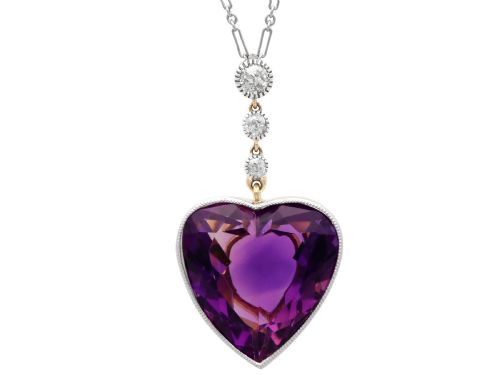
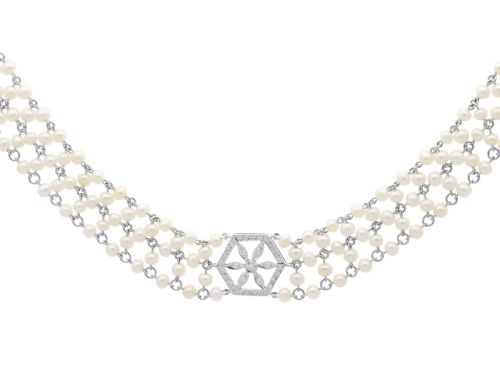
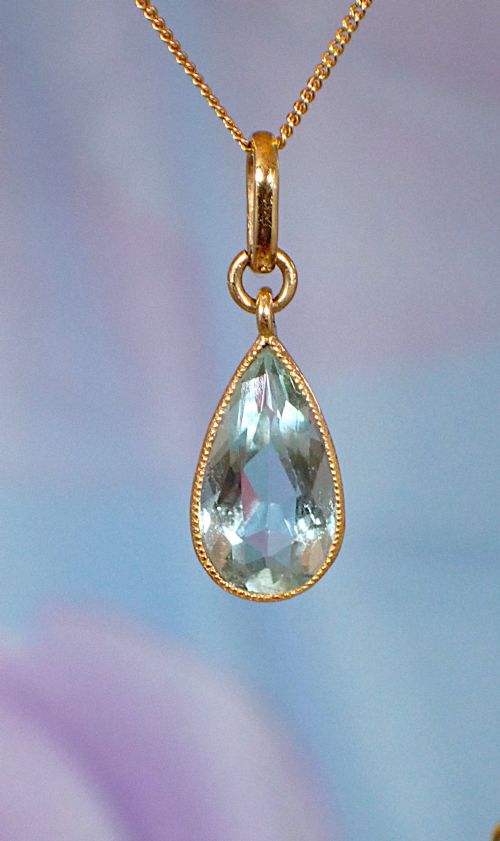
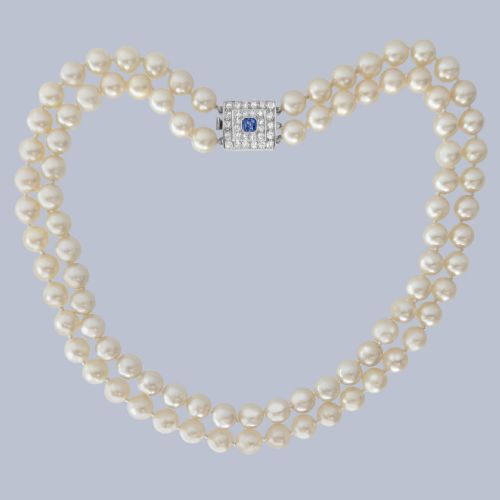
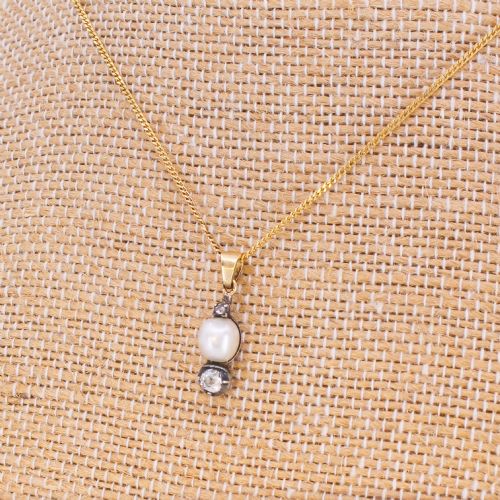
Most examples combine precious metals with central stones, ranging from delicate Lavalier pendants to multi-strand pearl necklaces secured by gemstone clasps. These creations span the nineteenth century through to the middle of the twentieth century, reflecting shifting tastes in adornment.
Materials and construction
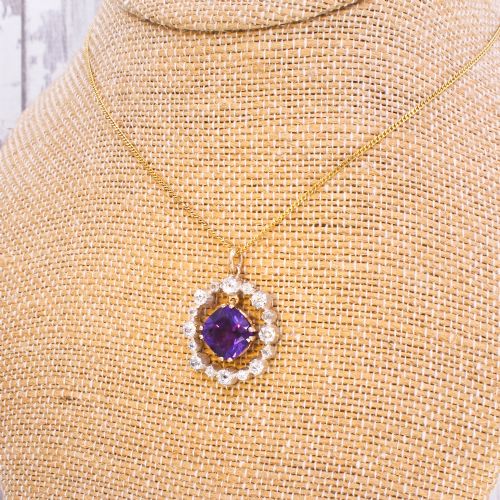
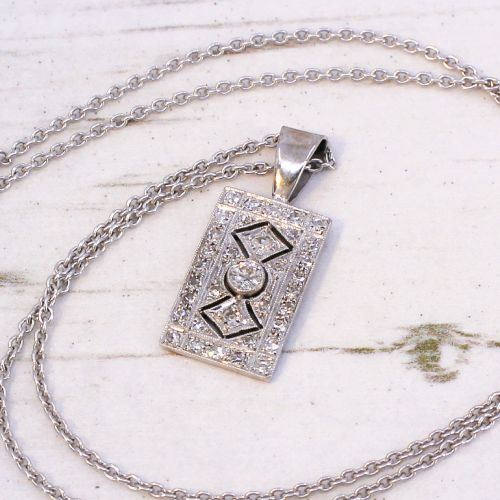
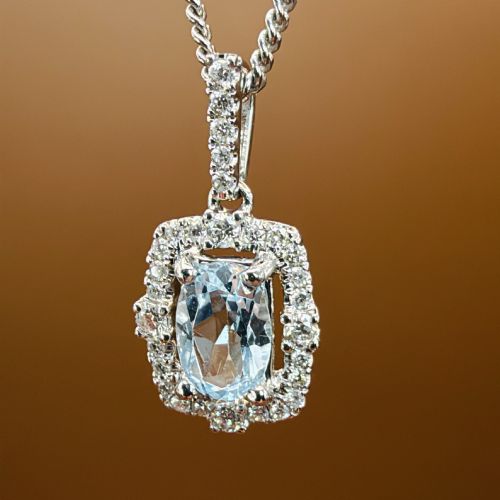
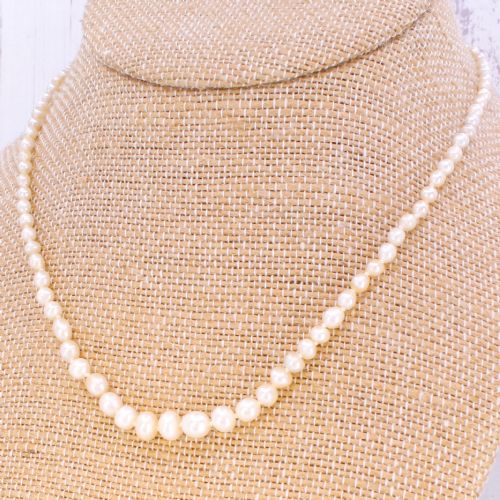
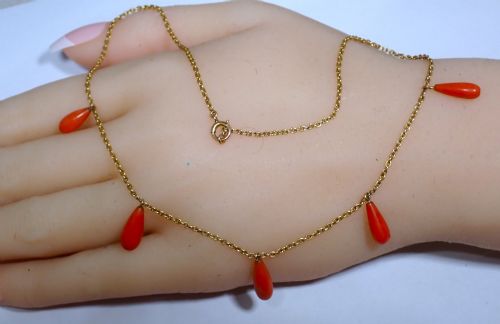
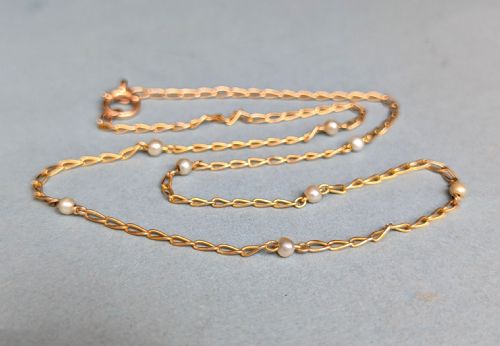
The construction relies on precious metals including platinum, white gold, yellow gold and rose gold, paired with diamonds, pearls and coloured gemstones. Metalwork styles transition from intricate yellow gold wirework in early pieces to geometric platinum settings in later decades.
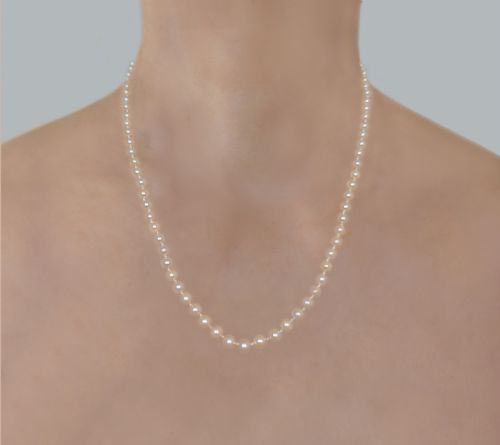
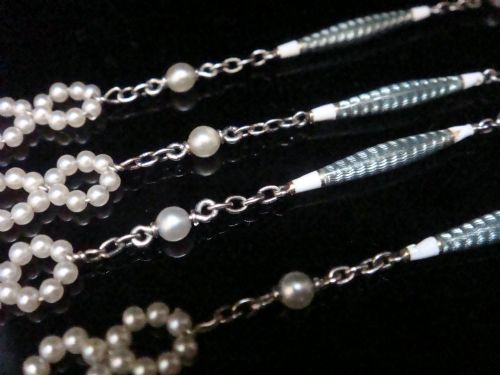
Gemstones are secured using techniques appropriate to their era, such as claw settings for diamonds and bezel settings for softer stones like opal and turquoise. Pearl necklaces often incorporate knotted silk threads between each bead to protect the material from friction.
Listings feature yellow gold, white gold, rose gold and platinum settings.
Assessing the execution
Quality reveals itself in the precision of the metalwork and the matching of the stones used within the composition. Fine pieces demonstrate careful stone selection where colour, cut and clarity align harmoniously across every element.
The integrity of the construction, from secure gemstone mountings to well-balanced clasps, determines the durability of the piece. Superior examples retain their original components and show disciplined hand-finishing beneath magnification.
Carl Bucherer
The Antique Fine Jewellery Necklace Glossary
- Lavalier pendant
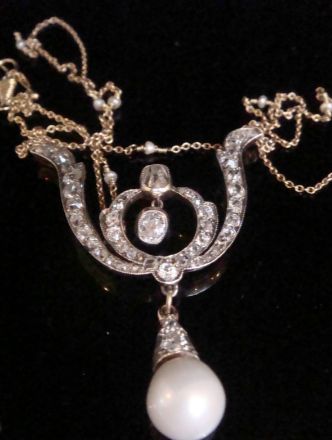
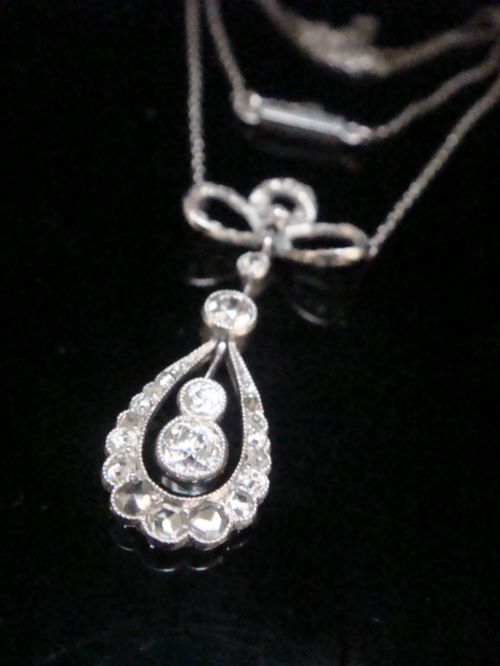
- A necklace featuring a central drop stone suspended below a smaller motif, popular during the Edwardian era. This style accentuates movement when worn against the skin.
- Old cut diamond
- A stone faceted by hand with a high crown and small table, typical of jewellery produced before the mid-twentieth century. These cuts display a softer scintillation under candlelight.
- Negligee pendant
- A design incorporating two asymmetric drops hanging from a central connector, characteristic of Edwardian fine jewellery. The composition creates an elegant, cascading line.
- Seed pearl
- A tiny, naturally formed pearl used in clusters or strung en masse to create delicate floral and geometric motifs. They require careful handling to maintain their lustre.
- Choker
- A short necklace designed to fit high around the neck, frequently set with diamonds and platinum during the Art Deco period.
Antique Fine Jewellery Necklace: Frequently Asked Questions
How do I care for antique pearl necklaces?
Pearls require gentle cleaning with a soft, damp cloth after wearing to remove cosmetic residues and body oils. Avoid exposing organic gems to ultrasonic cleaners, alcohol or harsh chemical sprays.
Store pearl strands flat in silk-lined compartments to prevent the silk cord from stretching or snapping under tension. Periodic re-stringing by a specialist ensures the integrity of the piece.
What defines an Edwardian pendant necklace?
Edwardian necklaces utilise platinum and yellow gold to create lace-like motifs inspired by garlands and ribbons. These pieces frequently incorporate diamonds, aquamarines and seed pearls in light, airy frameworks.
The aesthetic values delicacy and symmetry, contrasting sharply with the heavier geometry of the subsequent Art Deco movement.
How can I date an antique gold chain?
Dating relies on examining the clasp mechanism, link style and any assay stamps or hallmarks present on the metal. Earlier nineteenth-century chains often feature hand-carved spring rings or barrel clasps.
The transition from yellow gold to white gold and platinum marks the stylistic shift towards the twentieth century.
Are gemstone clasps original to the necklaces?
Many multi-strand pearl necklaces incorporate decorative clasps set with sapphires, emeralds and diamonds that match the fabrication period of the piece. These functional closures often double as focal points when worn at the front or side of the neck.
Expert examination of the prongs and solder joints helps confirm whether the clasp shares the age of the main body.