
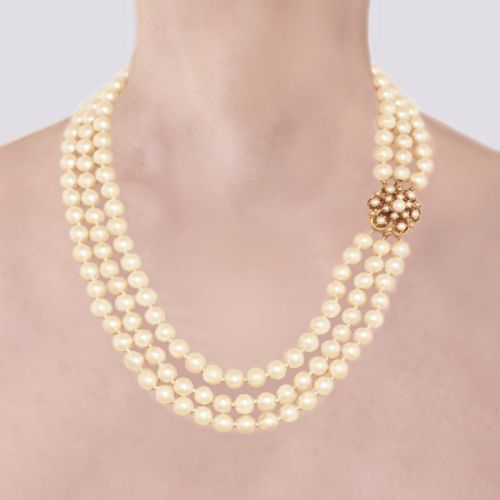


Three Strand Pearl Choker
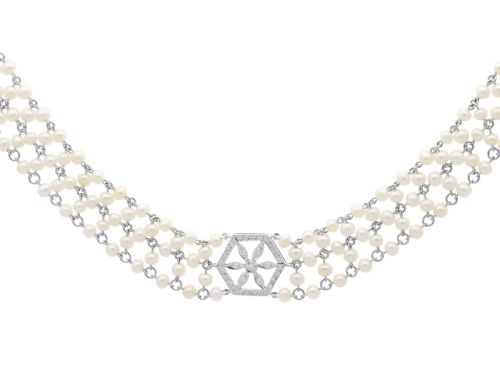
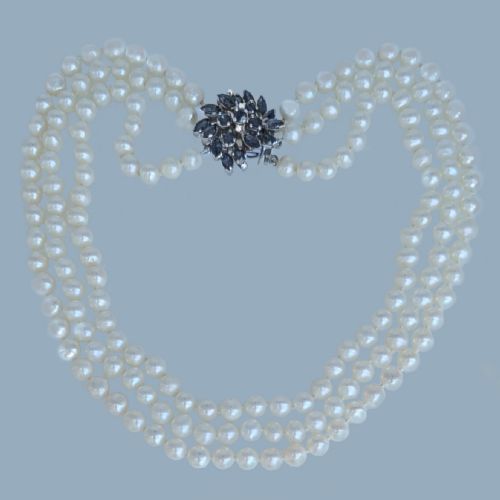
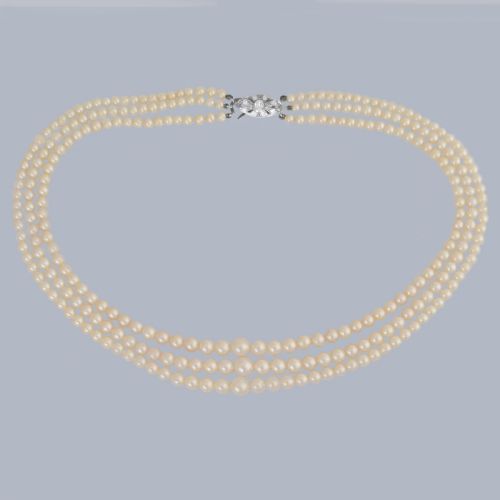
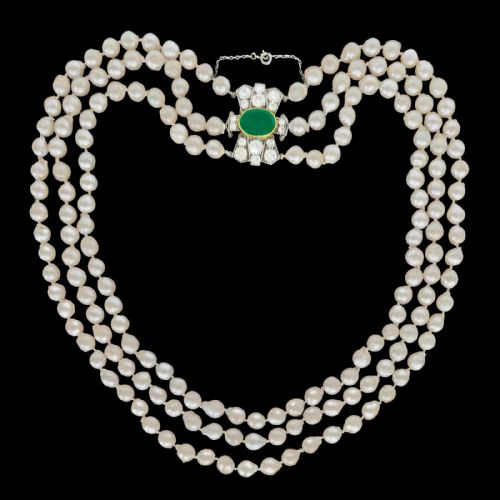
A three strand pearl choker sits close to the throat, offering three rows of lustrous pearls secured by a decorative clasp.
Three Strand Pearl Choker
When you search for a three strand pearl choker, you are looking at short, multi-row necklaces designed to sit high on the neck. These pieces often feature graduated or uniform strands secured by elaborate clasps made from precious metals and gemstones.
The versions you are most likely to meet on this page date from the Victorian era through the Mid-Century period. They incorporate pearls alongside materials like diamond, sapphire, emerald, and 9ct gold, reflecting the styles of the 1920s, 1930s, 1950s, and 1960s.
How they were made
These necklaces are constructed using silk thread to string the pearls, often individually knotted between each bead to ensure security and prevent rubbing. The strands are gathered together at each end and attached to a secure metal clasp.
Listings here feature pearls, diamonds, sapphires, and 9ct gold across Victorian, Art Deco, and Mid-Century styles.
What varies in quality
The quality of a three strand pearl choker depends significantly on the uniformity of the pearls, their orient and lustre, and whether they are natural saltwater or cultured specimens. Superior pieces display deep, natural iridescence and consistent matching across all three rows.
Craftsmanship in the clasp further separates examples, with intricate metalwork, certified diamonds, and precious coloured stones indicating higher workshop standards. The condition of the original stringing and the neatness of the knotting also contribute to the overall standard of the piece.
The Three Strand Pearl Choker Glossary
- Choker
- A short necklace designed to fit closely around the neck. These pieces typically measure around sixteen to eighteen inches in length.
- Cultured pearl
- A pearl created by the introduction of a nucleus into an oyster or mollusc by human intervention. Most examples from the twentieth century utilise these cultured specimens.
- Graduated
- Pearls that increase in size progressively from the ends towards the centre of the strand. This arrangement ensures a balanced appearance when worn.
- Clasp
- The mechanical fastening device at the back or side of the necklace. In fine jewellery, these often double as decorative brooches set with diamonds and precious stones.
- Basra pearl
- A natural saltwater pearl originating from the Persian Gulf region. These are highly regarded by collectors for their exceptional orient and historical provenance.
Three Strand Pearl Choker: Frequently Asked Questions
How do I wear a three strand pearl choker?
A three strand pearl choker is designed to sit high on the collarbone, making it well-suited for open necklines and formal evening wear. The shorter length ensures the rows remain neat and prominent against the skin.
Because these necklaces feature multiple strands, they offer a fuller, more substantial appearance than single-row designs. They work effectively as a standalone focal point for an outfit.
Are these pearls natural or cultured?
The pearls found in these pieces include both natural saltwater varieties, such as Victorian Basra pearls, and twentieth-century cultured pearls. Gemological reports often accompany specific pieces to confirm their origin.
Cultured pearls dominate the Mid-Century and Art Deco listings, while earlier Victorian examples more frequently yield natural pearls. Checking the accompanying documentation helps clarify the specific origin.
What metal is used in the clasps?
Clasps on these necklaces are constructed from precious metals including 9ct gold, 18ct white gold, platinum, and silver. These metals often provide the structural support for gemstone settings.
Gemstones such as diamonds, sapphires, emeralds, and rubies are frequently flush-set or claw-set into the metalwork of the clasp. This allows the fastening to function also as an ornamental feature.
How do I care for a pearl choker?
Pearls require gentle handling because organic gems are softer than mined stones and susceptible to damage from acids, cosmetics, and perfumes. Wipe them softly with a clean, damp cloth after wearing.
Have the silk thread checked periodically by a jeweller, as silk can weaken and stretch over decades of use. Storing the necklace flat prevents undue strain on the strands.