

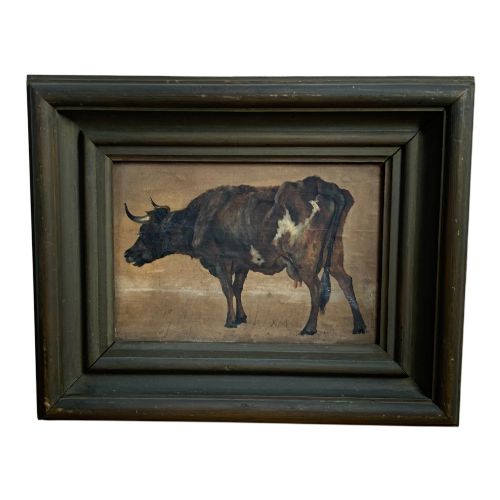


Antique Farm Animal Picture
An antique farm animal picture brings rural life into a room through oil and watercolour studies of livestock and poultry.
Antique Farm Animal Picture
An antique farm animal picture captures horses, sheep, cattle, and poultry within pastoral settings and farmyards. The selection relies heavily on oil paintings on canvas or board, alongside watercolours and framed prints from the nineteenth and early twentieth centuries.
Victorian rural realism dominates the available forms, depicting everyday agricultural scenes with horses, chickens, ducks, and calves. Painters of this era applied careful observation to farmyard animals, often framing them in giltwood surrounds.
The aesthetic ranges from detailed oil paintings by named Victorian practitioners to simpler prints and folk art interpretations. Buyers encounter individual studies of sheep or cockerels alongside paired scenes of livestock beside rivers or cottage doors.
How they were made
Artists built these works using oil paint applied to canvas or board, capturing the textures of animal coats and feathers with fine brushwork. Watercolours on paper also appear, offering lighter renderings of farm subjects.
Many works retain their original giltwood and gesso frames, often embellished with gold leaf to complement the painted pastoral scenes. These frames provide structural support while framing the rustic compositions.
Antique Farm Animal Picture Retail Price Guide 2026
Typical asking prices for farm animal picture among the pieces listed under this phrase on Sellingantiques today, from the lower quarter to the upper quarter. They describe what is for sale here now, not the wider market.
Several canvases squeeze guinea pigs and rabbits into cottage corners alongside the more stately horses and cattle.
What varies in quality
Quality rests in the precision of the animal anatomy, the handling of light across feathers and wool, and the depth of the pastoral background. Works by established Victorian realists show greater attention to texture and movement than simpler decorative pieces.
The preservation of the original paint surface and the condition of the accompanying giltwood frame influence the overall character of the piece. Intricate gesso moulding and intact gold leaf elevate the presentation of the artwork.
Claude Cardon·John Frederick Herring Jnr·Edgar Hunt·Percival Glenfern·Charles Hunt Jnr
The Antique Farm Animal Picture Glossary
- Oil on Canvas
- Pigment mixed with drying oil applied to a woven fabric stretched across a wooden frame. This surface allowed artists to build rich textures for animal coats.
- Giltwood
- Wood carved and covered with a thin layer of gold leaf or metallic powder. It provides a bright border to many nineteenth-century paintings.
- Gesso
- A plaster mixture applied to wood frames before gilding to create a smooth base for ornamentation. It allows crisp, moulded details along the frame edges.
- Animalier
- A nineteenth-century artistic focus on the realistic portrayal of animals. Painters in this style observed livestock and poultry with anatomical accuracy.
- Watercolour
- Pigments suspended in a water-based solution applied to paper. This medium creates transparent washes suited to lighter studies.
Antique Farm Animal Picture: Frequently Asked Questions
What subjects appear in these works?
The subjects focus on rural livestock and poultry, including chickens, sheep, calves, horses, and ducks. Scenes often set these animals within farmyards, cottages, or beside rivers.
Artists also depicted figures interacting with the animals, such as women feeding chickens or farmers tending to cattle and pigs.
How do I date a farm animal painting?
Dating relies on stylistic clues, framing materials, and the canvas support used by the artist. Victorian and Edwardian works often feature specific realism techniques and distinct giltwood frame styles.
Signatures, artist records, and inscriptions on the reverse of the board or canvas further help place the piece in its nineteenth or early twentieth-century context.
Where should I hang a pastoral painting?
These works suit dining rooms, studies, or living spaces where traditional interiors benefit from warm rural scenes. Their domestic subjects harmonize with timber furniture and neutral wall colours.
Placing the artwork away from direct sunlight protects the oil pigments and preserves the gold leaf on the original frame.
What is Victorian rural realism?
Victorian rural realism is an artistic approach that depicts agricultural life and farm animals with close attention to detail. Painters aimed for accurate representations of anatomy and rustic settings rather than idealized fantasies.
This style captures the everyday texture of nineteenth-century farming, showing livestock and poultry in realistic daily routines.