

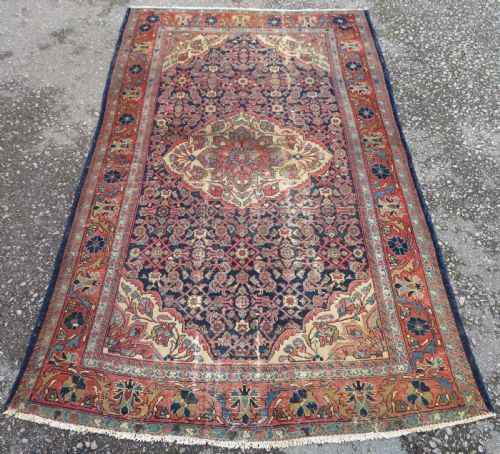
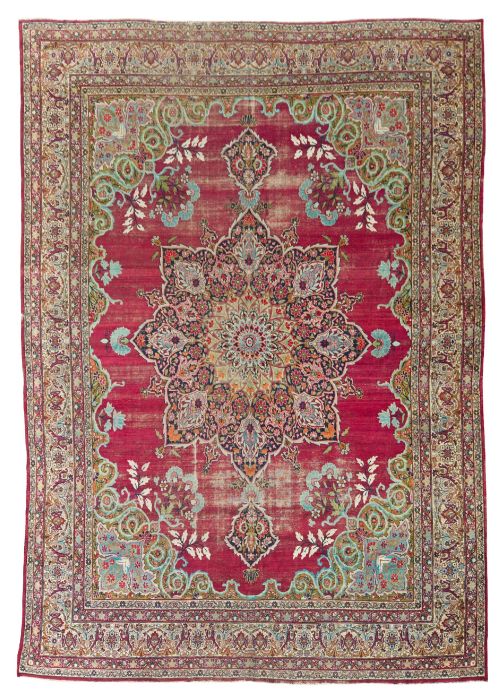
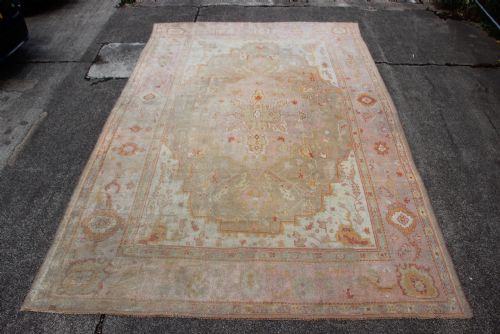


Antique Faded Carpet
An antique faded carpet brings quiet elegance and centuries of texture into a modern interior through softly worn wool and gentle, muted tones.
Antique Faded Carpet
When you search for an antique faded carpet, you are looking at floor coverings woven across Persia, Turkey, and the Caucasus during the nineteenth and early twentieth centuries. These pieces have lost their original bright dyes through age and use, resulting in subdued patinas that suit contemporary rooms.
The most common version met on this page is the Oushak or Ushak carpet, often dating from the late nineteenth or early twentieth century. These Turkish pieces typically display large-scale motifs and pale, washed-out palettes of pinks, blues, and neutrals.
Other recurring regional forms include Persian room-size carpets such as Kirman, Sarouk, and Tabriz, alongside smaller tribal runners and kilims. Each type brings distinct knotting densities and wool qualities while sharing that characteristic softened look.
Materials and Construction
These carpets are constructed primarily from hand-spun wool pile woven onto cotton or wool foundations, with occasional variations featuring angora wool for added softness. Natural dyes derived from plants and minerals aged over decades to create the gentle, faded aesthetic seen today.
Weavers tied intricate knots by hand on vertical looms, creating dense structures designed to endure heavy foot traffic. The subsequent decades of wear gradually lowered the pile height, exposing the foundational weave and softening the colour transitions.
Antique Faded Carpet Retail Price Guide 2026
Typical asking prices for faded carpet among the pieces listed under this phrase on Sellingantiques today, from the lower quarter to the upper quarter. They describe what is for sale here now, not the wider market.
Some resilient runners have quietly paced corridors since the days of horse-drawn cabs and gas lamps.
Distinctions in Quality
Quality in these floor coverings rests upon the fineness of the knotting and the structural integrity of the foundation. Carpets with secure edges and stable wool pile endure daily use far better than those with brittle cotton foundations or extensive historical repairs.
The aesthetic balance of the fading also determines distinction. The most successful examples retain a harmonious relationship between the remaining design elements and the muted background tones, rather than appearing unevenly bleached or structurally compromised.
Maples
The Antique Faded Carpet Glossary
- Oushak
- A traditional style of Turkish carpet originating from the town of Ushak, known for large geometric or floral medallions and soft pastel wools. These pieces frequently feature muted pinks and pale blues.
- Pile
- The vertical or inclined loop of yarn that forms the usable surface of a carpet. In older examples, the pile has worn down to reveal subtle texture and foundation threads.
- Kilim
- A flat-woven carpet or rug produced without a pile by tightly interweaving warp and weft strands. These textiles offer crisp geometric patterns and a lighter weight than knotted carpets.
- Patina
- The surface appearance altered by age, wear, and light exposure. On these carpets, it describes the desirable softening of primary dye colours over generations.
- Warp
- The stationary longitudinal threads stretched onto a loom before weaving begins. Foundation stability depends heavily on the material strength of these vertical strands.
Antique Faded Carpet: Frequently Asked Questions
How do I clean an antique faded carpet?
Vacuum gently using a suction-only attachment without a rotating brush bar to protect the low pile and delicate foundation threads.
Professional specialist cleaning is recommended every few years to remove embedded grit without disturbing natural dyes.
Will these carpets withstand heavy foot traffic?
Many of these pieces were constructed for demanding daily use and remain structurally robust despite their low pile.
Placing a quality underlay beneath the carpet cushions the fibres and prevents slipping in high-traffic hallways or living rooms.
How do I distinguish an Oushak from a Persian carpet?
Oushak carpets generally display looser knotting, larger geometric or floral motifs, and characteristically warm pastel or pale blue palettes.
Persian regional pieces like Kirman or Tabriz typically feature denser knot counts and more intricate, curvilinear medallion designs.
What causes the faded look on these carpets?
Decades of natural sunlight exposure, gentle foot traffic, and periodic washing gradually soften the saturated botanical and mineral dyes used by nineteenth-century weavers.
This ageing process creates the muted patinas and subtle colour variations prized by collectors and interior designers.