




Antique Exterior Wall Lights
These antique exterior wall lights bring substantial character to a facade, offering heavy copper, brass, and iron builds that modern reproductions simply cannot match.
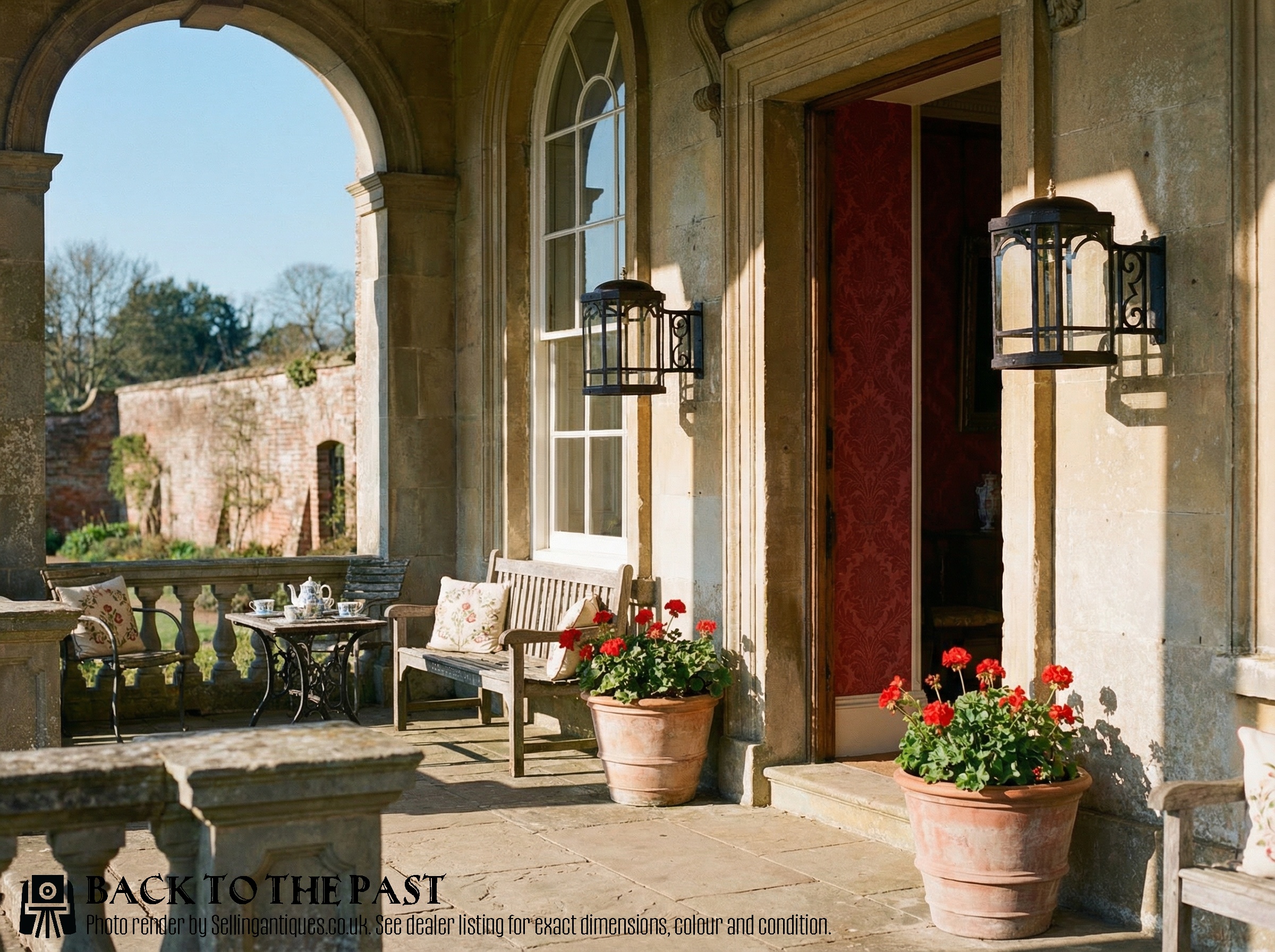
Antique Exterior Wall Lights
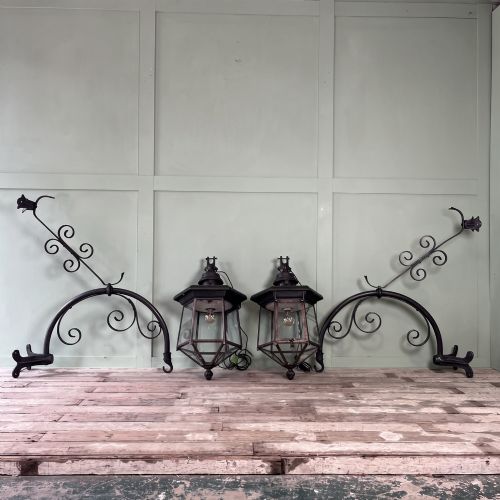
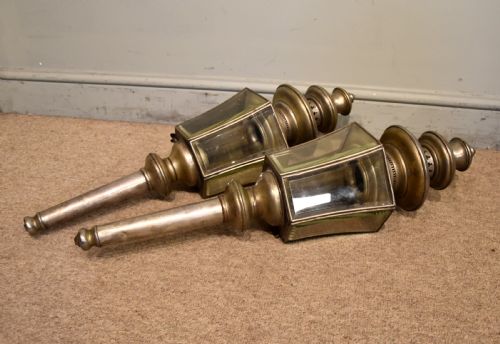
When you search for antique exterior wall lights, you encounter heavy lanterns, coach lamps, and carriage lights designed originally for gas or candle power before later electrical conversion. These fixtures draw from 19th Century, Victorian, Edwardian, and 1930s periods, presenting robust forms meant to brave the weather outside a porch or coach-house.
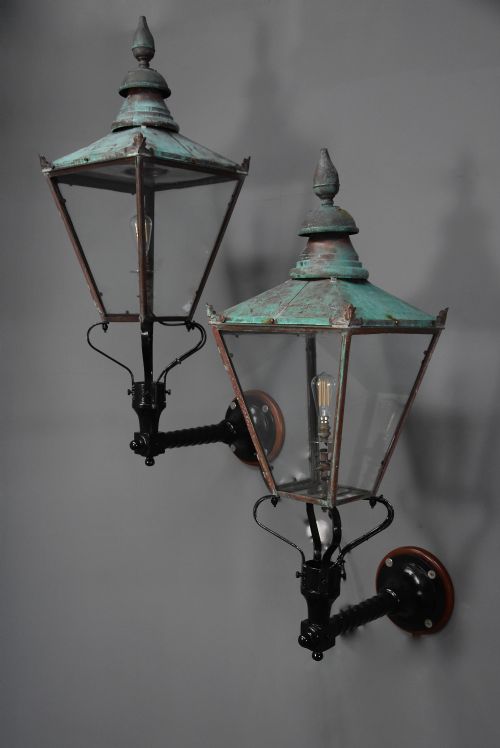
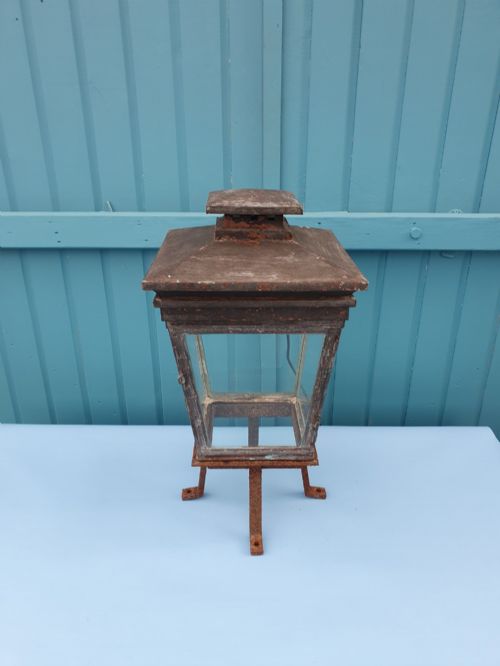
The selections on this page lean heavily towards pairs and large proportions, featuring robust wall brackets, swan neck supports, and octagonal or half-lantern profiles. Materials range from wrought iron and cast iron to solid copper and brass, often displaying patinated verdigris surfaces built up over decades of exposure.
Stylistically, pieces span industrial utility to ornate French Empire and Neo-Classical designs. You find sturdy street lanterns alongside refined porch lights, each carrying the marks of utilitarian service or formal architectural placement.
How they were made
Construction relies on durable exterior metals, predominantly copper, brass, cast iron, and wrought iron, joined to withstand wind and rain. Artisans hammered and soldered copper sheets, shaped iron bars, and cast heavy bracket components to mount securely to stone or brick walls.
Glazing typically involves heavy clear or frosted glass panes held securely within metal frames by glazing bars or clips. Many surviving copper and brass pieces began life as gas or oil lamps, later adapted to house electrical fittings while retaining their original structural integrity.
Some copper street lanterns still retain the faint, lingering scent of Victorian town gas deep within their sealed metal seams.
What varies in quality
Quality rests in the weight of the metal and the integrity of the structural joinery, where thicker gauge copper and solid cast iron brackets distinguish superior commissions from lighter utility items. The sophistication of the supporting bracket - such as spiral twists or cast ornamentation - often signals a higher tier of manufacture.
Originality of components and the depth of the natural patina also dictate the standing of a piece. Fixtures retaining their original glass panels, heavy mounting brackets, and uncompromised metalwork command greater appreciation among collectors.
REVO Leicester·Revo Tipton
The Antique Exterior Wall Lights Glossary
- Coach lamp
- A lighting fixture originally mounted to horse-drawn carriages or coach-houses to illuminate roads at night. These typically feature glazed sides and metal chimneys.
- Half lantern
- A wall-mounted lantern flattened on one side to sit flush against an exterior wall or pillar. This form saves space in narrow porches and doorways.
- Verdigris
- A green patina formed naturally on copper, brass, or bronze through atmospheric weathering over long periods. Collectors often value this stable surface layer for its visual depth.
- Swan neck
- A curved metal mounting arm resembling the neck of a swan, used to project a lantern outward from a wall or lamp post. It provides both structural support and aesthetic clearance.
Antique Exterior Wall Lights: Frequently Asked Questions
Can these lights be wired for modern electricity?
Most antique exterior wall lights have already been converted from gas or oil to electricity during their long histories, though rewiring by a qualified professional is normally recommended for outdoor safety.
Because these fixtures were built with generous internal spaces, modern electrical components usually fit securely inside without altering the exterior appearance.
How do I mount a heavy iron lantern?
Due to the substantial weight of cast iron, thick copper, and wrought iron brackets, these fixtures require secure fixing into solid masonry or timber studs using appropriaterawl plugs and heavy-duty screws.
It is essential to ensure the weight is distributed properly across the wall bracket to prevent strain on the mounting surface during high winds.
Are these lights weatherproof?
Constructed from durable metals like copper, brass, and iron, these pieces were originally designed to withstand harsh outdoor conditions and remain well-suited for exterior installation.
Over the decades, metals develop protective oxidation layers, though checking seals around the glass panes helps prevent moisture ingress in exposed locations.
How do I date an antique lantern?
Dating relies on examining manufacturing methods, such as hand-soldered copper joints, cast iron maker's marks, and the specific profile of the mounting bracket.
Stylistic cues like Victorian gas fittings, Edwardian proportions, or 1930s industrial forms also help place a fixture within a specific era.