
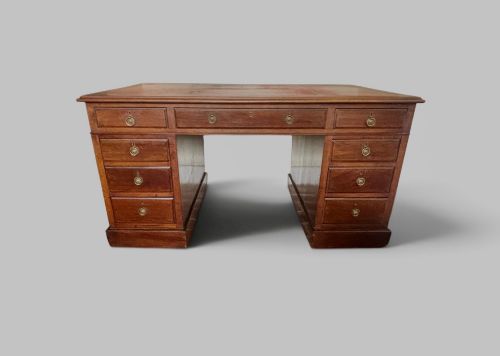


Antique Executive Table
An antique executive table delivers serious workspace presence, combining historical heft with fitted drawers and writing surfaces designed for proper study.
Antique Executive Table
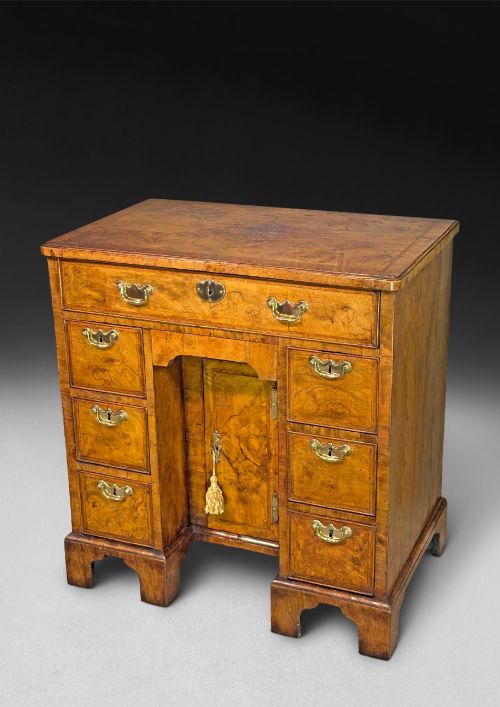
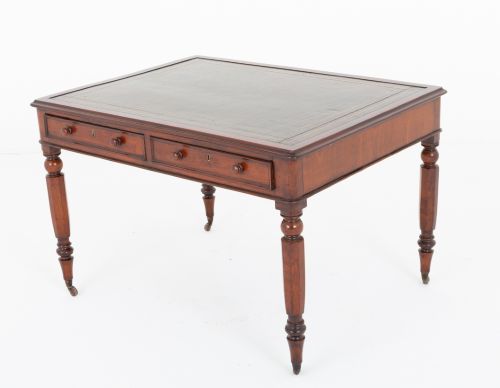
When you search for an antique executive table, you are looking at substantial working furniture built for serious administrative use rather than casual correspondence. These pieces include large pedestal desks, partners desks, writing tables, and library tables designed to anchor a private study or office.
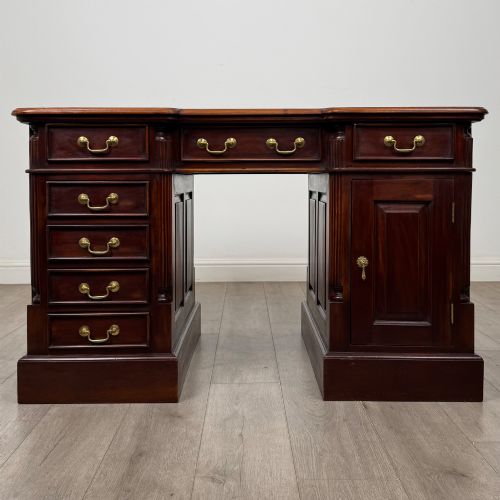
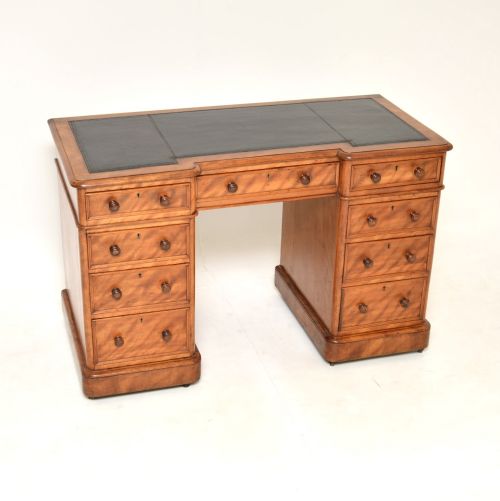
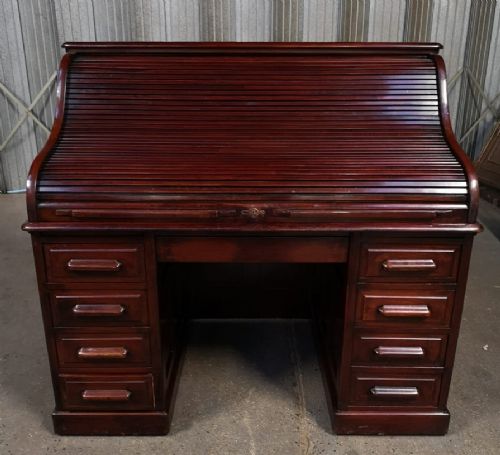
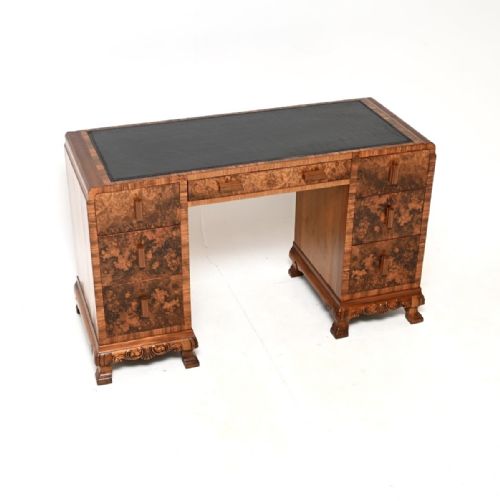
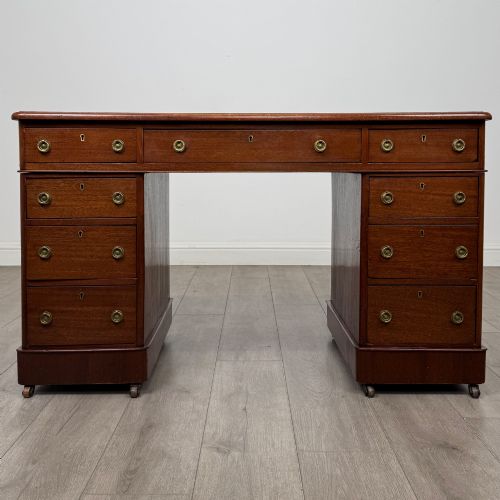
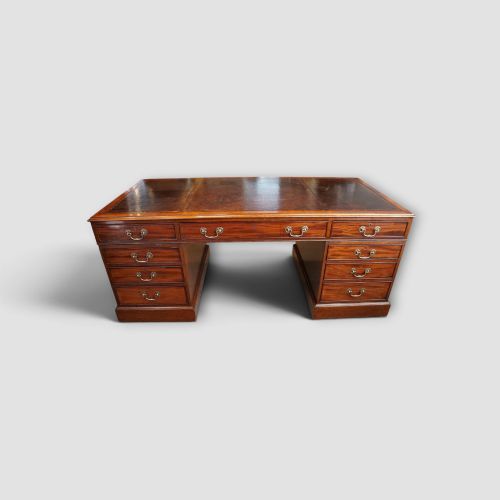
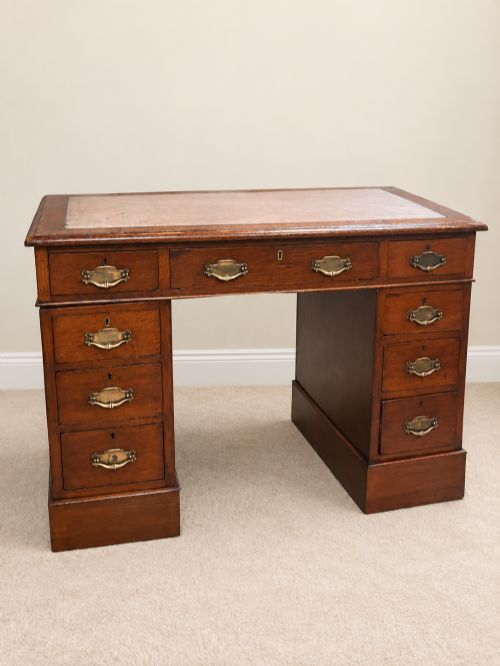
The version you are most likely to meet on this page is the Victorian or Edwardian pedestal desk in mahogany or oak, featuring banks of drawers flanking a central kneehole. These desks often retain inset leather writing surfaces, sometimes tooled with gilt borders, reflecting their original purpose as grand writing hubs.
How they were made
Cabinet makers utilised dense timber stocks like mahogany, oak, walnut, and burr walnut, often laid over sturdy secondary woods to build these heavy frames. Surfaces were frequently inset with panels of dyed and tooled leather, providing a tactile writing plane that contrasted with the polished wooden surrounds.
Joinery involved traditional techniques such as dovetailed drawer construction and mortise and tenon framing, ensuring the large pedestals and tops could withstand daily administrative use. Brass hardware, including drop handles and key escutcheons, was fitted to secure the numerous drawers.
One remarkably forward-thinking Victorian desk even turned up with royal commemorative leather, proving that paperwork was once considered fit for a monarch.
What varies in quality
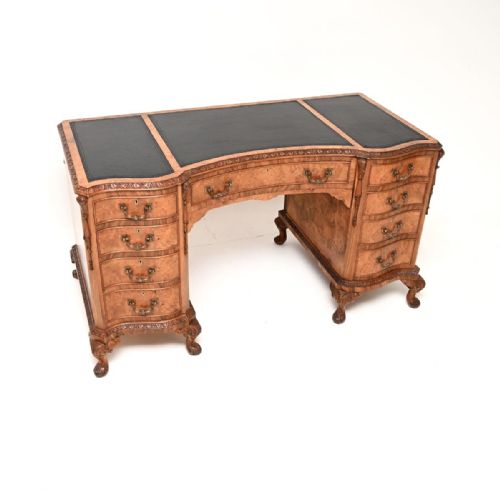
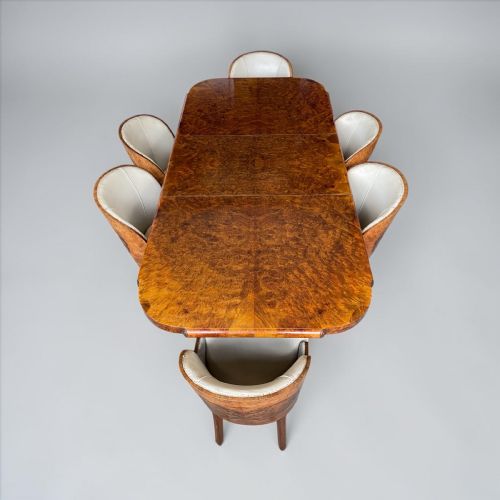
The standard of timber selection heavily dictates the upper tier of these pieces, with figured veneers, matched burr walnut, and solid mahogany boards separating bespoke commissions from standard workshop production. Superior examples display continuous grain matching across drawer fronts and finely executed hand-carved mouldings.
Internal construction and original fittings also define the grade of a piece, from secondary pine drawer linings up to secondary oak used throughout higher-end cabinets. The presence of original stamped brass locks, working keys, and untouched patination on the timber elevates the overall execution.
Maurice Adams·Trollope and Sons·Edwards and Roberts·Maple and Co·Johnstone and Jeanes
The Antique Executive Table Glossary
- Partners desk
- A large double-sided pedestal desk designed for two people to work opposite each other, featuring banks of drawers on both sides.
- Kneehole desk
- A smaller pedestal desk with a central recess for the user's legs, flanked by vertical stacks of multiple drawers.
- Bureau plat
- A freestanding French writing table, typically with a rectangular leather-inset top and one or more frieze drawers, standing on slender cabriole or tapered legs.
- Dickens desk
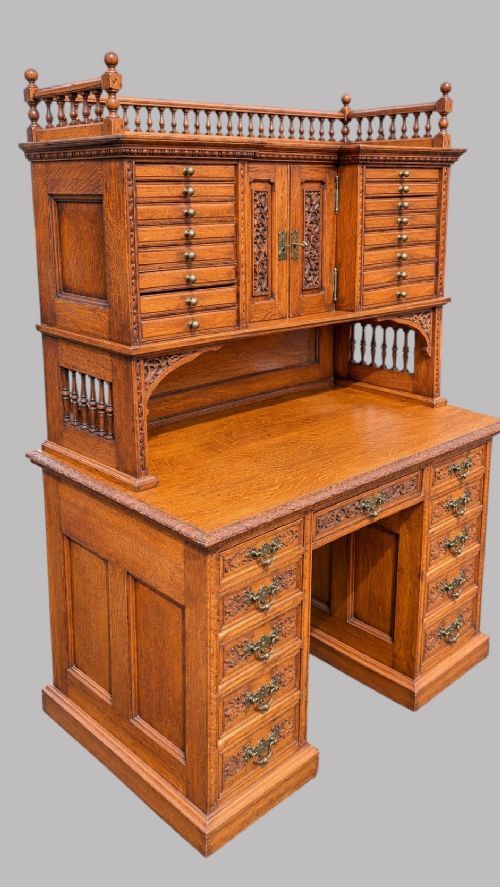
- A high-backed pedestal desk incorporating small drawers and pigeonholes above the main writing surface, named after the author's association with the form.
- Ebonised wood
- Timber treated with a chemical stain or pigment to simulate heavy, dark ebony, popular during the Victorian and Aesthetic Movement periods.
Antique Executive Table: Frequently Asked Questions
What is a partners desk?
A partners desk is a large, double-sided workspace built with drawers and cupboards facing outward on both the front and the back. This layout allowed two people, traditionally business partners or associates, to sit and work opposite one another.
These pieces were constructed to stand in the middle of a large room rather than against a wall, displaying finished cabinetry on all four sides.
How do I care for leather top desks?
Leather writing surfaces require gentle cleaning with a slightly damp cloth followed by a specialised leather conditioner to prevent drying and cracking. Avoid using harsh chemical sprays or excess water, which can damage the gilt tooling around the edges.
Applying a neutral wax or leather balm periodically will maintain the suppleness and deep colour of the hide without lifting the gold leaf.
How do I distinguish Victorian from Edwardian desks?
Victorian desks tend to feature heavier proportions, dark mahogany or walnut timbers, and elaborate carving or deep paneling. The design often emphasises formal weight and imposing scale.
Edwardian pieces frequently display lighter construction, satinwood or mahogany banded in lighter veneers, and simpler decorative motifs inspired by earlier Georgian or Sheraton revivals.