
Antique Equestrian Silver
Antique equestrian silver brings together the precision of the silversmith and the traditions of the hunt, racing and driving.
Antique Equestrian Silver
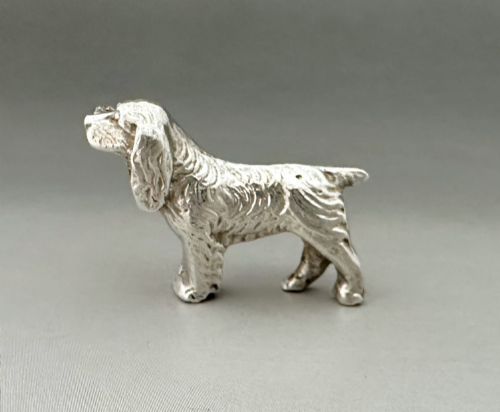
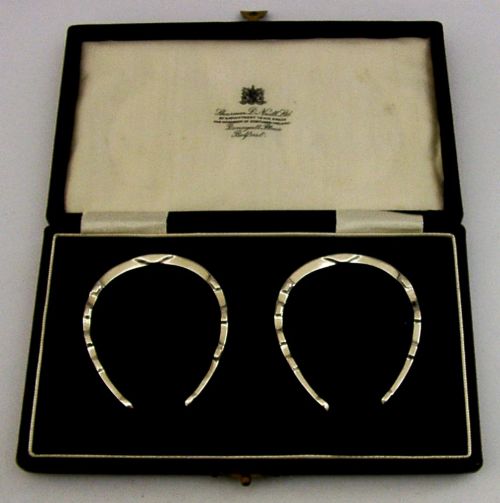
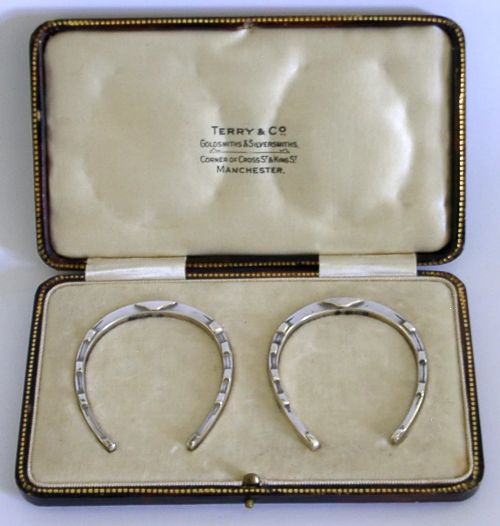
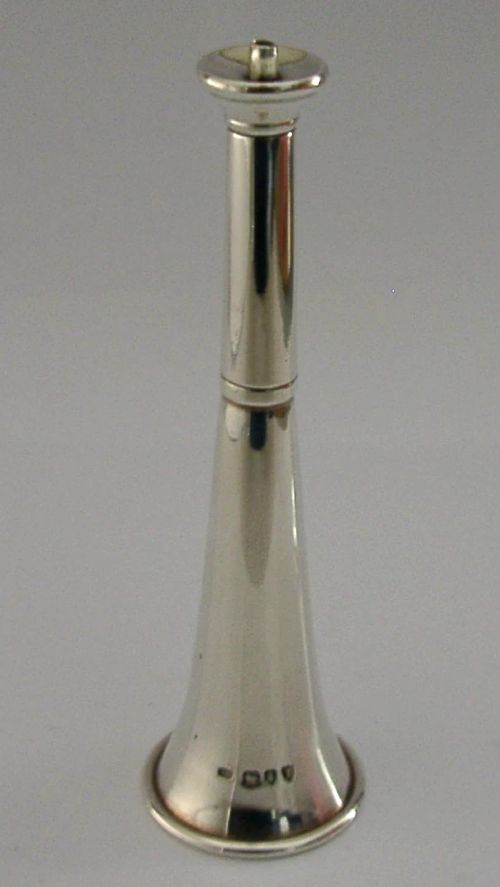
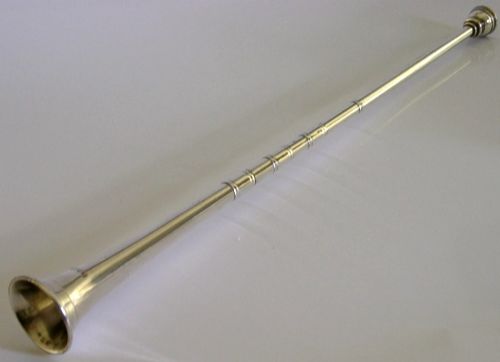
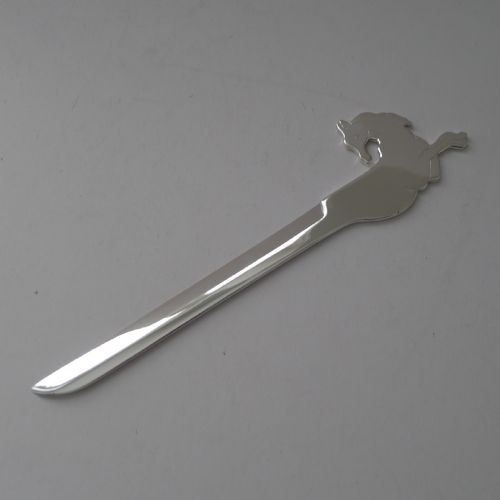
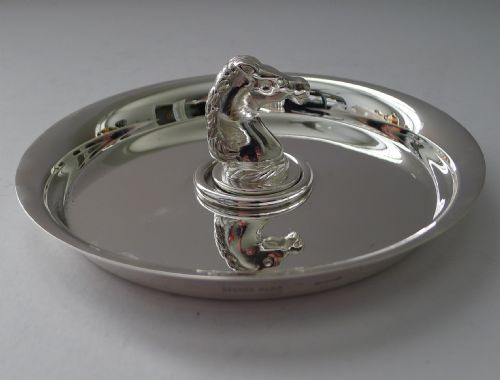
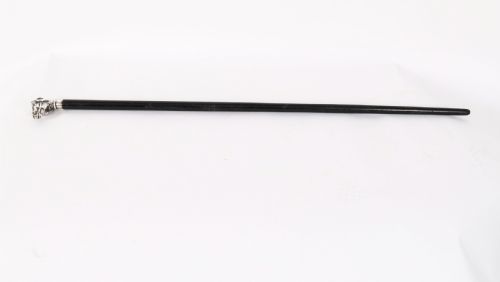
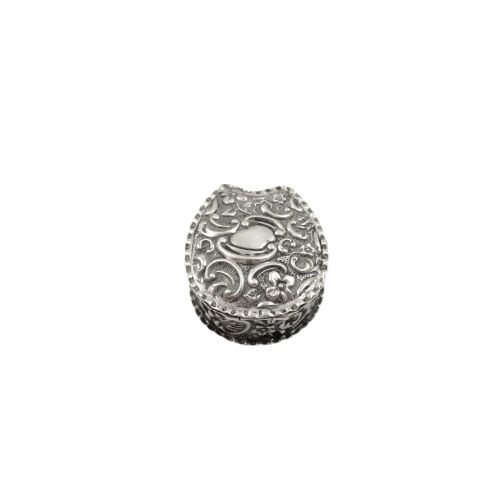
Antique equestrian silver encompasses functional items and decorative pieces shaped around horses, riders and the stable. When searching for antique equestrian silver, buyers encounter items ranging from horseshoe napkin rings and jockey cap caddy spoons to silver-mounted horse hoof inkwells and hunting horns.
The objects span the Victorian, Edwardian and mid-century periods, with numerous pieces originating from the late nineteenth and early twentieth centuries. Table accessories, vesta cases and brooches dominate the selection, reflecting both personal attire and country house hospitality.
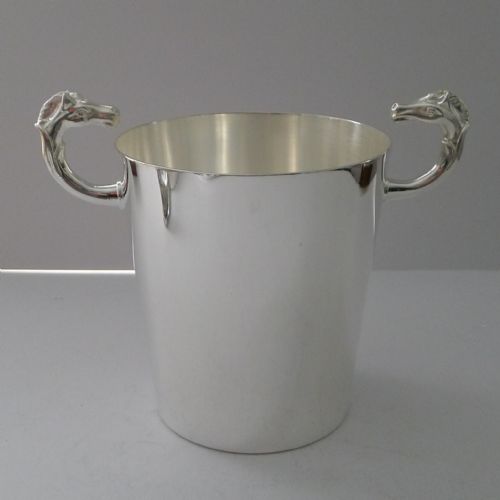
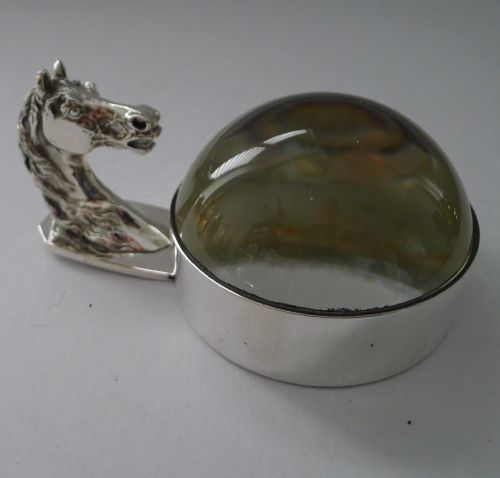
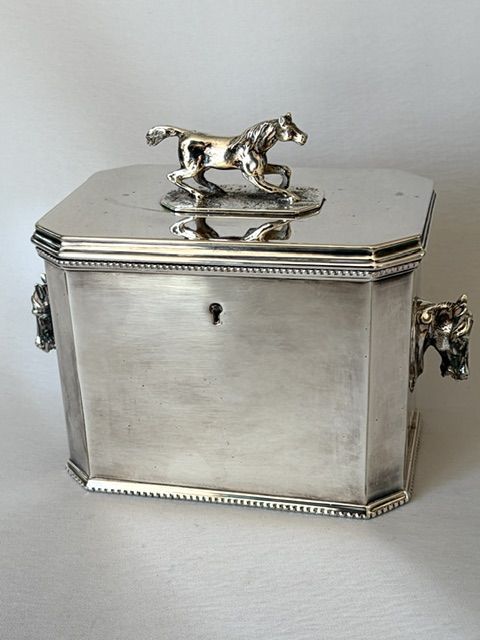
Makers utilised motifs such as horseshoes, stirrups, riding crops and horse heads to transform everyday silver into sporting statements. These pieces served practical roles in gentlemanly pursuits while celebrating the prestige of the turf and the hunting field.
How they were made
Silversmiths employed sterling silver and silver plate, often combining the metal with organic materials such as horse hoof, horn, leather, oak and tortoiseshell. Taxidermy elements like mounted hooves required precise taxidermy preparation before silver mounts and collars were fitted.
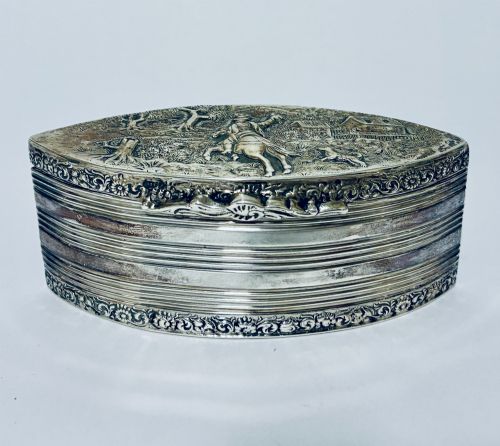
Casting and embossing created three-dimensional animal forms, including detailed horses heads, dogs and jockey figures. Enamelling added colour to items like vesta cases, while hand engraving delineated the texture of horse hair, leather straps and horseshoe nails.
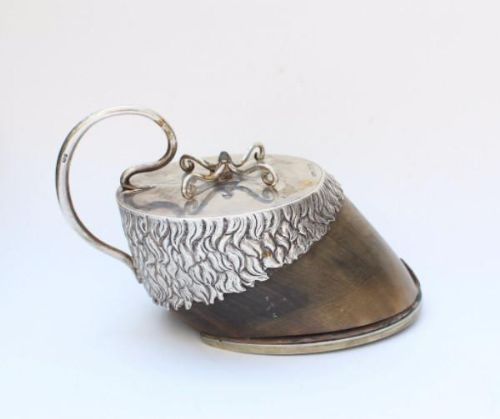
Several items incorporate actual horse hoofs mounted in polished silver to hold ink.
What varies in quality
Quality rests in the anatomical accuracy of the modelling and the crispness of the chased or engraved detail. Pieces featuring hand-painted enamel plaques or identifiable maker marks show superior craftsmanship compared to plain production items.
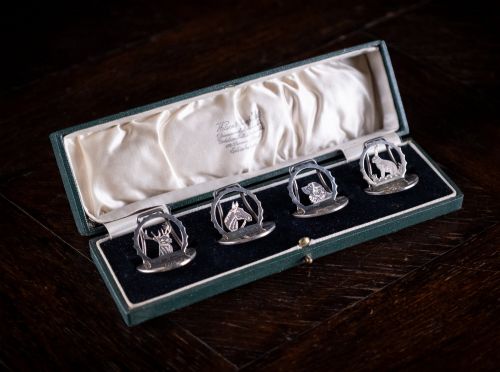
The integration of secondary materials defines the better examples, where silver mounts fit seamlessly against polished horn, cut crystal or seasoned oak. Finer objects retain intact original cases and legible hallmarks that document the exact year of assay.
Braham·Sampson Mordan·James Dixon & Sons·A Wilcox·William Neale·Swaine Adeney·John Meek·Hermes Paris·WMF
The Antique Equestrian Silver Glossary
- Vesta case
- A small pocket container designed for holding matches, frequently hinged and fitted with a striking panel on the base. Many equestrian examples feature embossed horseshoes or hand-painted jockey portraits.
- Caddy spoon
- A short-handled spoon used for measuring tea leaves from a caddy into a pot. Equestrian versions often showcase terminal handles modelled as jockey caps.
- Hallmark
- A series of stamped marks on precious metal indicating the maker, assay office, purity and date of manufacture. These stamps allow collectors to date pieces precisely.
- Toast rack
- A table frame with vertical dividers designed to hold slices of toast upright. Victorian makers frequently cast the framework in the shape of stirrups and horseshoes.
- Cruet set
- A matched group of small condiment containers for salt, pepper and mustard, sometimes arranged on a dedicated stand. Equestrian sets incorporate horseshoe frames or hunting horn motifs.
Antique Equestrian Silver: Frequently Asked Questions
What items are classed as equestrian silver?
The category includes functional dining pieces, desk accessories and personal items shaped around horse racing and hunting. Common forms are horseshoe napkin rings, hunting horns, vesta cases and inkwells.
Many incorporate motifs like stirrups, riding crops, horse heads and hoofs, executed in sterling silver or silver plate.
How can I tell the date of a piece?
British pieces typically bear hallmarks stamped into the metal, which record the assay office, silver standard and a specific date letter. Consulting standard hallmarking reference tables reveals the exact year of production.
Pieces without hallmarks rely on stylistic evidence, patent dates or associated maker signatures to establish a period.
How were horse hoof items used?
Actual horse hooves were preserved through taxidermy and fitted with silver mounts to serve as desk tidies, inkwells, paperweights or spirit measure stands. These objects commemorated prized riding horses or hunting mounts within Victorian country houses.
The natural keratin of the hoof was polished and combined with silver collars, hinges and inscribed presentation plaques.
Are these items made of solid silver?
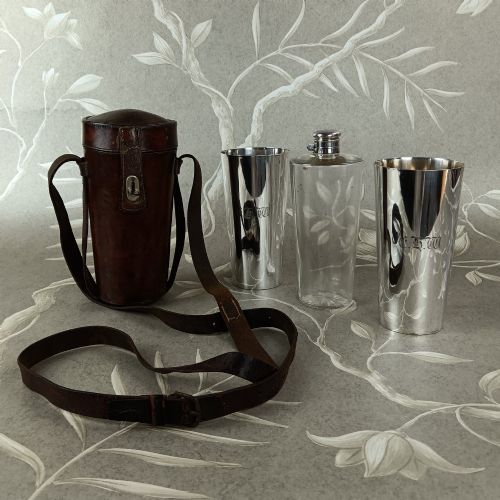
Listings comprise both solid sterling silver and silver-plated items over base metals like brass or bronze. Makers also combined the metal with leather, oak, crystal and glass for items such as spirit flasks and inkstands.
Hallmarks or stamped marks on the metal indicate whether a piece is solid sterling silver or plate.