



Antique Equestrian Plaque
These antique equestrian plaque pieces bring the classic form of horse and rider to your wall.
Antique Equestrian Plaque
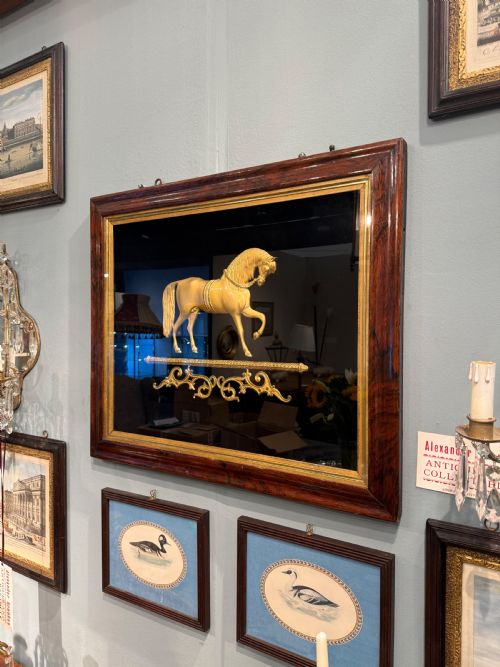
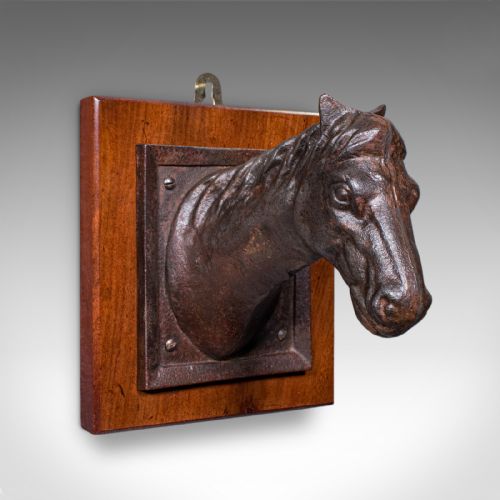
When you search for an antique equestrian plaque, you encounter wall-hanging items depicting horses in various sculptural forms. These range from cast metal mounts and carved oak panels to porcelain plates and sheet metal silhouettes.
The versions most commonly met span from the eighteenth century to the early twentieth century. They include utilitarian coat hooks alongside purely decorative reliefs made in materials like bronze, iron, and porcelain.
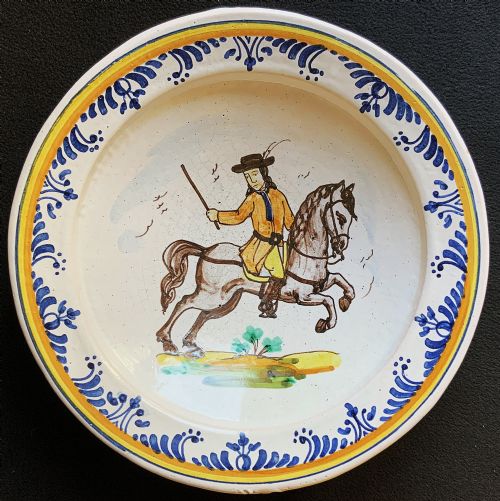
Origins vary across European traditions, taking in English tack hooks, French porcelain, German marble dust reliefs, and Spanish polychrome chargers.
How they were made
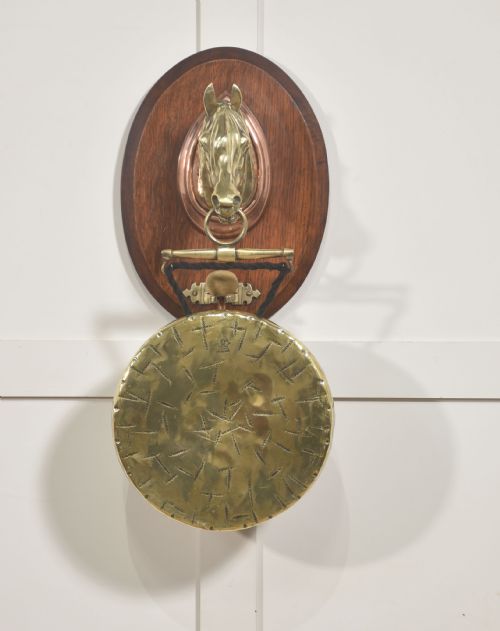
Makers utilised traditional casting and carving techniques to shape metals, woods, and ceramics. Gilt bronze, cast iron, and sheet metal provide the metallic reliefs, often mounted onto rosewood or oak backings.
Potters and ceramists shaped porcelain and faience plates, applying polychrome glazes to depict horsemen. Carvers worked directly into solid timber to create dimensional wall panels and functional tack hooks.
Materials across these listings include wood, oak, brass, porcelain, gilt bronze, rosewood, glass, and cast iron.
What varies in quality
The standard of an antique equestrian plaque depends on the crispness of the modelling and the integration of the materials. A finely cast bronze or a sharply carved oak panel displays musculature and detail that inferior pressed metal lacks.
Material pairing also separates pieces, such as a horse head mount fitted securely to a polished hardwood back rather than a simple stamped sheet.
The Antique Equestrian Plaque Glossary
- Relief
- A sculptural technique where the figures project from a flat background. This is the primary method used for wall-hanging horse plaques.
- Faience
- Tin-glazed earthenware produced in Europe, seen in decorative charger plates depicting riders. The glaze creates an opaque white surface for painted decoration.
- Gilt bronze
- Bronze that has been treated with a thin layer of gold. It adds a durable, warm metallic sheen to equestrian mounts.
- Polychrome
- Decorated in multiple colours. This term describes painted ceramic plates and chargers showing horsemen.
Antique Equestrian Plaque: Frequently Asked Questions
How do I hang a heavy bronze plaque?
Heavy plaques require secure wall fixings suited to the weight of the metal and wood backing. Use appropriate wall plugs and screws rather than standard picture wire.
Ensure the hanging bracket on the reverse is firmly attached to the frame before mounting.
Were these always meant for walls?
Many pieces served dual purposes, combining decoration with utility as coat hooks or dinner gongs. Others were designed purely as visual wall art or decorative plates.
Check the reverse for hanging loops, hooks, or brackets to understand the original mounting method.
How do I clean an iron horse mount?
Iron and cast metal mounts benefit from gentle dusting with a dry cloth. Avoid using liquid cleaners that can cause corrosion on older iron surfaces.
Preserve the original finish by keeping the metal in a stable, dry environment away from dampness.
What is the difference between a plaque and a charger?
A plaque is typically flat or relief-moulded specifically for wall display, while a charger is a large decorative plate. Chargers often feature painted or glazed scenes and require plate hangers for wall mounting.
Both serve as wall decoration in equestrian-themed interiors.