


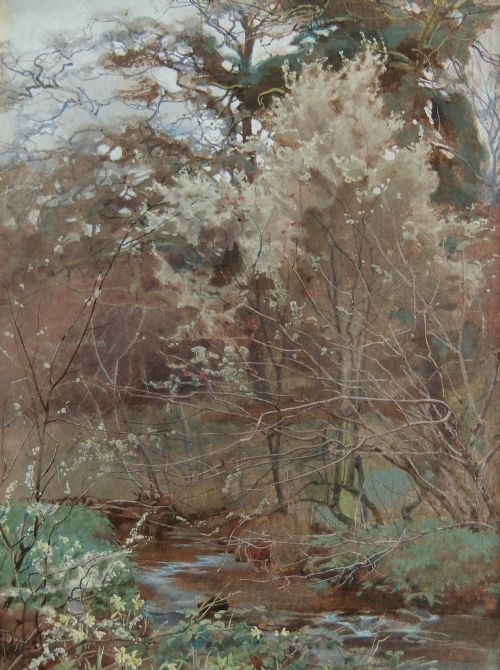


Antique English Woodland Art
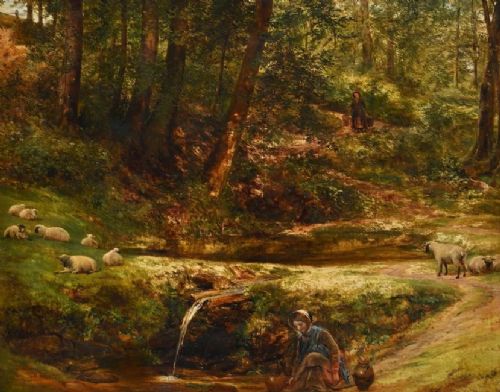
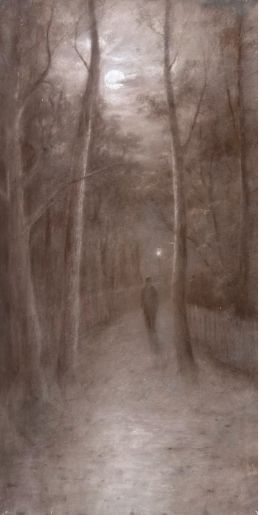
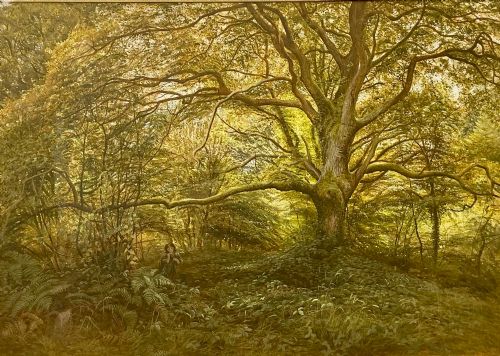
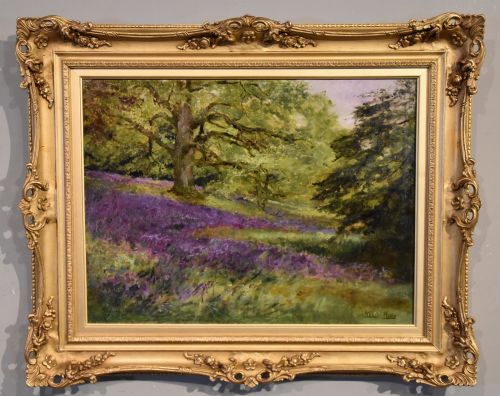
Antique English woodland art captures the quiet depths of British groves and country rivers through nineteenth and twentieth-century paintings.
Antique English Woodland Art
Antique English woodland art comprises framed watercolours, oil paintings on canvas or panel, charcoal drawings and prints depicting British forests, country rivers and rural glades.
The selections on this page span the Victorian era, the Edwardian period and the early twentieth century, reflecting shifting tastes in landscape depiction from 1850 onward.
Buyers encounter works by named British artists such as William Mellor and Beatrice Parsons alongside accomplished pieces by members of the wider English School.
How these pieces were made
Painters applied oil and watercolour pigments onto canvas, wood panels and heavy paper sheets to capture natural light within shaded woods and along riverbanks.
Charcoal was used on canvas for tonal monochrome studies, while prints employed early mechanical or artisanal reproduction methods on paper.
Artists worked en plein air or developed studio watercolours from detailed country sketches made in locations such as the New Forest and Yorkshire.
Several Victorian woodland scenes still carry the faint scent of old linseed oil and wood smoke from country cottages.
What varies in quality
Quality rests in the artist's handling of light filtering through a canopy and the precise rendering of native foliage like bluebells and blackthorn.
Works by established academic painters command attention for their depth of colour and balanced composition compared to anonymous decorative watercolours.
The integrity of the original wood framing and the stability of the canvas or paper support also influence the standing of each piece.
Richard Redgrave·Bonomi Edward Warren·Henry Yeen King·William Mellor·John Wright Oakes·Walter Follen Bishop·Rowland Henry Hill·Edmund George Warren·Alfred W Parsons·Charles James Adams·Ernest Higgins Rigg·Charles Edward Holloway·Beatrice Parsons·Frederick Golden Short·Lester Sutcliffe·Benjamin Callow·Walter Emsley·Kershaw Schofield·Everett W Mellor
The Antique English Woodland Art Glossary
- Watercolour painting
- A work created using water-soluble pigments on paper, valued for its translucent washes of colour. These pieces often capture delicate seasonal shifts in English woodlands.
- Oil on canvas
- A traditional painting medium where oil paints are applied to stretched fabric, offering rich textures and deep tones. This technique allows for heavy impasto on woodland foliage.
- Victorian Naturalism
- An artistic movement focused on the faithful observation of the natural world without idealisation. Practitioners recorded British flora and country scenes with careful botanical precision.
- British Impressionism
- A style embracing loose brushwork and the capture of transient atmospheric effects outdoors. It emerged in late nineteenth-century landscape painting.
- English School
- A collective term for artists born or working primarily in England across successive centuries. It groups diverse talents under a shared national artistic heritage.
Antique English Woodland Art: Frequently Asked Questions
What subjects do these paintings show?
These works concentrate on British country scenery, featuring shaded riverbanks, bluebell woods, rural glades and pastoral streams.
Artists focused on specific English locations like Yorkshire, Hampshire and Hertfordshire to record authentic rural views.
How do I care for watercolour woodland art?
Watercolours require protection from direct sunlight to prevent the pigments from fading over time.
Frame these works behind glass with acid-free mounts and hang them in rooms with stable humidity levels.
How do I date a Victorian landscape?
Dating relies on the artist's documented working years, exhibition records and stylistic markers such as nineteenth-century framing.
Victorian works often carry signature styles of naturalism and detailed foliage that distinguish them from later twentieth-century pieces.
Where were these woodland scenes painted?
Painters travelled to recognised rural retreats across Britain, including the New Forest, Yorkshire dales and Hertfordshire country lanes.
Many artists sketched directly from nature before completing their finished oils and watercolours back in the studio.