
Antique English Tableware
These pieces of antique english tableware span centuries of dining, bringing silver, porcelain and earthenware to the table.
Antique English Tableware
Antique english tableware encompasses everything required to set a formal table across multiple centuries. The selection here ranges from Georgian silver serving pieces to Victorian porcelain dessert services and earthenware dinner plates.
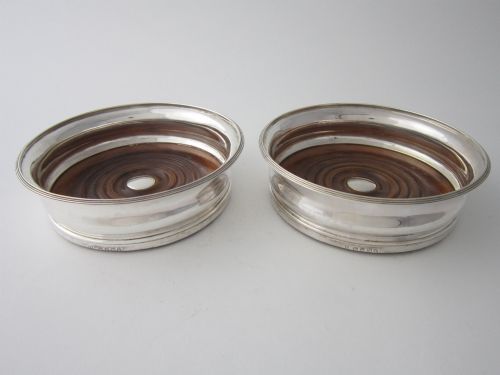
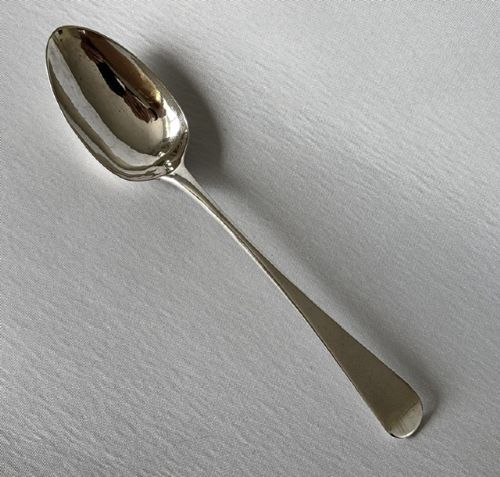
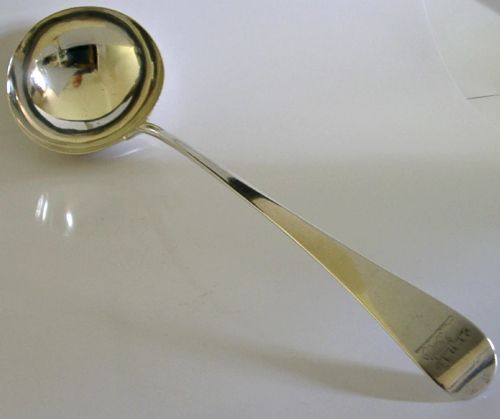
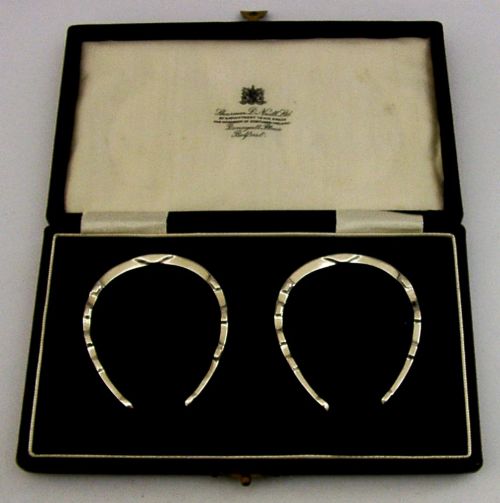
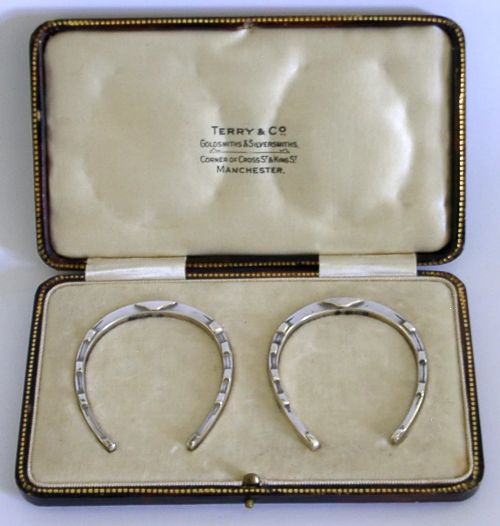
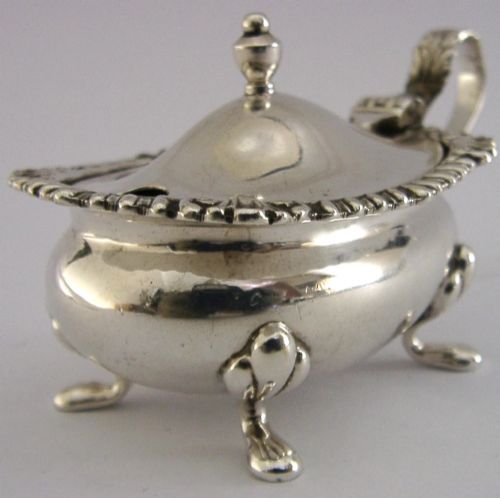
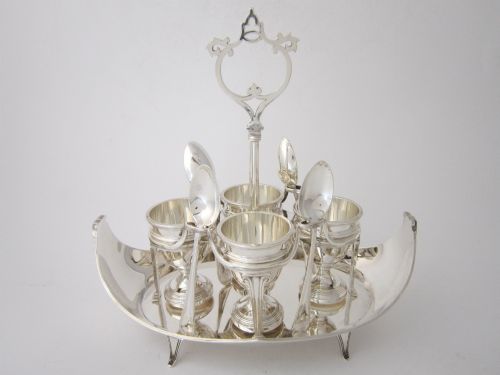
The most common items encountered in this category include sterling silver napkin rings, sugar bowls, cream jugs, and dinner plates from various British periods. Forms extend from practical mustard pots and salt cellars to decorative toast racks and egg cruets.
Pieces originate from notable domestic potteries and silversmiths operating during the 18th, 19th, and early 20th centuries. Buyers find functional vessels alongside decorative display items created for dining rooms of the past.
Materials and Technique
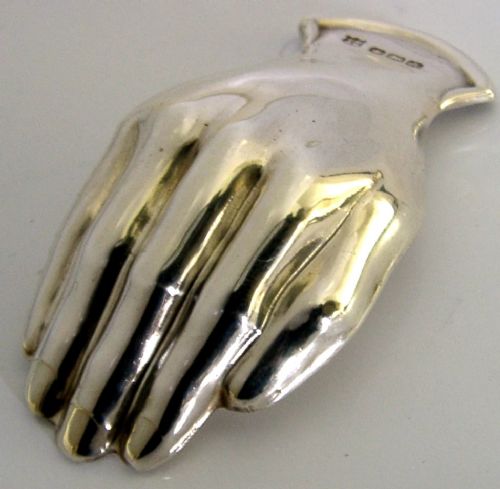
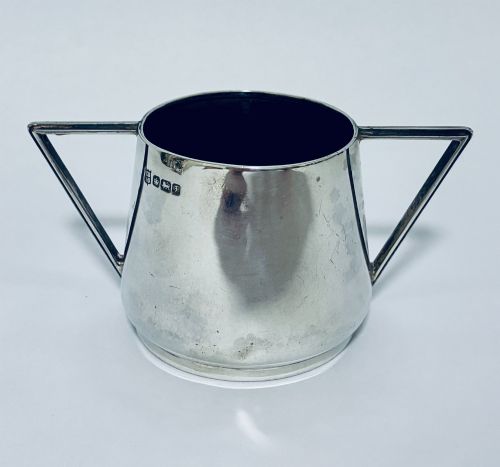
Silversmiths shaped sterling silver into hollowware and flatware using hammering, casting, and piercing techniques. Items frequently feature hallmarks indicating the assay office, date letter, and maker's mark.
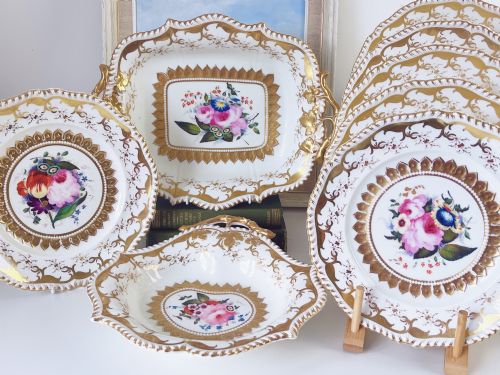
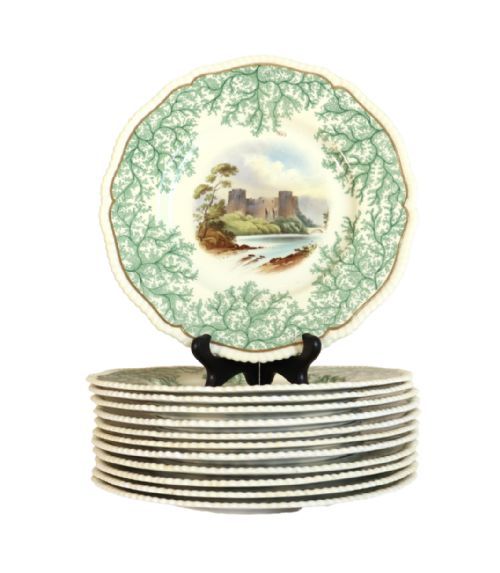
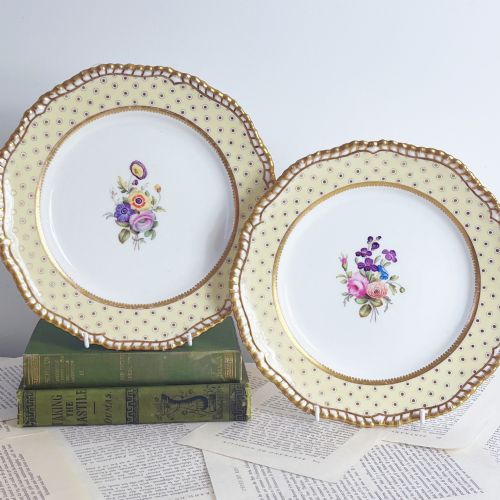
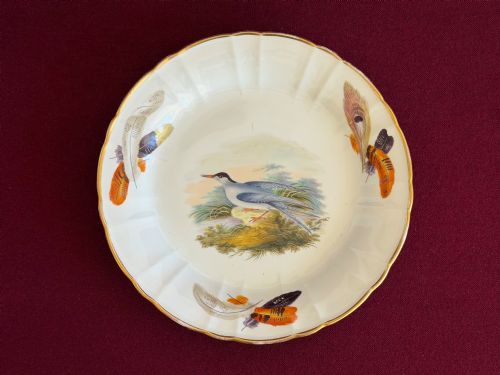
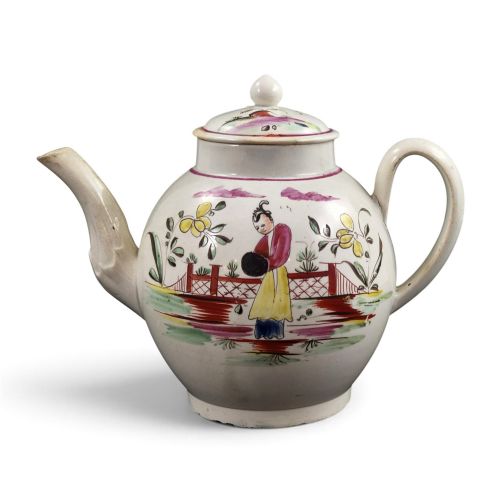
Potteries utilised earthenware, bone china, and creamware, often decorating surfaces with hand-painted botanical or landscape motifs. Glazes applied before firing created durable finishes across plates, teapots, and tureens.
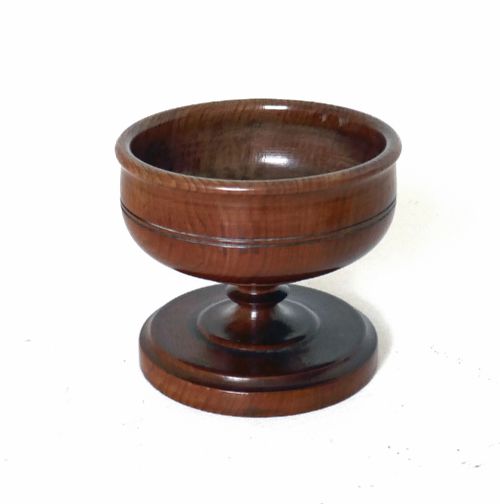
Listings feature items spanning the 18th, 19th, and 20th centuries, executed in sterling silver, bone china, creamware, and treen.
Craftsmanship and Execution
Quality separates through the crispness of chased decoration on silver and the precision of hand-painted details on ceramics. Superior items display meticulous attention to balance, weight, and finishing touches by skilled hands.
Provenance and maker attribution elevate certain items above standard production pieces from the same era. Surviving sets with matching components maintain greater integrity than assembled groups.
Peter & Jonathan Bateman·Hester Bateman·Grainger Lee & Co·Spode·Royal Crown Derby·Wedgwood·Davenport·Mappin and Webb·Dee & Fargus·George Jones
The Antique English Tableware Glossary
- Hallmark
- Official stamps struck into precious metals to guarantee purity and origin. These marks indicate the assay office, maker, and year of production.
- Creamware
- A refined earthenware developed in the 18th century with a warm cream-coloured glaze. It gained popularity for its smooth surface and suitability for domestic dining.
- Bone china
- A type of porcelain incorporating bone ash for added strength and translucency. It allowed makers to produce thinner, lighter tableware.
- Tureen
- A deep covered bowl used for serving soups, sauces, or vegetables at the table. They often stand on matching fixed or separate platters.
- Imari style
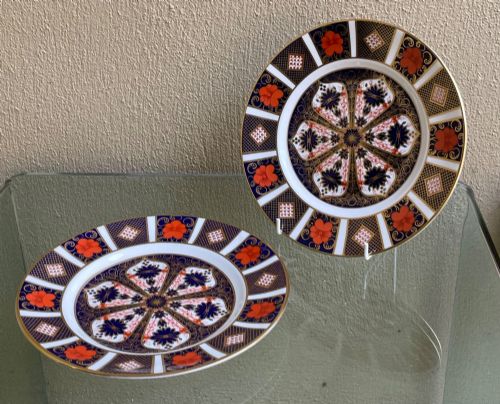
- A decorative scheme inspired by Japanese export porcelain featuring deep blue, iron red, and gilt details. English factories adopted this palette during the Georgian and Victorian eras.
Antique English Tableware: Frequently Asked Questions
How do I clean antique silver tableware?
Clean sterling silver gently using a specialist microfibre cloth and mild soapy water to remove everyday tarnishing without abrasive damage. Avoid harsh chemical dips that strip the natural patina accumulated over generations.
Store silver pieces in dry conditions away from direct sunlight and damp environments to maintain their finish.
Can I use antique plates for dining?
Most antique earthenware and porcelain plates withstand careful hand washing, though modern dishwashers subject fragile glazes to excessive thermal shock and aggressive detergents. Older crazing in ceramic bodies absorbs liquids over time.
Reserve these pieces for special occasions rather than daily use to preserve hand-painted details and historic surfaces.
What does a sterling silver hallmark tell me?
A complete hallmark sequence reveals the city where the metal was tested, the specific year of manufacture, and the silversmith responsible for the piece. Standard marks confirm the silver meets the official British purity standard.
Researching these stamps allows collectors to date items precisely and trace regional manufacturing traditions.
How should I display a dessert service?
Display plates and comports in well-lit cabinets or securely mounted wall racks where their painted scenes and border patterns remain visible. Keep them away from heat sources that might dry out older ceramic bodies.
Grouping matching service pieces together creates a striking historical display in a dining room.