




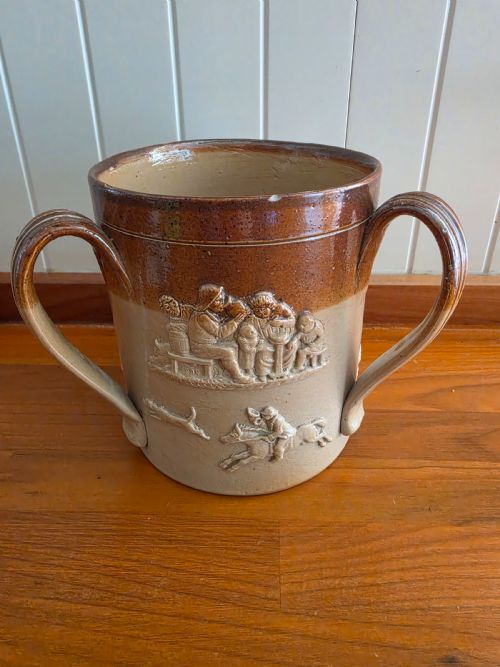
Antique English Stoneware Pottery
These pieces of antique English stoneware pottery bring robust utility and rich texture to any interior.
Antique English Stoneware Pottery
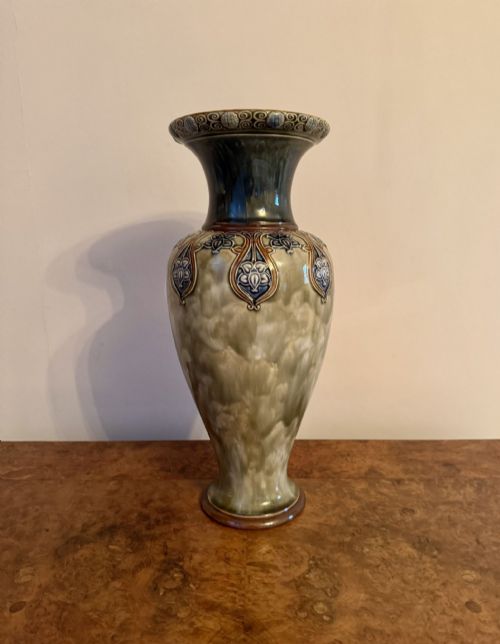
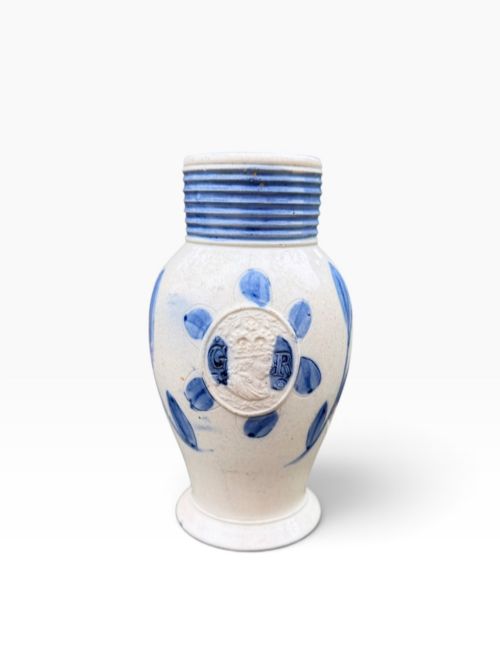
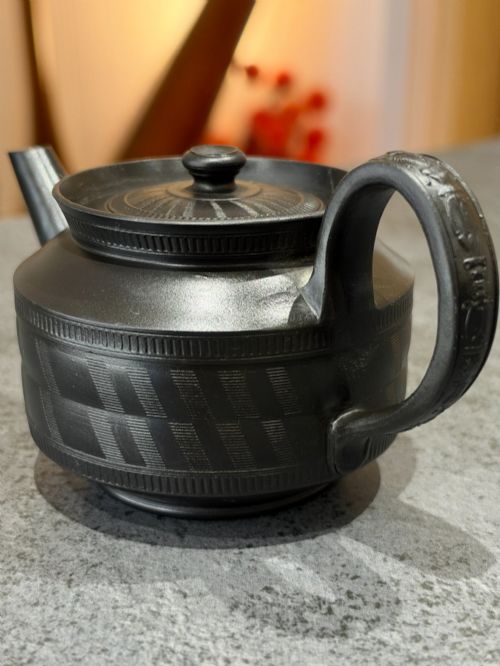
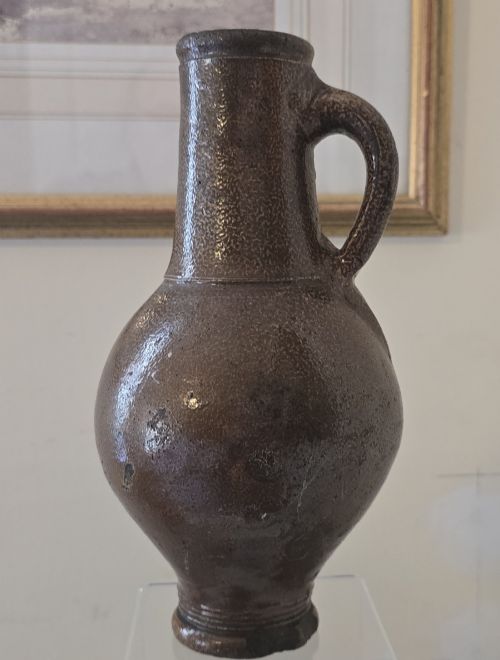
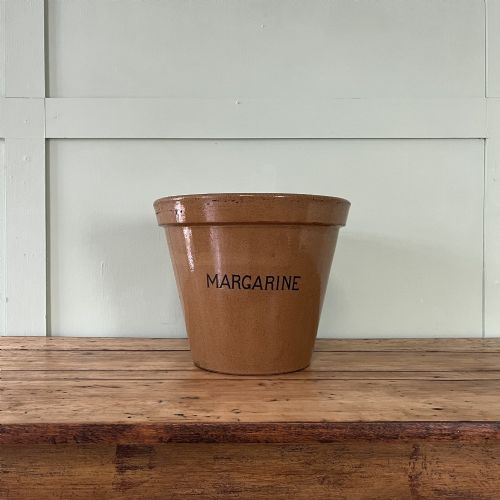
When you search for antique English stoneware pottery, you encounter a durable category defined by vitrified clay and salt glazes. The selection here spans utilitarian storage vessels, tavern jugs and decorative Victorian tablewares.
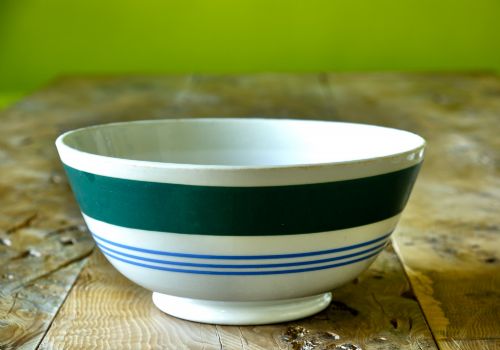
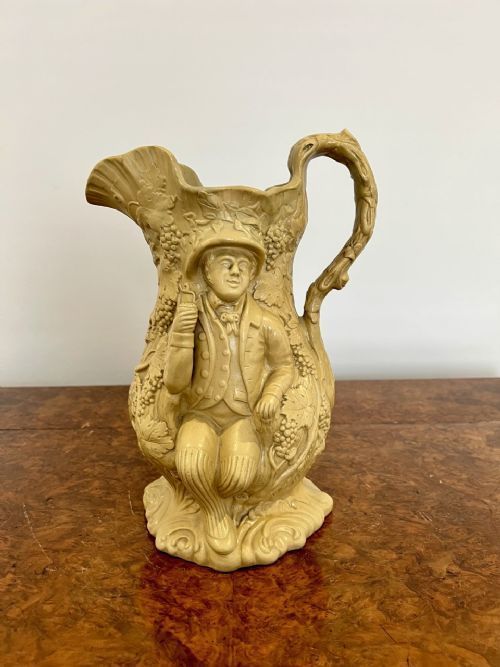
Most examples originate in the nineteenth century, ranging from early Georgian moulded pieces to elaborate Art Nouveau vases and commemorative items. Jugs, pitchers, bowls and tygs dominate the forms available in this medium.
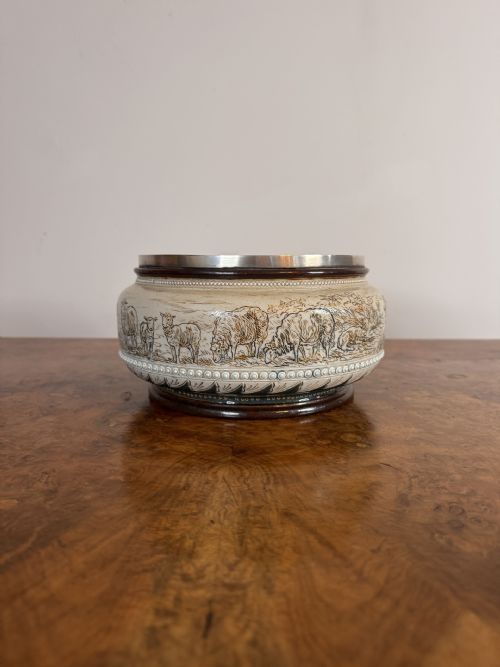
Makers such as Doulton Lambeth feature prominently alongside earlier salt-glazed pitchers and slipware variants. Each object reflects the heavy utilitarian roots and evolving decorative tastes of English potteries.
How they were made
Potters utilised dense local clay bodies fired at high temperatures until vitrification occurred, rendering the material completely non-porous. Many vessels received salt glazes, thrown into kilns where salt vaporised to create a characteristic pitted texture.
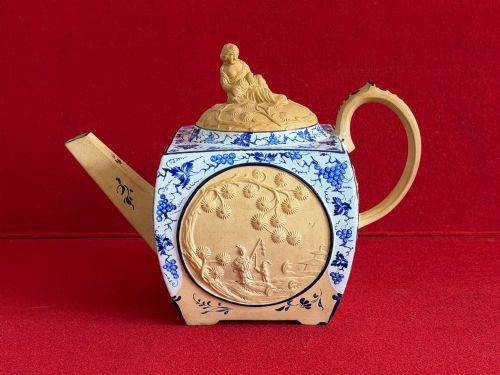
Relief moulding and applied sprigged decoration added raised motifs, often highlighted with enamel or contrasting slips. Metal mounts in silver or silver plate frequently reinforced the rims of finer ale jugs and beakers.
Antique English Stoneware Pottery Retail Price Guide 2026
Typical asking prices for english stoneware pottery among the pieces listed under this phrase on Sellingantiques today, from the lower quarter to the upper quarter. They describe what is for sale here now, not the wider market.
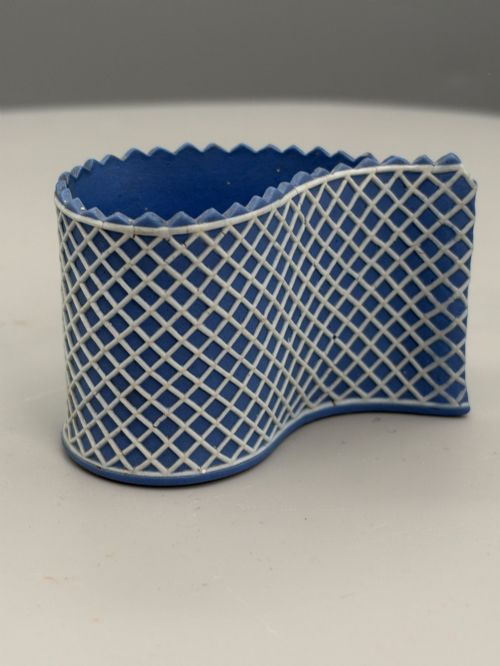
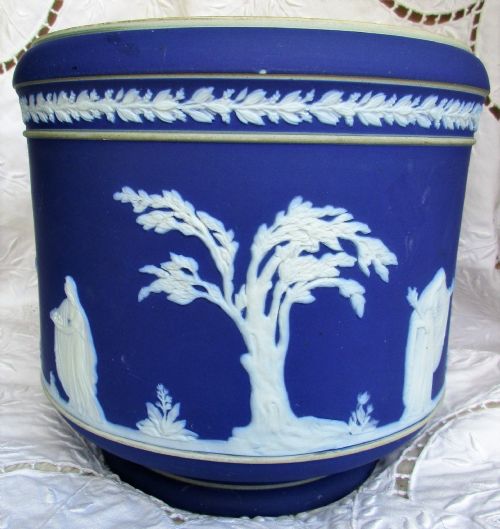
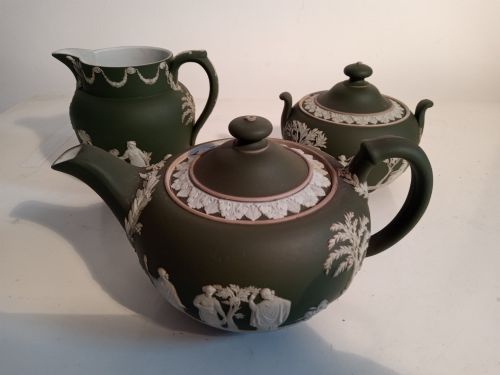
The listings span from the early nineteenth century through the Edwardian era, featuring materials such as stoneware, earthenware, and jasperware.
What varies in quality
The distinction between standard utility ware and top-tier studio output lies in the crispness of relief moulding and the artistry of surface decoration. Pieces painted by recognised artists command greater interest due to their hand-executed detail.
Complexity of form and the inclusion of precious metal mounts separate ordinary vessels from exhibition pieces. The uniformity of the salt glaze and the precision in applied sprigging reveal the skill of the original potter.
Wedgwood·Doulton Lambeth·Copeland Spode·Minton·Royal Doulton
The Antique English Stoneware Pottery Glossary
- Stoneware
- A robust ceramic pottery fired at high temperatures until the clay body vitrifies into a dense, impermeable material. It resists liquids without needing an internal glaze.
- Salt glaze
- A glassy, slightly orange-peel texture formed by throwing common salt into the kiln during high-temperature firing. The sodium reacts with the silica in the clay body.
- Tyg
- A drinking vessel featuring three or more handles designed for communal passing around a table. These multi-handled pots date back centuries in English tradition.
- Sprigged
- A decorative technique where separately moulded clay motifs are applied to the surface of an unfired vessel using slip as an adhesive. It creates distinct relief patterns.
- Puzzle jug
- An interactive vessel featuring perforated necks and hidden channels that require the drinker to solve a riddle or cover specific holes to imbibe the liquid without spilling.
Antique English Stoneware Pottery: Frequently Asked Questions
How do I clean antique stoneware?
Wash pieces gently in warm water using mild soap and a soft cloth to protect the historic glaze and any applied decoration.
Avoid soaking items with metal mounts or porous repairs to prevent moisture damage.
Can I still use these pots for drinks?
Many salt-glazed vessels remain entirely waterproof and functional for serving cold beverages or holding flowers.
Inspect each piece for hairline cracks or historical repairs before exposing them to liquids.
What is the difference between earthenware and stoneware?
Earthenware uses porous clay fired at lower temperatures, whereas stoneware vitrifies completely during high-heat firing.
Stoneware is heavier, non-porous, and significantly more durable than standard earthenware.
How do I identify a salt glaze?
Look closely for a pitted surface texture that resembles the skin of an orange across the body of the pot.
This distinct finish results from salt vaporising inside the kiln during the peak of the firing process.