



Antique English Rummer
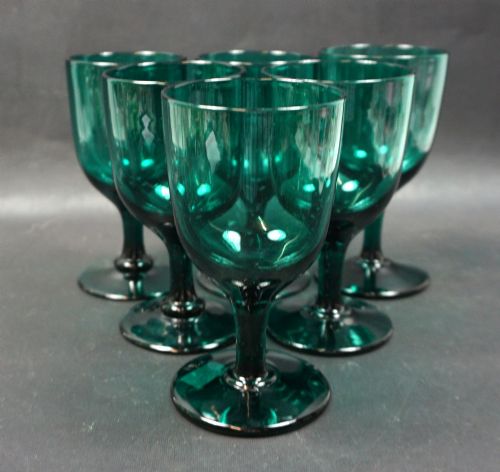
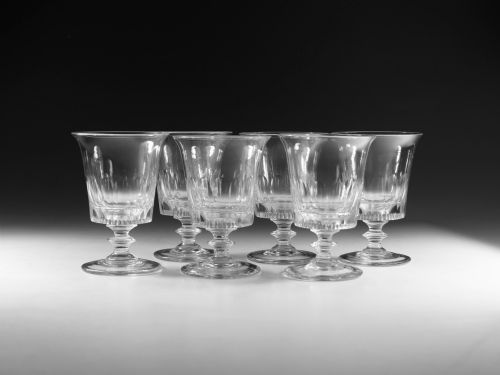
These heavy drinking vessels are an antique English rummer, built for hearty toasts and generous measures during the Georgian and Victorian eras.
Antique English Rummer
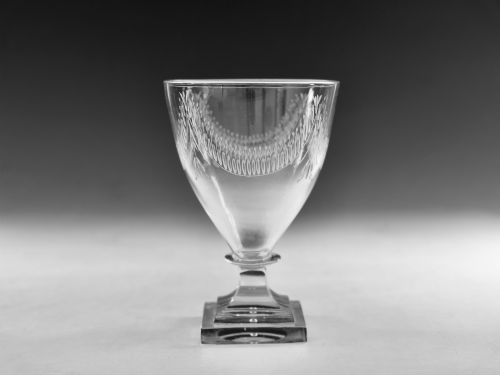
An antique English rummer is a substantial drinking glass designed for ale, wine, or spirits during the Georgian and Victorian periods. You will frequently encounter heavy lead-glass examples dating from around 1790 to 1850 on this page, often showing deep bucket bowls.
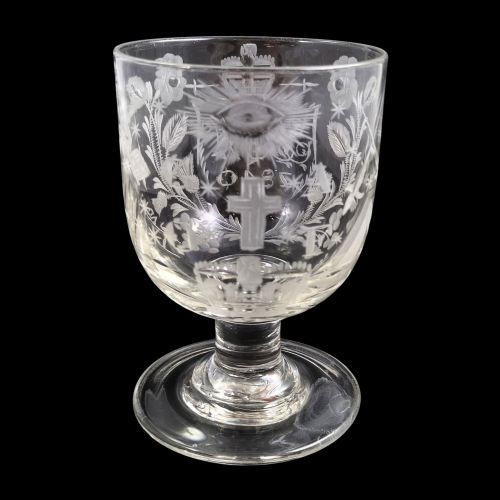
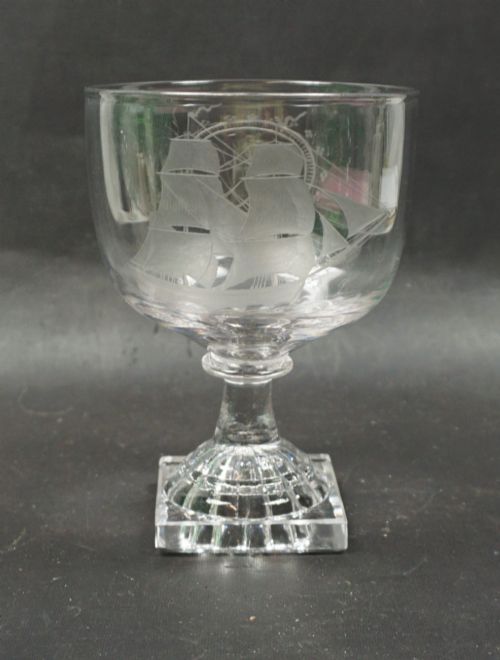
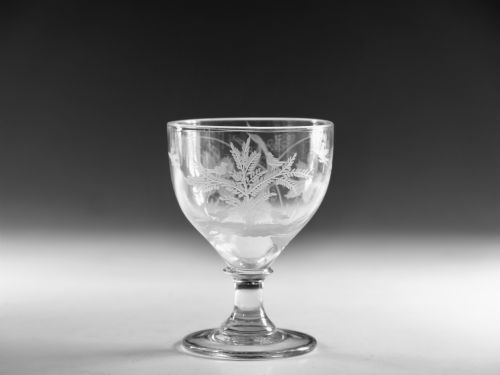
The form evolved from earlier roemers into robust English vessels suited to the dining table or tavern. Many pieces carry commemorative or social engravings recording ships, bridges, or agricultural motifs like hops and barley.
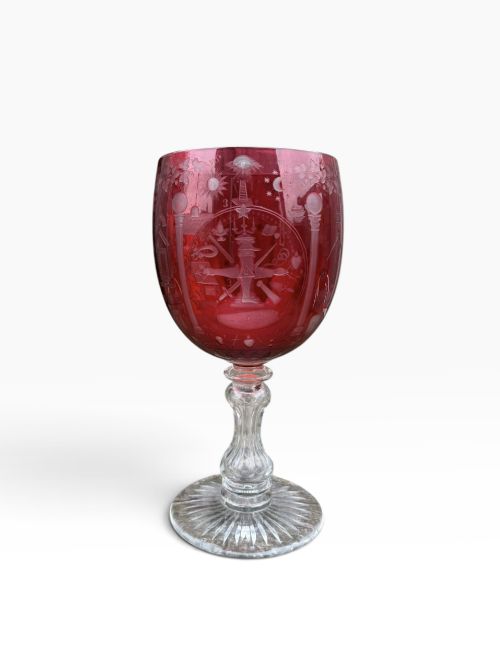
Forms span individual vessels to matched sets of six, alongside rarer coloured variations in cranberry, turquoise, and Bristol green. These larger glasses sit comfortably in the hand, reflecting the heavier drinking customs of past centuries.
Materials and construction
Maker's workshops relied heavily on lead glass and clear crystal, which provided the substantial weight and refractive clarity characteristic of these drinking vessels. Flint glass was also utilised to achieve brilliance and durability in daily service.
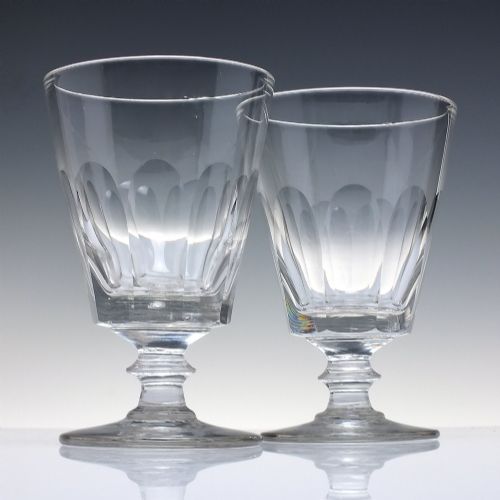
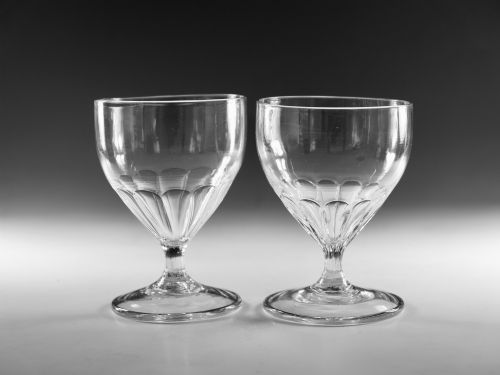
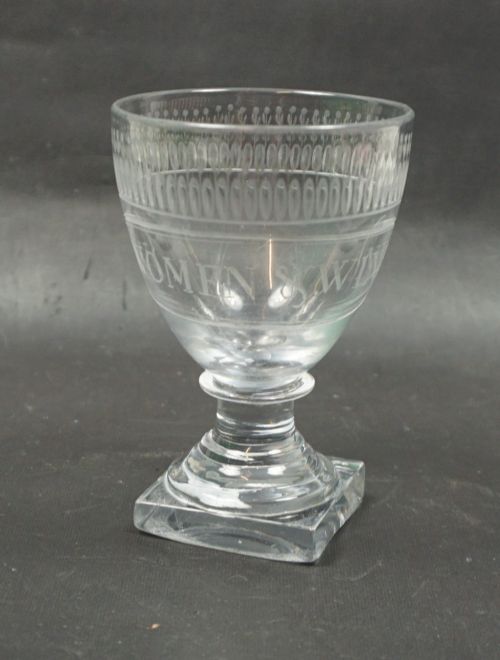
Vessels were shaped by hand blowing into moulds, producing panel-moulded or petal-moulded bowls atop lemon-squeezer or baluster feet. Surface decoration was subsequently applied using wheel engraving, naive etching, or deep cutting.
One cheerful vessel bears the rallying cry God Speed the Plow, celebrating nineteenth-century agriculture with every hearty toast.
Assessing quality and craftsmanship
Quality rests in the weight of the metal, the balance of the stem, and the crispness of the wheel engraving. Heavy lead crystal with deep, unhurried facet cutting or finely detailed armorials represents the upper tier of production.
Simpler, naive etchings and lighter moulded glass form the more domestic end of the spectrum. The clarity of the glass and the stability of the foot further separate standard tavern pieces from exhibition-grade glassware.
The Antique English Rummer Glossary
- Lead glass
- Glass containing lead oxide to increase weight, brilliance, and workability. This material allows for deep cutting and light refraction.
- Bucket bowl
- A straight-sided bowl curving outward slightly toward the rim, typical of sturdy drinking vessels. This shape provides the capacity needed for ale and punch.
- Lemon-squeezer foot
- A square-moulded base with stepped sides resembling a kitchen juicer. It offers extra stability to heavy glassware.
- Baluster stem
- A thick, turned stem shaped with swollen nodes reminiscent of architectural supports. These stems anchor the proportions of larger drinking vessels.
- Panel moulded
- Glass blown into a faceted mould to create vertical flat planes around the lower bowl. This technique adds texture and structural strength.
Antique English Rummer: Frequently Asked Questions
What were rummers used for?
These vessels served larger portions of ale, wine, and punch during social gatherings, taverns, and formal dinners. Their robust construction allowed them to withstand frequent toasts and hearty use.
Over time, they transitioned from everyday tavern items into prized display pieces and commemorative tableware for special occasions.
How do I date an antique rummer?
Dating relies on stylistic shifts in bowl shape, foot design, and engraving techniques across the Georgian and Victorian periods. Early pieces often feature bucket bowls and lemon-squeezer feet, while later Victorian examples display heavier cut crystal.
Pontil marks on the underside and the specific tint of the lead glass also offer clues to the manufacturing decade.
Are coloured rummers authentic?
Yes, coloured variants in cranberry, turquoise green, and Bristol green appear across the late eighteenth and nineteenth centuries. These colours were achieved through mineral additives during the glass-melting process.
While clear lead glass remains the most common finish, coloured and cased examples were produced for specific markets and prosperous households.