


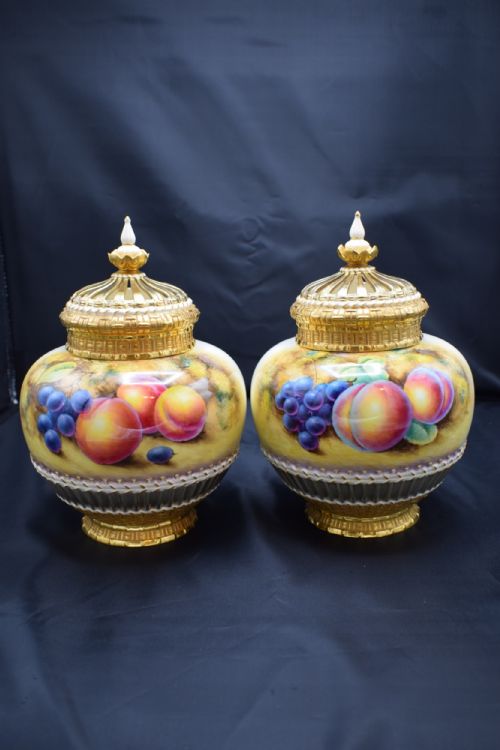


Antique English Fruit Vase
An antique english fruit vase brings rich hand-painted orchard studies and glazed ceramic forms directly into the home.
Antique English Fruit Vase
The antique english fruit vase category centres predominantly on porcelain and glazed earthenware vessels decorated with detailed botanical motifs. Buyers encounter various forms here, including lidded pot pourri jars, spill vases, ewers, and ginger jars.
Most examples originate from the twentieth century, spanning Edwardian production through to mid-century studio and factory output. These pieces combine traditional ornamental shapes with meticulous hand-painted depictions of apples, pears, and berries.
Makers such as Royal Worcester dominate the selection, often featuring specific artist signatures on the painted panels. Alongside porcelain, the listings include distinct glazed earthenware from the period.
How they were made
Potters shaped fine porcelain and earthenware bodies on wheels or in moulds before firing them to create durable vessels. Artisans then applied intricate hand-painted fruit studies directly onto the glazed surfaces.
Gilding, gold leaf, and rich enamel highlights frequently accent the rims, handles, and borders of these vases. A final high-temperature firing fixed the painted details and metallic lustres permanently into the glaze.
Several artists clearly loved painting slightly bruised pears just as much as pristine apples.
What varies in quality
Quality rests upon the skill of the artist and the complexity of the hand-painted fruit composition. Pieces bearing signatures from known ceramic painters command greater attention for their artistic depth and finer brushwork.
The crispness of the porcelain moulding and the richness of the gilding also define the upper tier of the range. Intricate shapes like lidded pot pourri vases and ewers demonstrate higher craftsmanship than standard spill forms.
Royal Worcester·Coalport·William Moorcroft·Charlotte Rhead
The Antique English Fruit Vase Glossary
- Pot pourri vase
- A decorative vessel featuring a pierced lid designed to hold dried scented plant materials. These pieces often incorporate elaborate painted fruit scenes.
- Ewer
- A large jug with a wide spout and scroll handle, utilised historically for washing hands or purely as an ornamental display piece.
- Ginger jar
- A ceramic container with a wide body and flat lid, adapted in later periods into decorative display jars painted with botanical motifs.
- Spill vase
- A tall, narrow cylindrical vessel originally made to hold slender tapers for lighting fires and candles.
- Gilding
- The application of gold leaf or gold paint to ceramic surfaces, enhancing handles, collars, and borders.
Antique English Fruit Vase: Frequently Asked Questions
How do I clean an antique painted vase?
Dust these ceramic pieces gently with a soft, dry brush to protect the delicate hand-painted surfaces and delicate gilding.
Avoid using water, chemical cleaners, or abrasive cloths, as moisture can damage older enamels and metallic leaf highlights.
Were these vases used for display or function?
Most decorated porcelain fruit vessels served primarily as ornamental chimney piece or cabinet displays rather than for holding fresh flowers.
Pot pourri and ginger jar forms functioned as decorative containers for scented botanicals within formal Edwardian and mid-century interiors.
How do I identify a signed artist piece?
Look closely near the base of the painted fruit composition for handwritten signatures or initials from factory artists.
Names like Ricketts, Ayrton, and Blake indicate skilled decorators who specialised in botanical subjects for major English potteries.
What periods do these ceramic vases cover?
The available selection spans the early twentieth century, taking in Edwardian, Arts and Crafts, and Art Deco design movements.
Production dates extend from the early nineteen hundreds through to the nineteen sixties, reflecting changing ceramic styles over several decades.