
Antique English Coffer
An antique english coffer provides deep timber storage and structural endurance spanning from the sixteenth century through the Georgian era.
Antique English Coffer
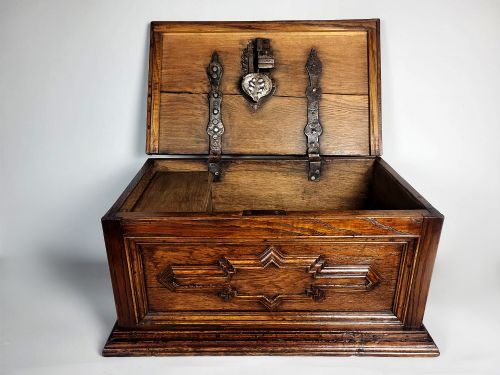
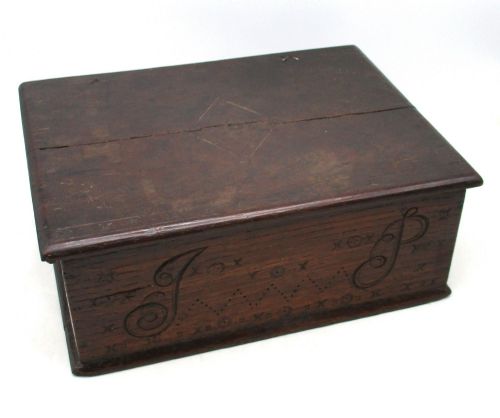
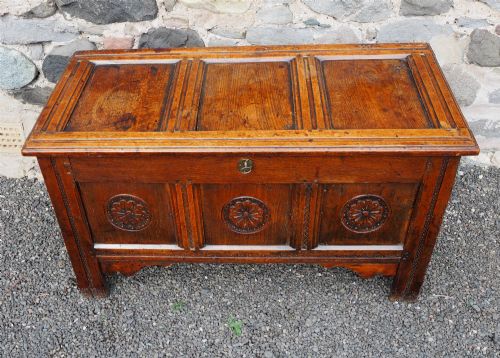
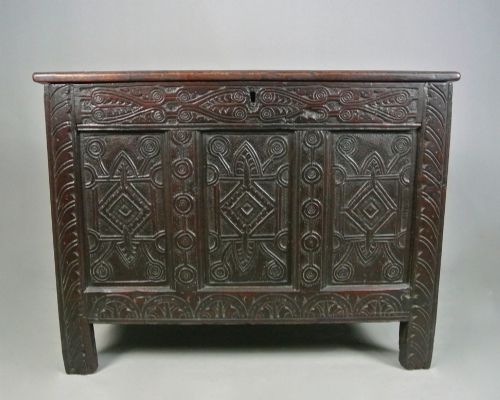
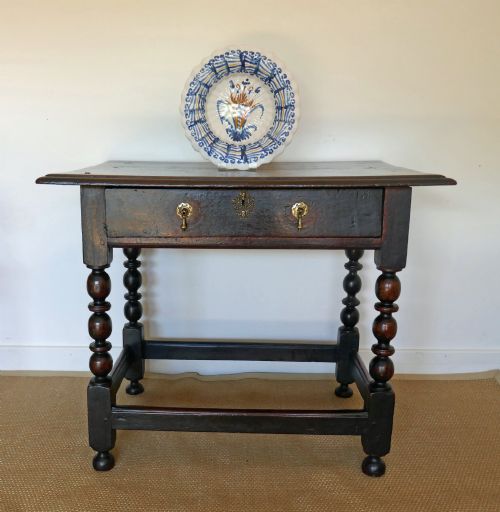
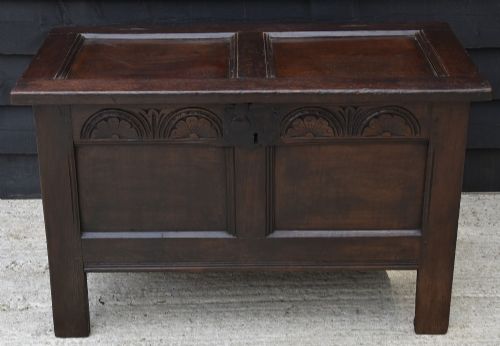
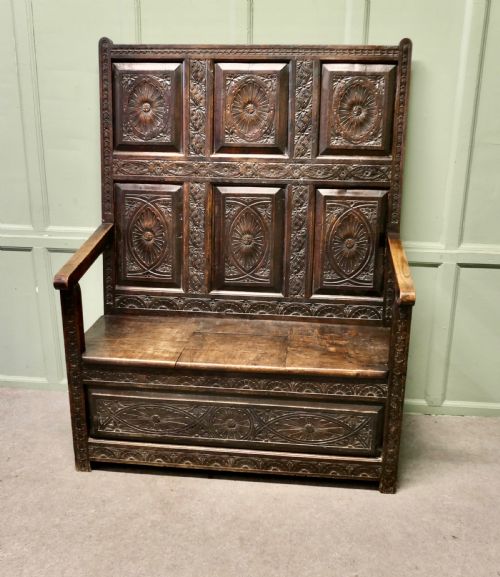
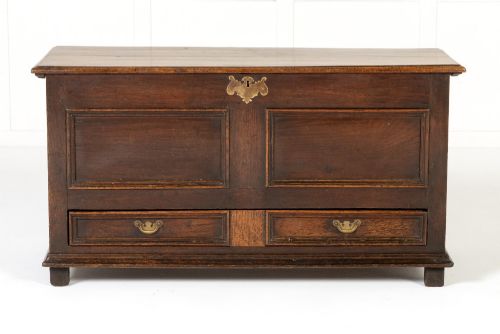
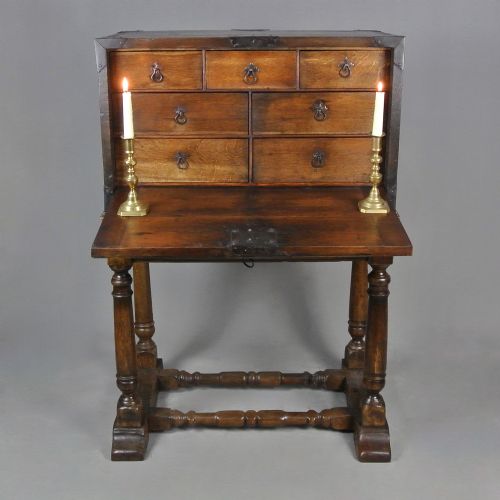
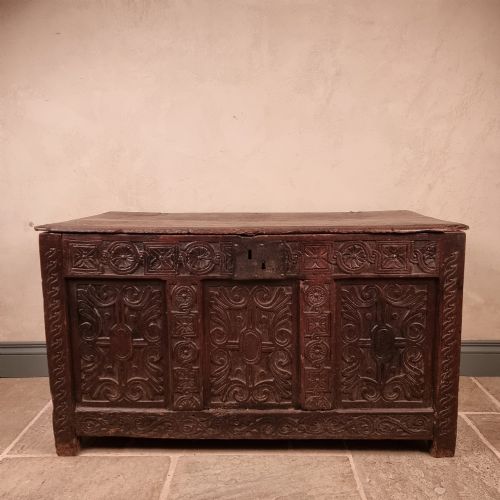
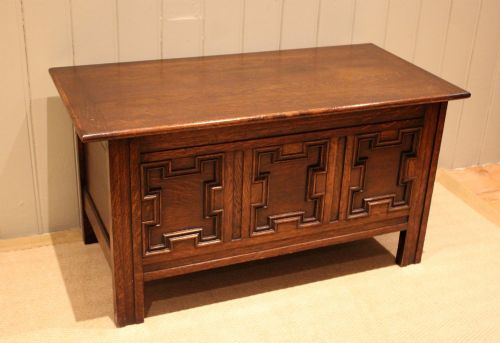
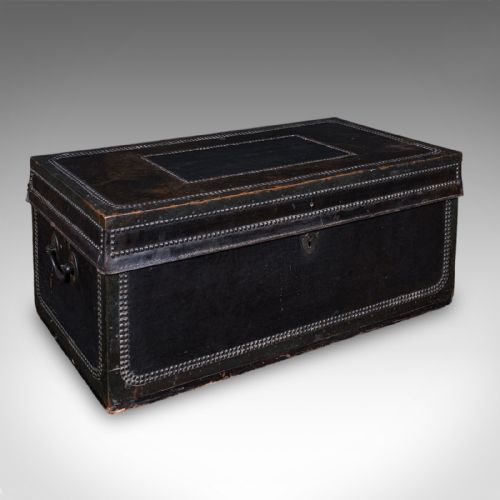
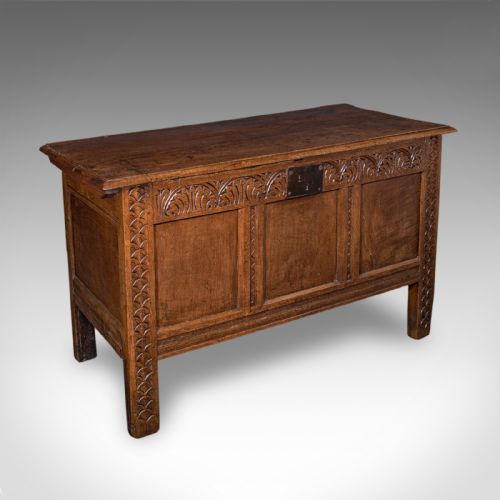
An antique english coffer serves primarily as a heavy timber storage chest, blanket box or strong box designed for domestic security and utility. The pieces seen here span from the sixteenth century through the seventeenth and eighteenth centuries, incorporating styles from the Tudor, Elizabethan, Jacobean and Georgian periods.
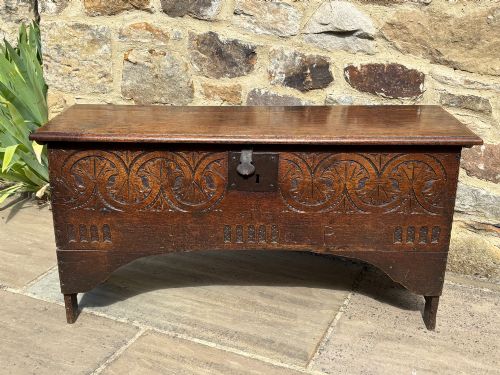
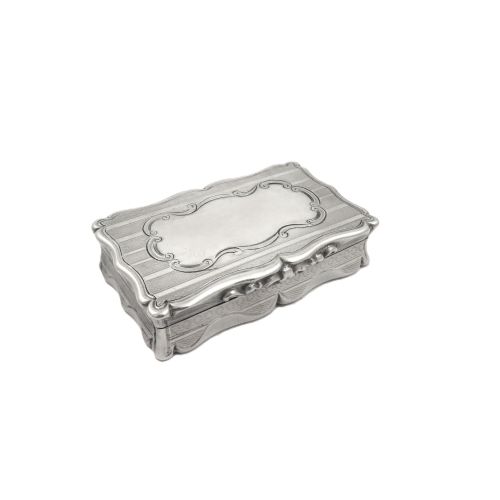
Buyers commonly encounter panelled oak coffers featuring carved decoration alongside simpler planked boards and mule chests equipped with lower drawers. Smaller variants such as document boxes, Bible boxes and box stools also appear frequently alongside larger storage trunks.
Origins remain strictly English, utilising domestic hardwoods and local joinery traditions handed down through generations of provincial craftsmen. These receptacles accommodated textiles, documents and valuables before modern wardrobes and cabinets became common household fixtures.
How they were made
Makers relied predominantly on solid English oak, shaping timber through clefting and hand sawing before joining panels with traditional mortise and tenon joints secured by wooden pegs. Early Elizabethan examples often utilised simple six-plank board construction clamped together at the edges.
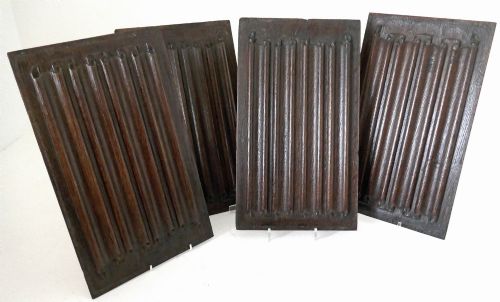
Surface ornamentation involved chip carving, linenfold panels, arcading and geometric moulding executed with gouges and chisels. Metalwork hardware such as complex steel locks, iron hinges and brass fittings were hand-forged to secure the lids and contents.
Some seventeenth-century strong boxes contained complex internal steel locking mechanisms designed to outwit clever thieves before the invention of modern bank vaults.
What varies in quality
The integrity of the timber framing and the proportion of original material dictate the standing of a piece within its period. Examples retaining their initial hinges, complex locks and untampered boarded bases command greater consideration among purists.
The execution and depth of hand carving distinguish superior workshops from basic provincial output, with crisp linenfold patterns or detailed geometric strapwork marking the higher tiers of craftsmanship.
The Antique English Coffer Glossary
- Linenfold
- A style of carved wooden panelling that resembles folded vertical strips of linen fabric. This decorative technique appears frequently on sixteenth and seventeenth-century pieces.
- Mule chest
- A storage chest fitted with one or more drawers beneath the main internal compartment. This form emerged during the late seventeenth and eighteenth centuries.
- Joined coffer
- A chest constructed from a framed skeleton of stiles and rails holding fitted panels together. This method replaced simpler planked board construction and allowed for larger, more stable furniture.
- Bible box
- A small tabletop or desk box designed to hold sacred texts and personal documents. These often feature sloping or flat hinged lids with integrated lock mechanisms.
Antique English Coffer: Frequently Asked Questions
What is an antique english coffer used for?
These chests served historically as secure receptacles for household linens, valuable documents, garments and silver plate. Households utilised them in chambers and halls before dedicated wardrobes and drawer units became standard.
Today, owners place them at the foot of beds, in hallways as blanket storage, or beneath windows to function as occasional seating while preserving traditional utility.
How do you date an antique english coffer?
Dating relies on observing construction methods, timber species, tool marks and stylistic motifs. Sixteenth-century pieces often employ simple planked board construction or early linenfold carving, while seventeenth-century examples typically use joined panel frameworks with geometric mouldings.
Later eighteenth-century Georgian variants frequently incorporate base drawers, mahogany elements or fruitwood varieties alongside softer panel mouldings that reflect changing domestic fashions.
Are these coffers made of solid oak?
The vast majority of examples recorded in these listings are constructed from solid English oak. Workshops selected this dense native hardwood for its structural strength and resistance to heavy wear.
Alternative timbers such as pine, fruitwood, camphorwood and walnut also appear in specific regional or later Victorian contexts, but oak remains the dominant material across early periods.
How do I care for an antique oak chest?
Maintain stable environmental conditions by keeping wooden chests away from direct heat sources, radiators and strong sunlight that can dry out old timbers. Avoid modern silicone polishes and instead apply traditional beeswax sparingly to nourish the dry surface.
Allow the timber to breathe naturally within a room possessing moderate humidity to prevent warping or shrinkage of the historic panels and framing joints.