

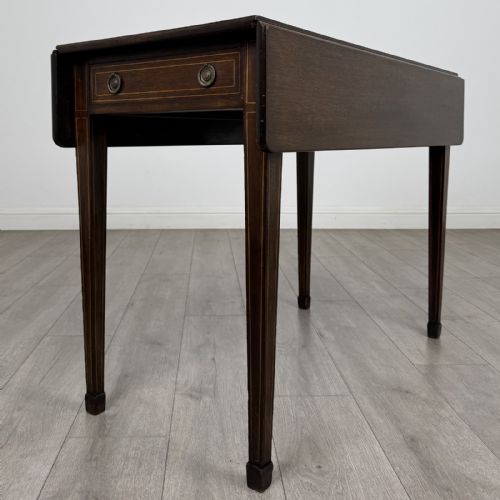
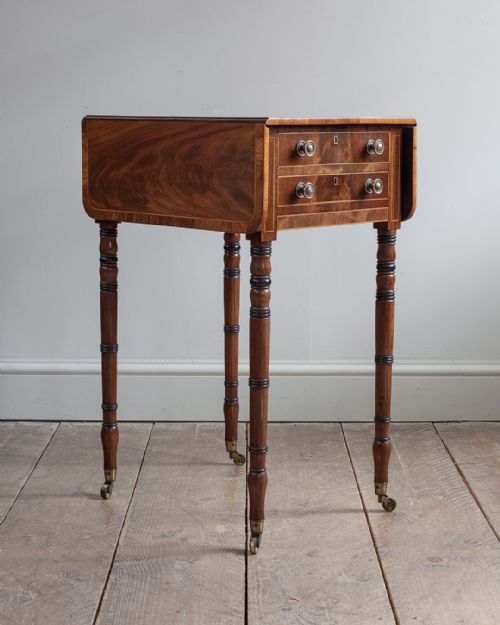
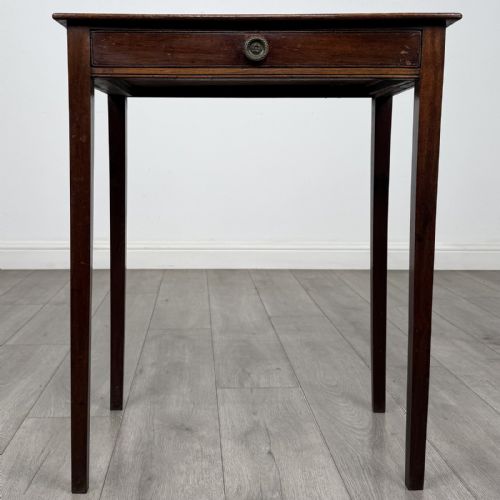
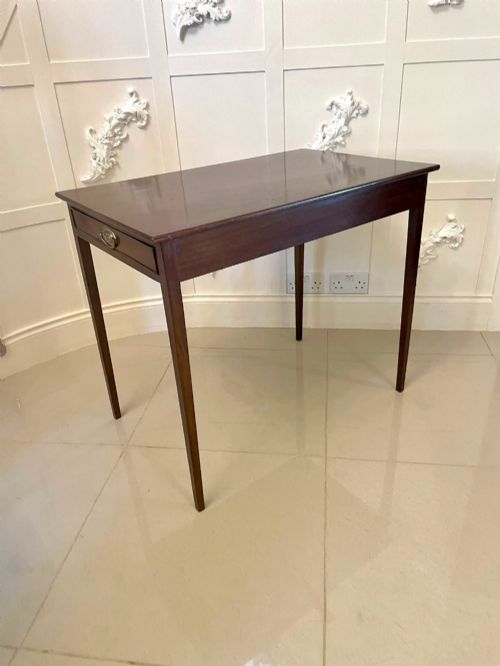
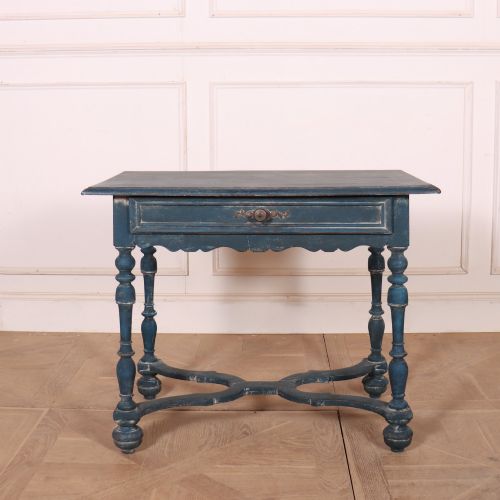
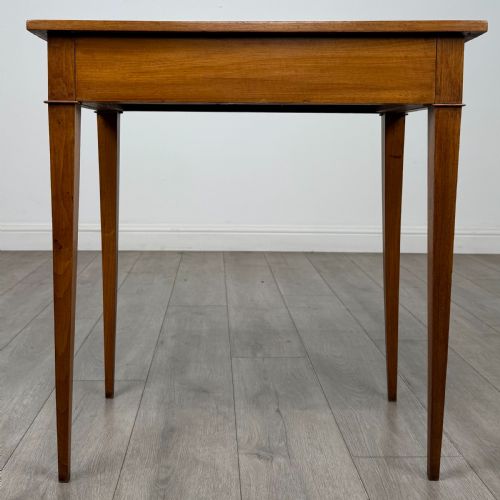
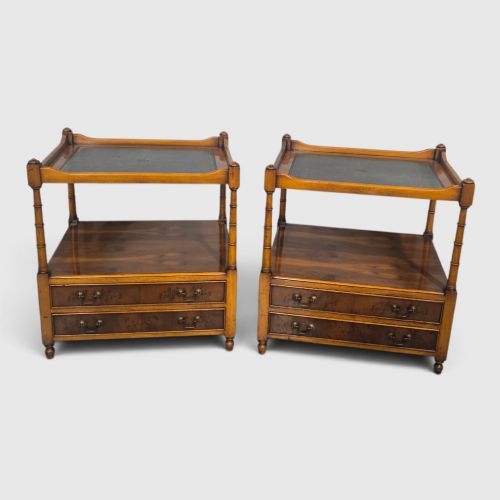
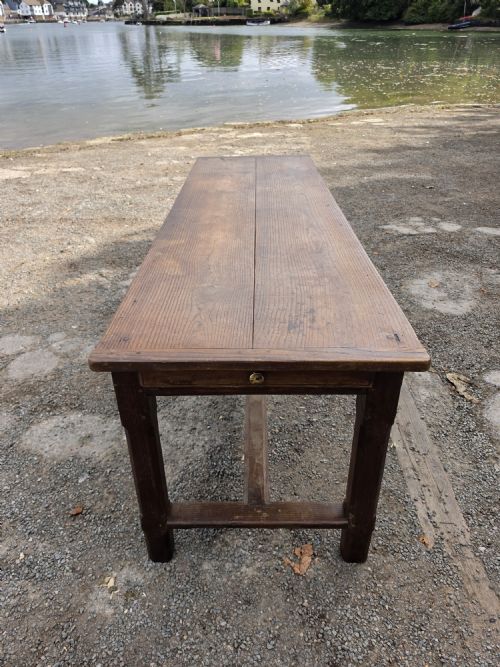
Antique End Table with Drawer
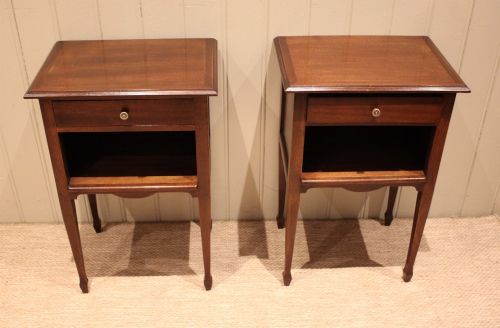
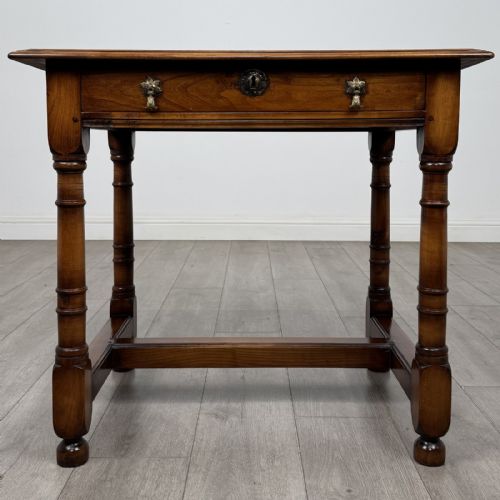
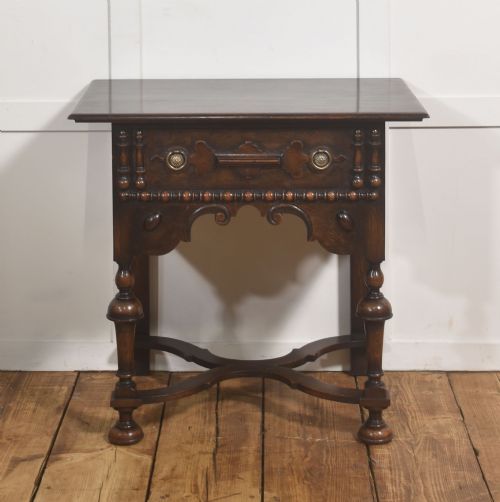
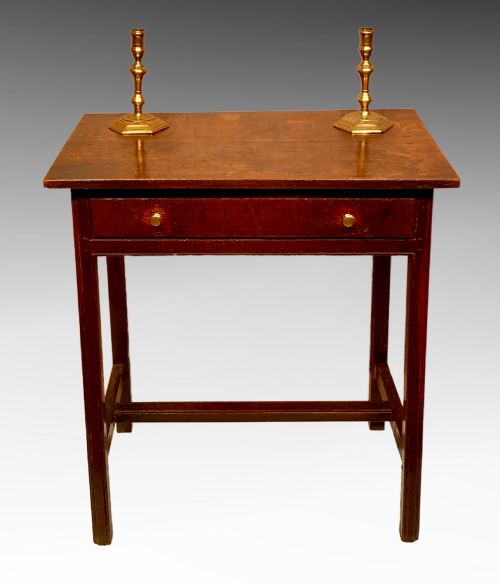
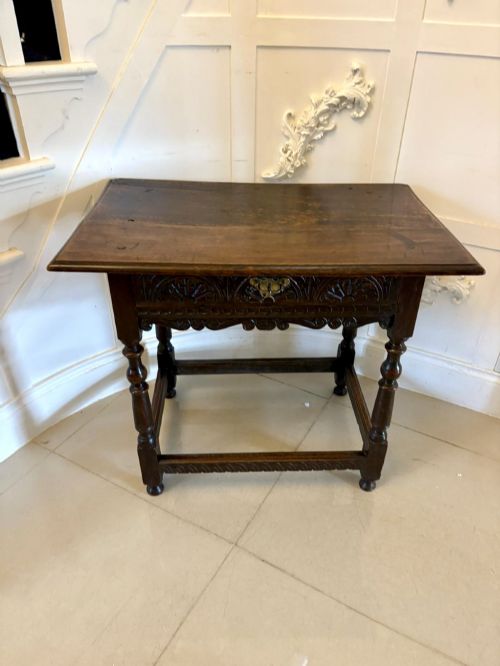
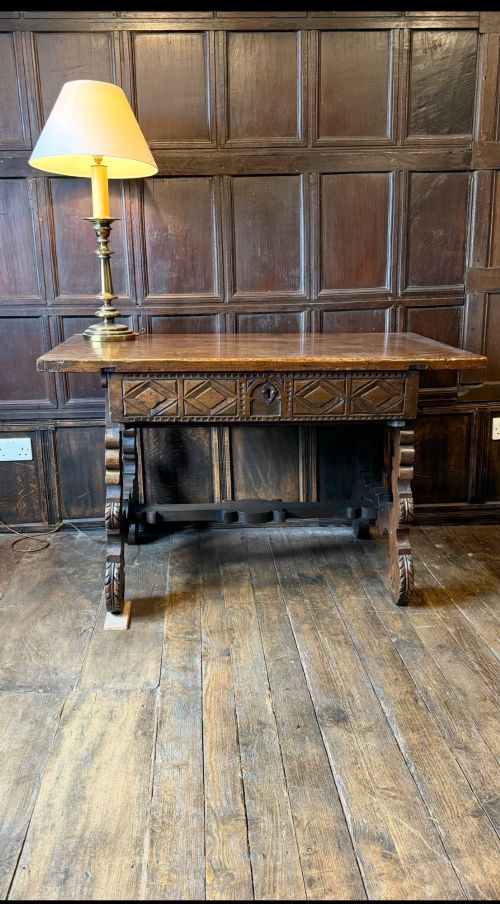
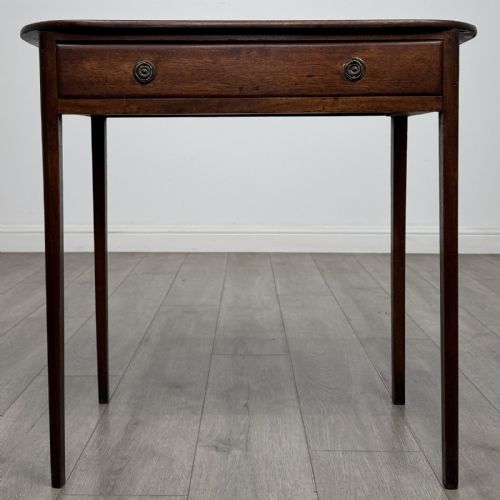
An antique end table with drawer offers compact storage beside a chair, bringing period timbers and practical surfaces into a room.
Antique End Table with Drawer
An antique end table with drawer bridges the gap between decorative occasional furniture and functional storage in a room. Buyers searching this phrase encounter forms spanning the 18th century, Regency, Victorian, and Edwardian periods.
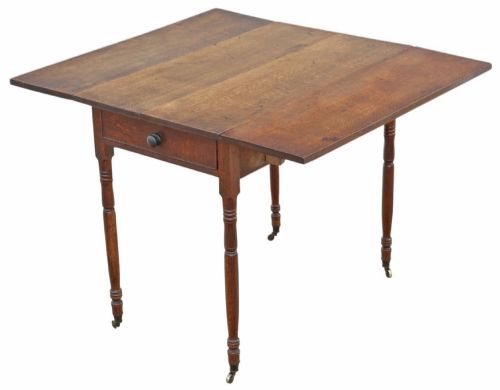
The selections recorded here appear as side tables, lamp tables, occasional tables, and Pembroke tables. Mahogany, oak, and walnut predominate, often equipped with a single frieze or end drawer for small items.
Materials and Construction
Cabinet makers utilised dense hardwoods including mahogany, walnut, rosewood, and oak for durability and rich grain presentation. Brass mounts, drop leaves, and turned or stretcher-supported legs appear frequently across the periods.
Drawer construction relies on traditional joinery housed within sturdy frames, matched with figured timber veneers or solid fruitwood and ash depending on the workshop origin.
Antique End Table with Drawer Retail Price Guide 2026
Typical asking prices for end table with drawer among the pieces listed under this phrase on Sellingantiques today, from the lower quarter to the upper quarter. They describe what is for sale here now, not the wider market.
Listings feature timbers such as mahogany, oak, walnut, rosewood, ash wood, and fruitwood spanning the 17th to the 20th century.
Distinctions in Quality
Quality rests in the selection of figured timbers such as flame mahogany or quartered walnut, and the crispness of inlaid details and wood-turned supports. Finer examples display balanced proportions, integrated drawer framing, and sound structural integrity across joints and stretchers.
The Antique End Table with Drawer Glossary
- Pembroke table
- A small table with hinged drop leaves on either side and usually a single drawer. This form emerged in the 18th century for versatility.
- Frieze drawer
- A drawer fitted directly beneath the top surface within the horizontal band of the table frame. It provides discreet storage for small accessories.
- Drop leaf
- A hinged flap on the side of a table top that can be raised to expand the surface area or lowered to save space.
- Stretcher
- A horizontal support connecting the legs of a table to increase stability. Early oak and fruitwood examples often feature turned wooden stretchers.
Antique End Table with Drawer: Frequently Asked Questions
What is an end table with drawer used for?
These tables provide a compact surface for a lamp, book, or cup beside a chair or sofa. The integrated drawer holds small everyday items out of sight.
Their modest proportions allow them to fit into narrow spaces where larger furniture would overwhelm the room.
How do I date an antique wooden table?
Dating relies on identifying the primary wood species, construction methods, and stylistic cues from periods like Georgian, Regency, or Victorian. Tool marks and timber ageing give further clues.
Secondary woods inside drawers and hardware styles also help narrow down the decade of manufacture.
Are Pembroke tables different from side tables?
Pembroke tables feature drop leaves on two opposing sides that fold down when not in use. Standard side tables have fixed tops without folding flaps.
Both forms frequently include a drawer beneath the surface for storage.
Where should I place a lamp table?
Lamp tables sit naturally beside seating areas, reading chairs, or beds to hold lighting and reading materials. Their small footprint makes them adaptable for corners and hallways.
Matching the wood tone to existing furniture helps integrate the piece into the room.