



Antique Enamelled Locket
An antique enamelled locket holds secrets beneath coloured glass and metal, offering a tactile piece of history to wear close.
Antique Enamelled Locket
An antique enamelled locket is a hinged pendant designed to hold miniature portraits, locks of hair, or small mementos, combining personal sentiment with decorative metalwork. These pieces emerge across several periods, stretching from the 18th century through the Georgian, Victorian, Edwardian, and Art Deco eras.
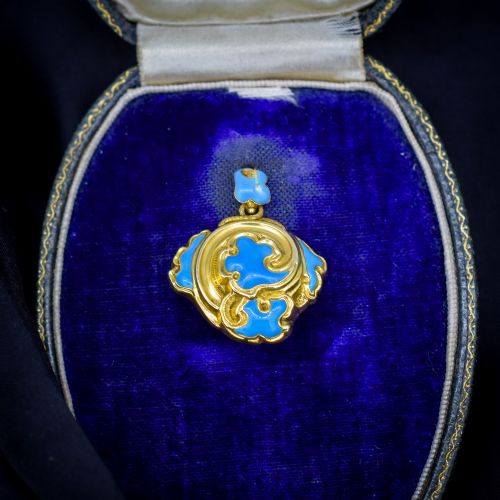
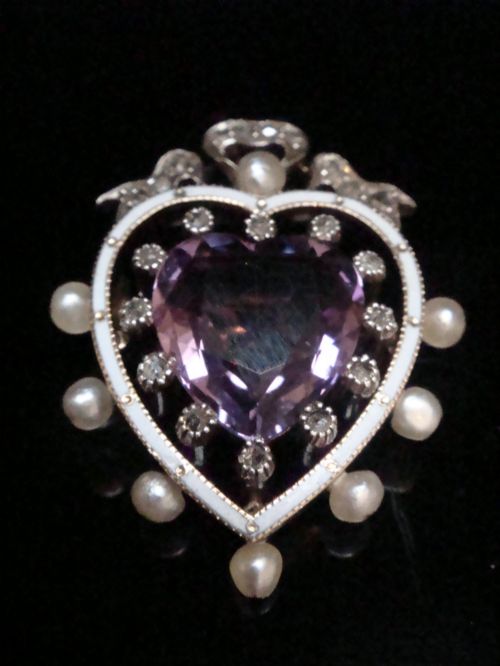
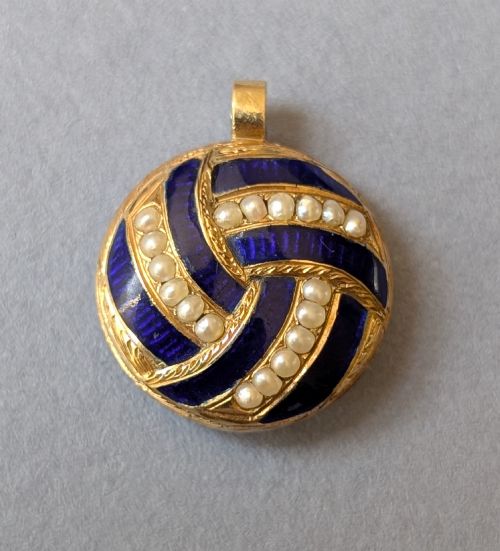
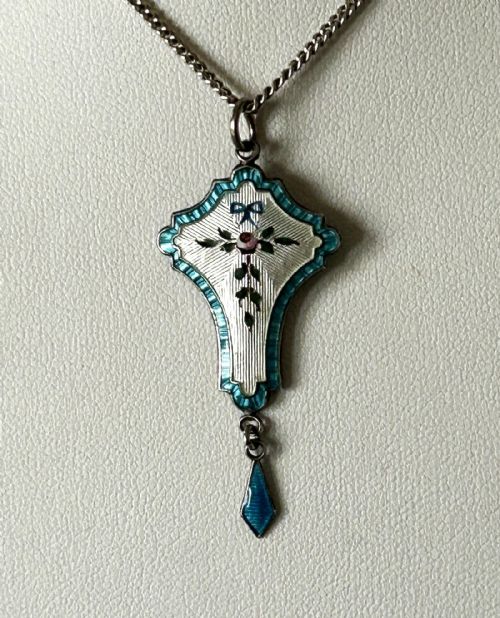
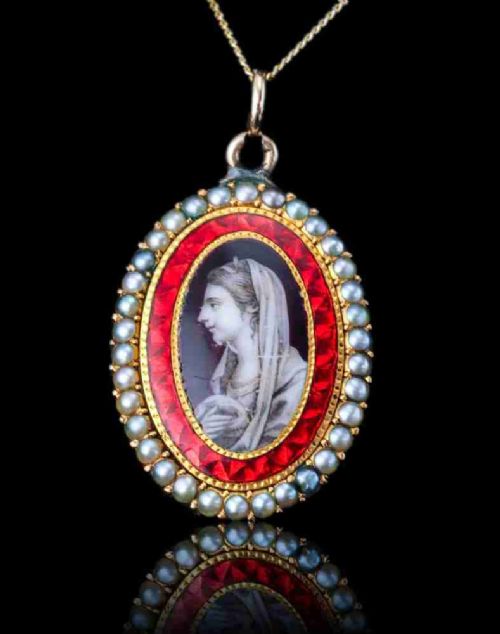
The most common examples met on this page are Victorian and Edwardian iterations fashioned in yellow gold or silver. They frequently incorporate blue enamel, guilloche patterns, pearls, and diamonds, alongside specific motifs like hearts, stars, and floral designs.
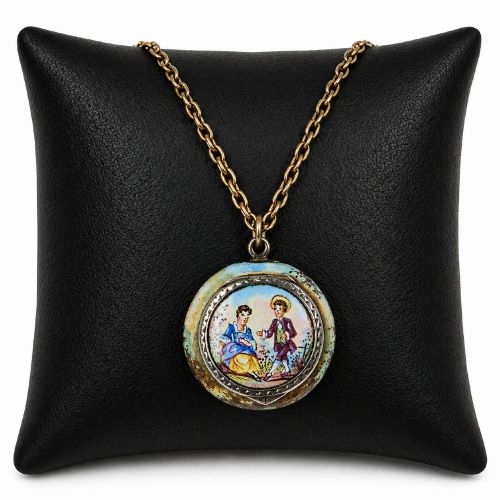
Other variations span mourning pieces bearing black enamel and hair work, portrait miniatures under glass, and silver compacts or charms. Origins range from English workshops to French studios and Viennese makers.
How they were made
Makers constructed these lockets using gold of varying purities - including 9ct, 15ct, 18ct, and 22ct - as well as silver, rolled gold, and silver gilt. Vitreous enamel, guilloche enamel, and translucent plique-a-jour techniques fused powdered glass to the metal surface under high heat to create rich coloured grounds.
Gemstones such as rose-cut diamonds, natural pearls, seed pearls, turquoise, peridots, and paste stones were meticulously set into the metal or enamel fields. Artisans also painted detailed portrait miniatures by hand, often encasing them behind protective crystal or glass panels within the hinged frames.
What varies in quality
The sophistication of the enamel work dictates much of the distinction between examples, separating flat, opaque fields from intricate engine-turned guilloche patterns or translucent plique-a-jour cells. Precision in the hand-painted portrait miniatures and the crispness of applied gold motifs like fleur-de-lis or star settings further elevate an item.
The choice of precious metals and precious stones shifts the tier of the piece, with high-carat gold and well-matched diamonds or natural pearls marking finer execution. Structural integrity in the hinge, the secure snap of the closure, and the original preservation of internal glass compartments also separate standard items from superior survivals.
Henry Bone ARA·Christian Friedrich Zincke·Meyle & Mayer·Charles Horner·Henry Perkins & Sons
The Antique Enamelled Locket Glossary
- Guilloche enamel
- A decorative technique where the metal surface is engraved with repetitive geometric patterns before transparent enamel is applied over the top. This allows light to reflect through the coloured glass in shifting waves.
- Plique-a-jour
- An enamelling method resembling stained glass, where enamel is fired in open wire cells without a solid backing. The technique lets light pass directly through the translucent coloured medium.
- Mourning locket
- A piece of commemorative jewellery produced to remember a deceased person, frequently featuring black enamel, hair work under glass, or inscriptions. These items served as tangible tokens of grief and remembrance.
- Portrait miniature
- A small, highly detailed painting executed on ivory, vellum, or card, often depicting a specific individual. They were commonly set into the front of pendants or concealed within locket interiors.
- Rose-cut diamond
- An antique diamond cut featuring a flat base and a domed crown faceted with triangular shapes. This historic cut produces a softer, broader reflection than modern brilliant cuts.
Antique Enamelled Locket: Frequently Asked Questions
What goes inside an antique locket?
These compartments traditionally hold miniature portraits painted on ivory or card, folded paper keepsakes, or woven locks of human hair. People used them to keep the likenesses of family members, spouses, or departed loved ones close to the heart.
Owners today continue this tradition by placing tiny photographs or handwritten notes inside the hinged frames. The inner bezels and glass covers help secure these delicate mementos safely against the metal backing.
How do I tell Victorian from Edwardian pieces?
Victorian examples tend to feature heavier gold weights, deeper colours like black and dark blue enamel, and motifs centred on mourning, sentiment, and elaborate foliate engraving. They span a lengthy era from the mid-nineteenth century through the close of the 1800s.
Edwardian pieces often embrace lighter aesthetics, featuring platinum, yellow gold, and bright guilloche enamel paired with delicate pearls and diamonds. The style leans towards airier, symmetrical designs influenced by the approaching Art Deco period.
Can I wear an enamelled locket daily?
Enamel is essentially coloured glass fused to metal, meaning it requires mindful handling to avoid sharp impacts or deep scratching. Wearing one daily is entirely possible if you treat the pendant with the care due to fragile antique jewellery.
It is wise to remove the locket before swimming, bathing, or engaging in heavy physical work. Storing the piece in a soft pouch away from harder jewellery prevents the metal and stones from abrading the enamelled surface.
What is guilloche enamel?
Guilloche is a decorative technique where a metal substrate is mechanically engraved with precise, repeating geometric patterns using a lathe. This patterned metal provides a textured foundation that catches and refracts light.
Translucent enamel is then applied over the engraved metal and fired. The underlying pattern shows through the coloured glass, creating a shimmering, multidimensional effect characteristic of many Edwardian and Art Deco pieces.